

NewsDetails
Steel Pipe Inventory Management Logistics Optimization Guide
author:Zhantong time:2026-07-26 10:02:04 Click:188
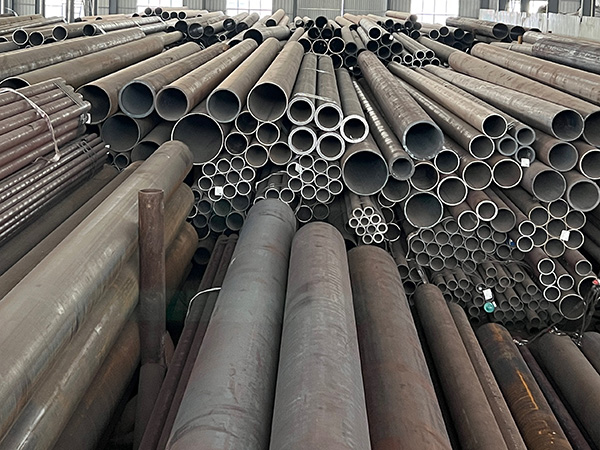
Steel pipe inventory represents substantial working capital that ties up warehouse space, requires handling equipment, and demands protection against damage and corrosion during storage. Effective inventory management balances stock availability—preventing shortages that delay customer orders—against carrying costs that accumulate when inventory sits idle. Logistics optimization extends this balance across transportation networks, combining service level requirements with freight efficiency to deliver pipe economically while meeting project schedules.
Inventory Classification and Stocking Strategies
ABC analysis classifies pipe inventory by value contribution and consumption frequency. High-velocity items—standard sizes and grades that ship frequently—warrant premium storage locations with easy access for rapid order picking. Lower-velocity items can occupy less accessible positions, accepting slightly longer retrieval times in exchange for optimized space utilization of the overall warehouse.
Safety stock calculations determine buffer inventory levels that protect against demand variability and supply disruptions. Service level targets—percentage of orders filled immediately from stock—drive safety stock quantities, with higher service levels requiring larger buffers. Lead time variability and demand variability inputs enable statistical calculation of appropriate safety stocks for each item.
Warehouse Layout and Material Handling
Warehouse layout optimization considers flow patterns that minimize travel distances while accommodating pipe lengths that can dominate storage configurations. Parallel rack rows aligned with receiving and shipping areas reduce handling movements. Staging areas adjacent to loading docks enable rapid truck turnaround without blocking main traffic paths.
Specialized handling equipment—forklifts with pipe clamps, overhead cranes, and specialized pipe carts—enables efficient movement of heavy pipe without damage to coating or pipe ends. Operator training ensures safe equipment operation while maximizing productivity. Preventive maintenance programs keep handling equipment available when needed, avoiding delays from equipment failures.
Storage Protection and Preservation
Coated pipe—FBE, 3LPE, or other corrosion protection systems—requires storage conditions that prevent coating damage before installation. Dunnage elevation prevents contact with standing water that could degrade coating at pipe-to-ground contact points. Spacer placement between pipe layers prevents point loading that could dent or deform pipe walls under the weight of overlying layers.
Indoor storage protects premium products from weather exposure that could degrade coating performance over extended storage periods. Outdoor storage facilities can accommodate standard products with periodic inspection to identify any coating issues requiring attention before shipment. Storage duration limits prevent indefinite accumulation of slow-moving items that could become obsolete.
Transportation Planning and Optimization
Freight optimization balances transportation cost against service requirements—faster modes cost more but reduce transit inventory and improve responsiveness to urgent customer needs. Truckload shipments benefit from rate negotiations based on committed volume, while less-than-truckload shipments trade higher per-unit costs for flexibility and reduced inventory requirements.
Route optimization software identifies efficient transportation paths, considering carrier capabilities, transit times, and cost variations across available options. Consolidation programs combine multiple orders into single shipments, reducing per-unit transportation costs while accepting slightly longer delivery windows. International shipments require additional planning for customs clearance, documentation, and ocean carrier coordination.
Supply Chain Coordination
Vendor-managed inventory (VMI) arrangements place supply planning responsibility with manufacturers or distributors who monitor customer stock levels and replenish automatically. This approach reduces customer inventory management burden while leveraging manufacturer visibility into production schedules and supply constraints. VMI relationships work best for items with stable demand patterns where automatic replenishment suits customer requirements.
Demand forecasting combines historical sales data with market intelligence to anticipate future requirements. Collaborative planning with key customers enables sharing of project pipelines and anticipated order patterns that improve forecast accuracy. Safety stock adjustments in response to forecast changes prevent both stockouts and excess inventory accumulation.
Technology Implementation
Warehouse management systems (WMS) track inventory locations, quantities, and status throughout the facility, enabling real-time visibility into stock availability. Barcode or RFID tracking captures receiving, putaway, picking, and shipping transactions as they occur, maintaining inventory accuracy that prevents discrepancies between physical and system quantities.
Transportation management systems (TMS) optimize carrier selection, route planning, and freight audit processes. Integration between WMS and TMS enables shipment optimization that considers inventory positioning, carrier availability, and customer delivery requirements simultaneously. Electronic data interchange (EDI) automates order transmission and invoice processing, reducing transaction costs and improving order accuracy.
Inviting global distributors to join our inventory management and logistics network. We partner with distributors who bring regional expertise and customer relationships that extend our supply capabilities to end users worldwide.
References
APICS Dictionary: Supply Chain Management Terminology
ISO 14641:2010: Electronic long-term preservation of document-related information
SCCM: Supply Chain Council Supply Chain Operations Reference Model
Institute for Supply Management: Supply Management Principles
Modern Materials Handling, February 2022: Warehouse Optimization Strategies
 Recommended Products
 Contact us
—— Contact:Manager
—— Tel:+86 15231788966
—— Email:info@zhantongpipe.com
—— Url:https://www.zhantongpipe.com
—— Address:Mengcun Hui Autonomous County, Cangzhou City, Hebei Province