
NewsDetails
Comparing Seamless Steel Tubes for High-Speed Rotational Equipment
author:Zhantong time:2026-01-18 12:13:08 Click:172
What Are Seamless Steel Tubes?
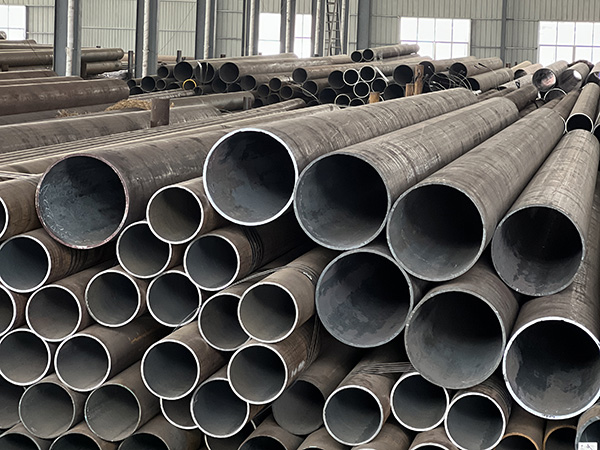
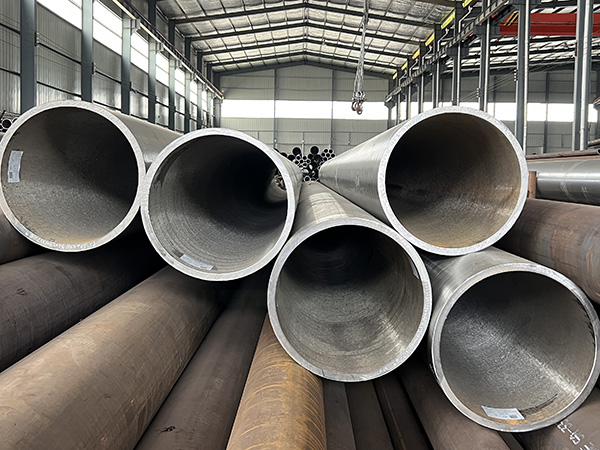
Seamless steel tubes are hollow cylindrical products produced without welding seams, offering uniform structure and consistent mechanical properties throughout the cross-section. Unlike welded pipes, seamless steel tubes are formed through piercing, rolling, and sizing processes that eliminate weak points caused by weld joints.
For industries using high-speed rotational equipment such as turbines, spindles, hydraulic shafts, and transmission components, seamless steel tubes provide superior balance, strength, and fatigue resistance. A professional seamless steel tubes manufacturer focuses on precision production to ensure that each tube performs reliably under dynamic loading conditions.
Through controlled factory production lines, seamless steel tubes achieve stable internal grain structure and dimensional accuracy essential for rotating systems.
Why High-Speed Rotational Equipment Requires Precision Tubing
High-speed rotational equipment operates under continuous centrifugal force, vibration, and thermal stress. Any inconsistency in material density, thickness, or roundness can cause imbalance, noise, or premature failure.
Seamless steel tubes are preferred because their uniform wall thickness reduces eccentric rotation. This directly improves dynamic stability and lowers the risk of fatigue cracking. In applications such as motor shafts, rotor sleeves, and precision rollers, even small deviations can lead to energy loss and bearing damage.
A reliable manufacturer integrates strict production control to supply tubes capable of handling thousands of rotation cycles per minute without deformation or structural instability.
Key Material Properties of Seamless Steel Tubes
When comparing seamless steel tubes, material performance becomes a critical factor. Key properties include tensile strength, yield strength, hardness, and microstructural uniformity.
Carbon steel, alloy steel, and heat-treated grades are commonly selected depending on speed, torque, and environmental conditions. Alloy elements improve wear resistance and fatigue life, which is crucial for rotating machinery operating continuously.
Additionally, seamless steel tubes provide better pressure containment and impact resistance compared with welded alternatives. Through factory production, metallurgical consistency is maintained across large batch supply, ensuring predictable performance in every tube delivered.
Dimensional Accuracy and Balance Control
Precision is one of the biggest advantages of seamless steel tubes for rotational equipment. Parameters such as roundness, straightness, concentricity, and surface finish affect balance behavior during rotation.
Poor dimensional accuracy can introduce vibration, causing increased bearing load and noise. Seamless production allows tighter tolerances compared with welded pipes because no seam distortion occurs during forming.
Modern manufacturing uses sizing mills, straightening machines, and inspection systems to ensure every tube meets dynamic performance requirements. Factory-based production ensures repeatability for bulk supply used in large equipment projects.
Fatigue Resistance and Dynamic Performance
Rotational equipment subjects materials to cyclic stress. Over time, these repeated loads can cause fatigue failure if the material contains micro-defects or inconsistent structure.
Seamless steel tubes outperform welded alternatives in fatigue resistance because their homogeneous structure distributes stress evenly. There is no weld seam acting as a stress concentration zone.
For high-speed shafts, rollers, and transmission housings, this means longer service life and reduced maintenance. A professional seamless steel tubes manufacturer designs production processes to minimize inclusions and internal voids, improving long-term reliability.
Manufacturing Process and Quality Production
The performance of seamless steel tubes is closely linked to the manufacturing process. Typical production steps include billet heating, piercing, hot rolling, cold drawing, heat treatment, straightening, and inspection.
Each step influences grain refinement, surface quality, and dimensional stability. Heat treatment improves strength and toughness, while cold drawing enhances surface smoothness and accuracy.
Factory-controlled production allows traceability, batch consistency, and quality documentation for large-scale projects. This is particularly important for high-speed equipment where predictable mechanical behavior is required across all components.
Comparing Seamless Steel Tubes Across Applications
Different industries compare seamless steel tubes based on application demands. In turbine systems, tubes must resist centrifugal force and temperature variation. In hydraulic machinery, pressure resistance and fatigue life are key.
In precision rollers, surface finish and straightness control rotational stability. For drive shafts, torsional strength and impact resistance become critical.
By selecting seamless steel tubes with suitable grade, heat treatment, and tolerance control, engineers ensure optimal performance under rotational load. Manufacturer production systems make it possible to customize dimensions and properties while maintaining bulk supply efficiency.
Manufacturer and Factory Bulk Supply Advantages
Choosing a professional seamless steel tubes manufacturer provides more than material—it delivers system reliability. Factory-scale production ensures uniform metallurgy, stable sizing, and consistent mechanical behavior.
With organized factory supply, projects benefit from identical tube performance across entire equipment lines. Bulk production also reduces lead time and simplifies logistics for industrial users.
Production traceability, inspection reports, and standardized packaging further strengthen quality control for high-speed rotational equipment.
Conclusion: Selecting the Right Seamless Steel Tubes
Comparing seamless steel tubes for high-speed rotational equipment requires attention to material strength, dimensional precision, fatigue resistance, and manufacturing quality. Seamless construction eliminates weak points and improves balance stability under dynamic load.
By working with suppliers backed by professional manufacturer production and reliable factory bulk supply, engineers ensure consistent performance, extended service life, and reduced operational risk.
Ultimately, seamless steel tubes are not just structural components—they are precision elements that support efficiency, safety, and long-term reliability in modern high-speed rotational systems.
References
GB/T 7714:Handbook of residual stress and deformation of steel[M]. ASM international, 2002.
MLA:Totten, George E., ed. Handbook of residual stress and deformation of steel. ASM international, 2002.
APA:Totten, G. E. (Ed.). (2002). Handbook of residual stress and deformation of steel. ASM international.
 Recommended Products
 Contact us
—— Contact:Manager
—— Tel:+86 15231788966
—— Email:info@zhantongpipe.com
—— Url:https://www.zhantongpipe.com
—— Address:Mengcun Hui Autonomous County, Cangzhou City, Hebei Province