
NewsDetails
Stainless Steel Flange: Grades, Corrosion Resistance and Selection
author:Zhantong time:2026-10-12 09:17:47 Click:149
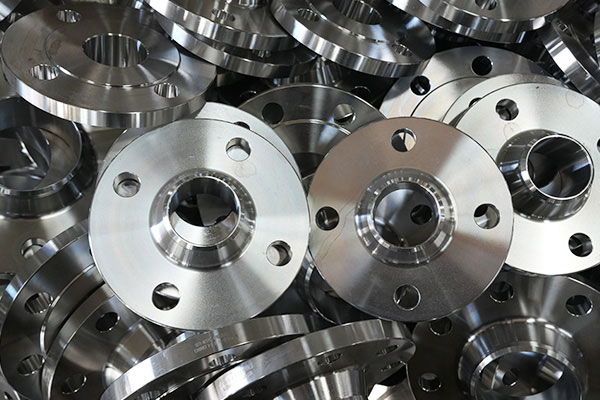
When a carbon steel flange starts rusting at the gasket seat, the joint loses bolt load and begins to weep. A stainless steel flange removes that failure mode in chemical, marine, desalination, pharmaceutical and food-processing lines. This article covers grades, corrosion behaviour, standards and the buying checks that separate a genuine alloy flange from a plated carbon steel imitation.

Why Stainless Instead of Carbon Steel
Stainless forms a self-healing chromium-oxide film that resists atmospheric moisture, process chemicals and chloride attack. In services where paint cannot be maintained — submerged piping, offshore decks, acidic process lines — stainless flanges deliver longer intervals between shutdowns and lower total cost of ownership despite a higher purchase price.
Common Grades and Their Sweet Spots
304 / 304L — general corrosion resistance, food, beverage and clean water; 304L preferred where welding is heavy
316 / 316L — molybdenum-bearing, the default choice for seawater, chlorides, pulp and pharmaceutical duty
321 / 347 — stabilised grades for elevated temperature service
Duplex 2205 / 2507 — high strength plus pitting resistance for sour and high-chloride offshore service
Standards and Pressure Ratings
ASTM A182 F304 / F304L / F316 / F316L forged or plate material
Dimensional standards: ASME B16.5, B16.47, EN 1092-1, DIN, JIS B2220, GB/T 9119
Pressure class 150 to 2500, or PN6 to PN100 depending on the standard used
Faces: RF, FF, RTJ and tongue-and-groove on request
Matching Gasket and Bolting
A stainless flange still leaks if the gasket is wrong. Pair 316L flanges with PTFE, flexible graphite or spiral wound gaskets with a stainless winding, and use A193 B8M / A194 8M bolting to avoid galvanic mismatch. Never bolt a stainless flange with plain zinc-plated carbon bolts in a wet service.
Typical Applications
Chemical and petrochemical process piping
Desalination, seawater intake and offshore platforms
Pharmaceutical, biotech and food-grade hygienic lines
Flue-gas desulphurisation and waste-water treatment
Cryogenic and low-temperature LNG transfer skids
How Zhantong Verifies Material
Zhantong machines stainless flanges on CNC centres and supplies PMI (positive material identification) reports, EN 10204 3.1 / 3.2 certificates, intergranular corrosion testing where specified and surface roughness records on the gasket seating face.
Frequently Asked Questions
Is 316L always better than 304?
In chloride or marine environments yes, because molybdenum raises pitting resistance. In dry, clean, indoor service 304L is usually the more economical choice.
Can stainless flanges be welded to carbon steel pipe?
Yes, using a compatible transition fitting or buttering with an over-alloyed filler such as 309L, followed by correct PWHT and inspection.
Do stainless flanges need coating?
Normally no. Painting is optional for identification or for buried service where external wrapping is still recommended.
Conclusion
Specify grade by medium, chloride level and temperature — not by habit. With the right alloy, face finish and bolting, a stainless steel flange becomes a fit-and-forget component. Contact Zhantong for 304/316L and duplex flanges machined to ASME, DIN or JIS drawings.
 Recommended Products
 Contact us
—— Contact:Manager
—— Tel:+86 15231788966
—— Email:info@zhantongpipe.com
—— Url:https://www.zhantongpipe.com
—— Address:Mengcun Hui Autonomous County, Cangzhou City, Hebei Province