
NewsDetails
Slip-On Flange vs Welding Neck Flange: How to Choose
author:Zhantong time:2026-10-13 10:29:34 Click:144
Two flanges look similar on a drawing but behave very differently under pressure, heat and vibration. Choosing between a slip-on flange and a welding neck flange is one of the most common specification decisions in piping design — and one of the cheapest places to prevent a future leak.

The Structural Difference
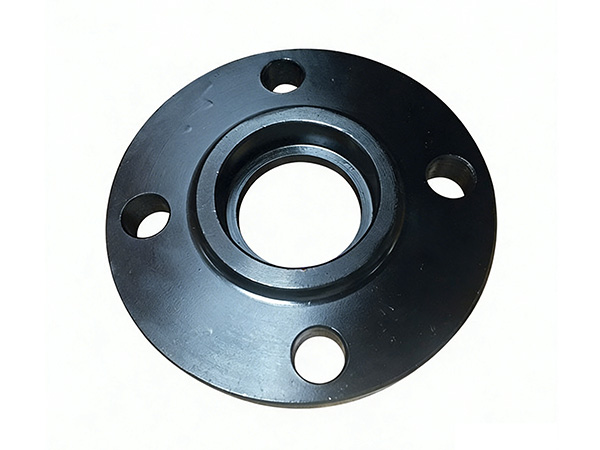
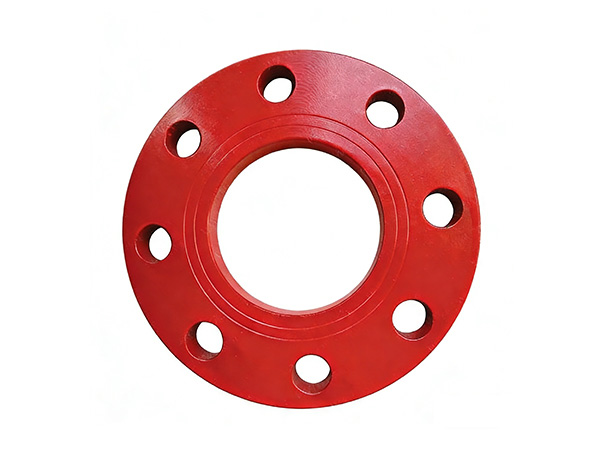
Slip-on flange (SO): the pipe passes through the bore; two fillet welds (inside and outside) fix it. No hub, low cost, easy alignment.
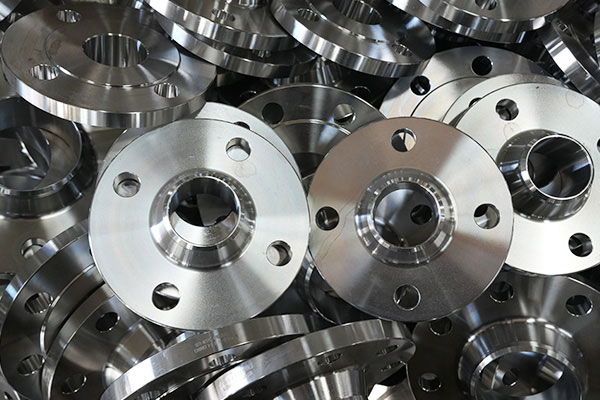
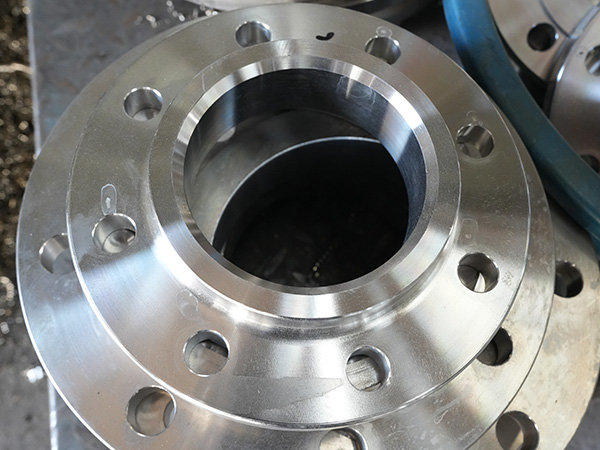
Welding neck flange (WN): a long tapered hub is butt-welded to the pipe, transferring stress smoothly into the pipe wall.
The hub is the whole point: it reduces the stress concentration at the joint and improves fatigue life.
Strength, Fatigue and Pressure
Under internal pressure and bending, a welding neck flange approximates the strength of the pipe itself. A slip-on flange has roughly two-thirds of the fatigue life of a welding neck under cyclic loading and is therefore normally limited to lower classes. As a working rule: slip-on for utility and low-pressure service, welding neck where pressure, temperature or cycling is significant.
Cost, Welding and Inspection
Slip-on: cheaper per piece, shorter fit-up time, no butt-weld radiography required — only fillet weld inspection.
Welding neck: more material and machining, requires a qualified butt weld, usually with RT or UT examination in critical service.
Lifecycle maths often favours the welding neck on hot, high-pressure lines because a single leak costs more than the price difference.
Quick Selection Table
| Service | Recommended type | Reason |
|---|---|---|
| Fire water, cooling water, compressed air | Slip-on | Low pressure, easy alignment, lowest cost |
| Low-pressure saturated steam | Slip-on or welding neck | Depends on class and cycling |
| High-pressure steam, hydrocarbon, refinery | Welding neck | Fatigue and thermal shock resistance |
| Sour gas, hydrogen, cryogenic | Welding neck | Stress control plus full NDT possible |
| Large-diameter municipal water | Slip-on / plate flat welding | Low stress, budget driven |
Frequently Asked Questions
Can a slip-on flange be used at Class 600?
It exists, but most engineers move to welding neck at Class 600 and above because of bending stress and fatigue concerns.
Do slip-on flanges need two welds?
Yes. Best practice is one fillet weld on the outside and one on the inside bore; the inner weld also reduces crevice corrosion at the socket.
Which one is easier to align?
The slip-on flange, because the pipe can be trimmed in place and the flange rotated before welding.
Conclusion
Match the flange to the duty, not the discount. Zhantong supplies both slip-on and welding neck flanges in carbon, stainless and alloy steel, machined to ASME B16.5/B16.47 and equivalent DIN, EN and JIS standards. Send medium, pressure, temperature and class and our engineers will confirm the right choice and price.
 Recommended Products
 Contact us
—— Contact:Manager
—— Tel:+86 15231788966
—— Email:info@zhantongpipe.com
—— Url:https://www.zhantongpipe.com
—— Address:Mengcun Hui Autonomous County, Cangzhou City, Hebei Province