
NewsDetails
High Pressure Boiler Tubes: Material Selection and Heat-Resistant Design
author:Zhantong time:2026-10-19 12:49:34 Click:112
Boiler tube failure is rarely sudden — it is the end of creep, scaling and thermal fatigue acting for years. Selecting high pressure boiler tubes correctly is therefore a design decision about decades, not a purchase-order line about price.
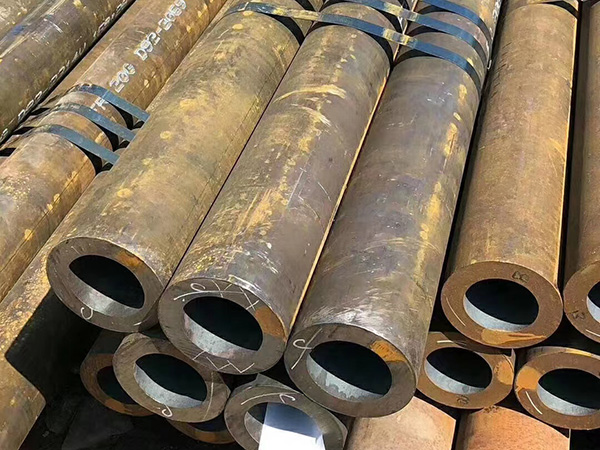
What Boiler Tube Must Survive
Internal pressure at elevated temperature, which drives creep
Steam-side oxidation and scale formation that raises metal temperature
Fireside corrosion and ash erosion in coal and biomass units
Thermal fatigue from start-up, load changes and soot blowing
Water-side corrosion and under-deposit attack in evaporator circuits
Grade Selection by Temperature
| Metal temperature band | Typical grade | Typical location |
|---|---|---|
| Up to ~350 °C | 20G / SA-210 A1 / SA-106 | Economiser, evaporator, low-temperature superheater |
| ~350–480 °C | 15CrMoG, SA-213 T12/T22 | Medium-temperature superheater, reheater |
| ~480–580 °C | 12Cr1MoVG, SA-213 T22/T23 | Final superheater, headers, main steam |
| Above ~580 °C | ASTM A335 P91 / P92, TP347H, Super304H | Ultra-supercritical final stages |
Standards That Govern Supply
GB/T 5310 — seamless steel tubes for high-pressure boilers (China)
GB/T 3087 — seamless tubes for low and medium pressure boilers
ASME SA-210 / SA-213 / SA-335 and DIN 17175 for export and EPC projects
Delivery with normalising and tempering, plus full mechanical and metallographic records
Design Rules That Prevent Failure
Keep measured metal temperature below the design assumption — scale is an insulator
Avoid abrupt wall-thickness changes and rigid restraints that concentrate thermal stress
Specify bends with controlled ovality and minimum wall thinning
Require 90% NDT plus hydrostatic testing before shipment
Plan inspection intervals for wall thickness, oxide scale and microstructure
Frequently Asked Questions
Which is better, 20G or 15CrMoG?
20G is a carbon manganese boiler steel for lower temperatures and lower cost. 15CrMoG is required once creep strength above roughly 450 °C governs the design.
Do boiler tubes need heat treatment after bending?
Small cold bends may not; hot-formed or heavily cold-worked bends usually require re-normalising and tempering to restore properties.
How long should boiler tube last?
With correct grade, water chemistry and temperature control, 20–30 years is common; most early failures trace back to overheating or poor water treatment.
Conclusion
High pressure boiler tubing is a system decision: grade, wall thickness, temperature control and water chemistry all interact. Zhantong supplies 20G, 15CrMoG, 12Cr1MoVG and high-alloy boiler tube to GB/T 5310, ASME and DIN requirements with complete traceability. Send a datasheet and we will match the grade.
 Recommended Products
 Contact us
—— Contact:Manager
—— Tel:+86 15231788966
—— Email:info@zhantongpipe.com
—— Url:https://www.zhantongpipe.com
—— Address:Mengcun Hui Autonomous County, Cangzhou City, Hebei Province