
NewsDetails
High Pressure Pipe Flanges Petrochemical Industry
author:Zhantong time:2026-06-18 18:11:36 Click:181
Petrochemical facilities operate among the most demanding environments for piping components. Processes involving hydrogen, hydrocarbons, and aggressive chemicals at elevated temperatures and pressures push materials to their limits. Flanges in these services must maintain sealability despite thermal cycling, vibration, and corrosive attack. Selecting appropriate high-pressure flanges requires understanding both the technical standards and the real-world performance factors that determine long-term reliability.
Pressure Rating Systems and Design Codes
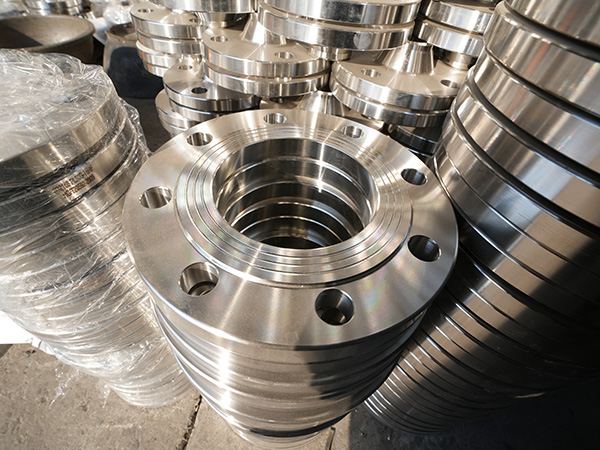
The American Petroleum Institute (API) and ASME establish the framework for flange selection in hydrocarbon services. API 605 covers large-diameter steel flanges for refinery applications, while ASME B16.5 and B16.47 govern standard and large-diameter flanges respectively. These standards define pressure-temperature ratings that account for material strength degradation at elevated temperatures—a flange rated for 1500 psi at ambient temperature might be limited to 1000 psi at 800°F.
Pressure classes for refinery flanges typically range from Class 150 to Class 2500, with Class 300, 600, and 900 being most common for process piping. Higher class flanges feature increased thickness and enhanced material properties. The rating system assumes certain minimum mechanical properties, so specifying appropriate material grades—carbon steel, alloy steel, or stainless steel—proves essential for achieving rated performance.
Material Selection for Aggressive Services
Refinery processes demand materials resistant to numerous degradation mechanisms. Hydrogen attack at high temperatures requires steels with controlled aluminum and titanium content, often specified per API 941 (Nelson curves). Sulfide stress cracking in sour service (containing H2S) necessitates hardiness limitations and specific heat treatments, governed by NACE MR0175/ISO 15156.
Alloy steel flanges—ASTM A182 grades F11, F22, F91—provide enhanced high-temperature strength and hydrogen attack resistance. Stainless steel variants (304, 316, 321, 347) handle corrosive intermediates and final products. For extreme conditions involving chlorides or organic acids, specialty alloys like Alloy 825 or Alloy 625 may be necessary despite their substantial cost.
Flange Facing and Gasket Compatibility
The flange facing configuration significantly influences joint performance. Raised face (RF) flanges dominate general refinery services, providing concentrated bolting pressure on ring gaskets. Ring-type joint (RTJ) flanges incorporate metal ring gaskets for high-pressure, high-temperature services where fire-safe design is mandatory. Flat face (FF) configurations appear in low-pressure services or connections to cast equipment.
Gasket selection requires matching chemical compatibility, temperature range, and pressure capability. Spiral wound gaskets with inner and outer rings (SWG type CGI) represent the workhorse for refinery flanges, offering resilience and blowout resistance. Camprofile gaskets and metal jacketed gaskets serve specialized applications. The gasket must be compatible with both flange facing and bolting specifications to achieve reliable, maintainable connections.
Installation and Maintenance Best Practices
Proper installation begins with flange inspection. Contact surfaces must be free of scratches, tool marks, and corrosion pits deeper than specified limits. Bolting must be cleaned, lubricated with appropriate compounds, and tightened following cross-pattern sequences with calibrated torque wrenches. Inadequate bolt tension leads to gasket relaxation and leaks, while excessive force can warp flanges or embed gaskets into facing irregularities.
Maintenance programs for flanged connections include periodic bolt tension verification, especially after thermal cycles that can relax gasket compression. Some facilities employ ultrasonic bolt stress measurement to verify tension without disassembly. Flange spray (leak detection fluid) helps identify developing leaks before they become hazardous. Documented bolt-up procedures and training programs ensure consistency across maintenance teams.
Emerging Technologies and Future Trends
Digital monitoring enters flange management through wireless pressure and temperature sensors that detect developing leaks. Some advanced systems use acoustic emission monitoring to identify gasket degradation before visible leaks occur. These technologies enhance safety and reduce unplanned downtime, though they require investment in hardware and data management infrastructure.
Additive manufacturing (3D printing) shows promise for producing complex flange geometries or hard-to-source sizes. While not yet qualified for high-pressure refinery services, printed flanges for low-pressure utility systems demonstrate the potential. As qualification frameworks develop, additive manufacturing could reduce lead times for replacement flanges and enable optimized designs.
Inviting global distributors to join our specialized refinery products distribution network. We partner with distributors who understand hydrocarbon processing requirements and maintain technical capabilities to support their customers' critical applications.
References
API 605: Large Diameter Carbon Steel Flanges
ASME B16.5-2020: Pipe Flanges and Flanged Fittings
NACE MR0175/ISO 15156: Petroleum and natural gas industries—Materials for use in H2S-containing environments
API 941: Steels for Hydrogen Service at Elevated Temperatures and Pressures
Hydrocarbon Processing, September 2020: Advances in Flange and Gasket Technologies
 Recommended Products
 Contact us
—— Contact:Manager
—— Tel:+86 15231788966
—— Email:info@zhantongpipe.com
—— Url:https://www.zhantongpipe.com
—— Address:Mengcun Hui Autonomous County, Cangzhou City, Hebei Province