
NewsDetails
Marine Engineering Pipes Corrosion Resistant Solutions
author:Zhantong time:2026-06-21 21:02:03 Click:200
Marine environments represent perhaps the most aggressively corrosive conditions encountered by industrial piping systems. Saltwater, with its high chloride content and dissolved oxygen, attacks most common engineering materials. Offshore platforms, coastal power plants, desalination facilities, and shipbuilding all demand piping solutions that survive decades of exposure without catastrophic failure. Selecting appropriate materials and protection systems for these applications requires understanding corrosion mechanisms, alloy metallurgy, and the economic trade-offs between initial cost and lifecycle performance.
Corrosion Challenges in Marine Environments
Seawater corrosion involves multiple mechanisms acting simultaneously. General corrosion uniformly attacks exposed surfaces, while pitting corrosion creates localized penetrations that can perforate pipes rapidly. Crevice corrosion occurs in shielded areas where oxygen depletion creates aggressive chemical environments. Stress corrosion cracking (SCC), particularly in austenitic stainless steels exposed to chlorides, can cause sudden, brittle failure at stresses far below yield strength.
Biofouling—the accumulation of marine organisms on submerged surfaces—exacerbates corrosion by creating differential aeration cells and shielding crevices. Warm seawater accelerates both corrosion and biofouling rates. Designs that minimize crevices, allow cleaning access, and incorporate cathodic protection help manage these challenges. However, material selection remains the primary defense against marine corrosion.
Duplex and Super Duplex Stainless Steels
Duplex stainless steels (DSS) combine austenitic and ferritic microstructures, achieving strength and corrosion resistance superior to either phase alone. Grades like 2205 (UNS S32205) offer approximately twice the yield strength of austenitic stainless steels like 316, with significantly better resistance to pitting and stress corrosion cracking. Super duplex grades (2507, Zeron 100) push performance further, with pitting resistance equivalent (PREN) values exceeding 40.
These alloys suit seawater cooling systems, fire water systems, and process piping on offshore platforms. Their higher strength allows thinner walls, reducing weight—a critical factor in offshore structures where every kilogram affects structural design and installation costs. Welding duplex alloys demands controlled heat input and filler metal selection to maintain phase balance and avoid embrittlement from intermetallic phase formation.
Super Austenitic and Nickel-Based Alloys
For the most aggressive marine environments, super austenitic stainless steels (AL-6XN, 254 SMO) and nickel-based alloys (Inconel 625, Hastelloy C-276) provide exceptional corrosion resistance. These materials resist pitting, crevice corrosion, and SCC even in warm seawater or under deposits. Their high molybdenum and nitrogen content creates passive films that self-heal after mechanical damage.
The cost of these alloys limits their use to critical applications—heat exchanger tubing, pump shafts, valve trim, and small-diameter instrumentation tubing. However, their reliability in preventing leaks of hazardous or valuable fluids often justifies the expense. Some offshore facilities standardize on super austenitic alloys for all seawater-contacted piping to eliminate corrosion-related downtime.
Protective Coatings and Cathodic Protection
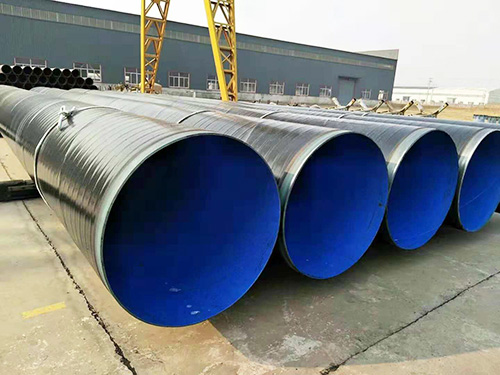
Carbon steel pipes with appropriate protection systems remain viable for many marine applications. Fusion-bonded epoxy (FBE) coatings, three-layer polyethylene (3PE), and polyurethane coatings provide barriers against corrosive environments. For submerged or buried marine pipes, cathodic protection through sacrificial anodes (magnesium, aluminum, zinc) or impressed current systems supplements coating protection.
Thermal spray aluminum (TSA) coatings offer another protection method. The aluminum layer provides both barrier protection and sacrificial cathodic protection if damaged. TSA systems require careful surface preparation and application but deliver decades of protection in splash zones and atmospheric marine environments. They see extensive use on offshore platform structures and topsides piping.
Design Considerations for Offshore Installations
Offshore piping systems must accommodate motion from waves, wind, and operational loads. Flexible connections, expansion loops, and carefully designed supports accommodate these movements without overstressing pipes or equipment. Weight optimization matters enormously—platform weight limits constrain how much piping can be installed. This drives use of high-strength materials and careful routing to minimize pipe lengths.
Maintenance access influences design profoundly. Once installed offshore, pipe repairs or replacements incur enormous costs—specialized vessels, weather windows, and skilled technicians all contribute. Designs emphasizing reliability, inspectability, and ease of maintenance pay dividends throughout project lifecycles. Some operators employ condition monitoring systems that detect wall thickness loss or coating degradation before failures occur.
Inviting global distributors to join our marine and offshore products distribution network. We seek partners with experience supplying offshore projects, shipbuilding, or coastal industrial facilities who understand the specialized requirements of marine environments.
References
NACE SP0176-2018: Corrosion Control of Steel Fixed Offshore Platforms Associated with Petroleum Production
ISO 21457:2010: Petroleum, petrochemical and natural gas industries—Selection and qualification of materials for use in equipment exposed to aqueous environments
ASTM G48-20: Standard Test Methods for Fitting and Crevice Corrosion Resistance of Stainless Steels and Related Alloys by Use of Ferric Chloride Solution
DNVGL-RP-0034: Design and manufacture of duplex stainless steel forgings and castings for subsea applications
Stainless Steel World, June 2021: Duplex Stainless Steels in Marine Applications
 Recommended Products
 Contact us
—— Contact:Manager
—— Tel:+86 15231788966
—— Email:info@zhantongpipe.com
—— Url:https://www.zhantongpipe.com
—— Address:Mengcun Hui Autonomous County, Cangzhou City, Hebei Province