
NewsDetails
Steel Pipe Coating Technologies Long Lasting Protection
author:Zhantong time:2026-06-24 22:08:54 Click:153
Corrosion costs the global economy billions annually, with pipeline failures representing some of the most expensive and environmentally damaging incidents. Effective coating systems serve as the first line of defense, isolating steel surfaces from corrosive environments. Modern coating technologies have evolved considerably, offering tailored solutions for diverse operating conditions—from buried water lines to subsea oil export pipelines. Understanding coating types, application methods, and performance characteristics enables informed selection that balances protection, cost, and service life.
Fusion-Bonded Epoxy (FBE) Coatings
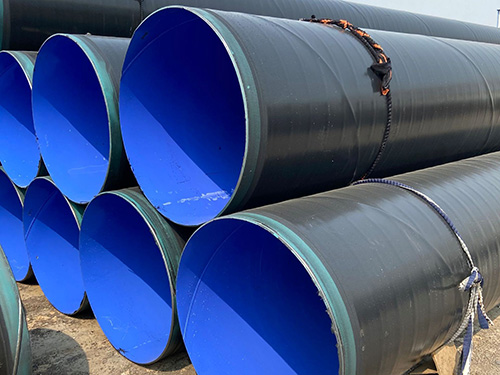
FBE coatings dominate the pipeline industry for good reasons. Applied as dry powder to heated steel surfaces (typically 230-250°C), the epoxy fuses and cures into a dense, adherent coating. FBE provides excellent adhesion, cathodic disbondment resistance, and chemical resistance. Single-layer FBE suits many water and oil pipeline applications, while dual-layer FBE adds an abrasion-resistant outer layer for directional drilling or rocky terrain installations.
The application process demands strict quality control. Surface preparation through abrasive blasting achieves the required surface profile (typically 50-100 microns). Powder application uses electrostatic spray guns that impart electrical charge to powder particles, improving transfer efficiency and coverage uniformity. Curing ovens or infrared heaters ensure complete crosslinking of the epoxy matrix. Leading coating facilities perform continuous quality monitoring, including film thickness measurement, adhesion testing, and holiday detection.
Three-Layer Polyethylene (3PE) Systems
3PE coating systems combine FBE's adhesion with polyethylene's mechanical protection. The three layers—epoxy primer, copolymer adhesive, and polyethylene topcoat—work synergistically. This system excels in buried pipeline applications where coating damage during handling and backfilling could occur. The polyethylene layer's toughness resists impact and abrasion, while its low permeability prevents moisture ingress that could undermine the epoxy layer.
Application of 3PE requires specialized equipment. After FBE application and partial curing, the copolymer adhesive extrudes onto the heated pipe. Immediately following, the polyethylene layer extrudes over the adhesive. This sequential process demands precise temperature control and synchronization. Quality assurance includes peel adhesion tests, impact resistance tests, and cathodic disbondment evaluation. Properly applied 3PE systems routinely achieve 30+ year service life in aggressive soils.
Liquid Coatings and Their Applications
Liquid-applied coatings offer versatility for complex geometries, field joints, and rehabilitation projects. Liquid epoxies, polyurethanes, and polyureas cure at ambient or slightly elevated temperatures, enabling application in environments where fusion-bonded coatings prove impractical. These coatings flow into crevices and around fittings, providing uniform protection on components that challenge extrusion or powder coating processes.
Two-component liquid coatings require accurate mixing ratios and pot-life awareness. Spray application demands proper equipment setup—ratio control, fluid tip selection, and spray pattern optimization. Brush and roller application suit small areas or touch-up work but may not achieve the film build or uniformity of spray methods. Curing conditions significantly affect final properties; low temperatures or high humidity can extend cure times or cause surface defects.
Metallic Coatings and Sacrificial Protection
Zinc coatings provide sacrificial protection to steel—even when coating damage exposes bare steel, the zinc preferentially corrodes, protecting the underlying substrate. Hot-dip galvanizing immerses fabricated pipes or fittings into molten zinc baths, producing thick, metallurgically bonded coatings. This process suits smaller diameter pipes and prefabricated assemblies. Zinc-rich paints offer similar sacrificial protection in liquid coating form, suitable for field application or touch-up of galvanized surfaces.
Aluminum and zinc-aluminum alloy coatings applied by thermal spray provide thicker metallic layers than hot-dip galvanizing, with the flexibility to coat large structures or apply on-site. These coatings perform well in atmospheric exposure and can serve as primers under topcoat systems. The porosity inherent to thermal-sprayed coatings necessitates careful sealer selection to prevent underfilm corrosion.
Inspection and Maintenance of Coated Pipelines
Even the best coating systems require inspection and occasional maintenance. Above-ground surveys using Pearson or close-interval survey (CIS) techniques identify coating defects through voltage gradient measurements. For buried pipelines, direct assessment methods evaluate coating condition indirectly through corrosion rate measurements and soil analysis. These techniques help prioritize rehabilitation efforts before significant corrosion occurs.
Coating repair procedures vary by original coating type and defect severity. Small damaged areas in FBE or liquid coatings may be spot-repaired using compatible materials and surface preparation. Extensive damage might require recoating sections using polyurethane or polyurea spray systems that bond to various substrates. Documentation of repairs, including surface preparation records and coating application parameters, supports quality assurance and regulatory compliance.
Inviting global distributors to join our coating solutions distribution network. We seek partners with experience in protective coatings, corrosion engineering, or pipeline construction who can provide technical support to their customers.
References
NACE SP0394-2016: Application, Performance, and Quality Control of Plant-Applied, Fusion-Bonded Epoxy External Pipeline Coating
ISO 21809-1:2018: Petroleum and natural gas industries—External coatings for buried or submerged pipelines
ASTM A1055/A1055M-20: Standard Specification for Fusion Bonded Epoxy Coated Steel Reinforcing Bars
SSPC-PA 2: Procedure for Determining Conformance to Dry Coating Thickness Requirements
Materials Performance, November 2020: Advances in Pipeline Coating Technologies
 Recommended Products
 Contact us
—— Contact:Manager
—— Tel:+86 15231788966
—— Email:info@zhantongpipe.com
—— Url:https://www.zhantongpipe.com
—— Address:Mengcun Hui Autonomous County, Cangzhou City, Hebei Province