
NewsDetails
Weld Neck Flanges: Design, Applications, and Selection Guide
author:Zhantong time:2026-08-17 20:13:40 Click:167
Weld neck flanges remain the preferred choice wherever piping systems face severe pressure, cyclic loading, or wide temperature swings. Their long tapered hub gradually transfers stress to the adjoining pipe, reducing stress concentration at the base of the connection. Anyone specifying flanges for demanding service should understand how the geometry works, what standards govern the product, and which factors truly drive a sound selection decision.
Why the Tapered Hub Matters
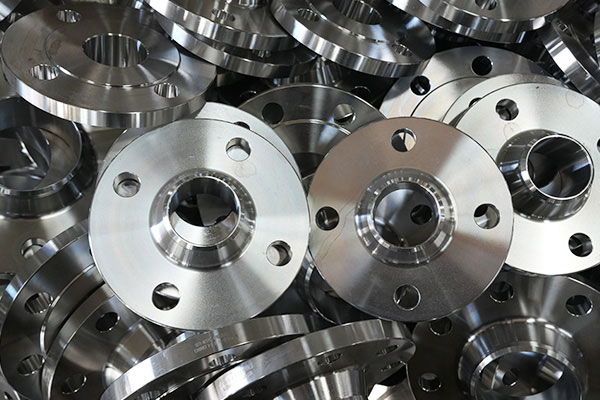
The defining feature of a weld neck flange is the long neck that tapers from the flange face down to a bore matching the connected pipe. This smooth transition does more than look tidy. It spreads bending and thermal stresses over a longer distance, so the material never sees the abrupt change in section that plagues lesser designs. In services with frequent thermal cycling, that gradual taper is often the difference between decades of trouble-free operation and repeated leak repairs.
Because the bore is machined to match the pipe inner diameter, turbulence at the joint stays low. Smooth flow reduces erosion and pressure drop, which matters in long transmission lines where every fraction of energy loss adds up across the network.
Common Standards and Pressure Classes
Most weld neck flanges follow ASME B16.5 for sizes up to 24 inches and ASME B16.47 for larger diameters. Pressure classes range from 150 through 2500, each defining allowable working pressures that decrease as temperature rises. Material specifications such as ASTM A105 for carbon steel, A182 for alloy and stainless grades, and A350 for low-temperature service pair with these dimensional standards to define a complete flange.
Selecting the right class means reading the pressure-temperature rating tables rather than assuming a class number guarantees a fixed pressure. A Class 300 carbon steel flange handles far less at 400°C than it does at ambient temperature, so the design conditions must be checked against the actual rating curve.
Face Types and Sealing Performance
Weld neck flanges come with several face types. The raised face suits general service and accommodates a wide range of gaskets. The ring-type joint face, machined with a precise groove, seats a metal ring gasket for the highest pressures and temperatures encountered in refineries and gas processing. Flat face versions serve connections to cast equipment where a raised face would risk cracking the mating component.
Surface finish also affects sealing. A serrated or concentric finish grips soft gaskets and resists blowout, while a smoother finish suits certain metallic gaskets. Matching the finish to the gasket is a detail that separates a reliable joint from a chronic weep.
Welding and Installation Practices
The butt weld between flange neck and pipe should join two members of matching wall thickness. When schedules differ, proper bore matching and internal taper prevent stress risers. Preheat, controlled interpass temperature, and post-weld heat treatment become important for thicker walls and alloy grades, since improper thermal control invites cracking or residual stress.
Qualified welders working to a documented procedure produce consistent joints. A responsible manufacturer supplies flanges with certified material test reports so the buyer can verify chemistry and mechanical properties before the flange ever reaches the welding station.
Selecting the Right Flange for the Job
Selection starts with the design pressure and temperature, then moves to fluid characteristics, pipe material, and code requirements. Corrosive media may justify stainless or duplex grades even where carbon steel would satisfy pressure alone. Low-temperature service demands impact-tested materials that resist brittle fracture. Large-diameter transmission projects weigh the cost of forging against the reliability the weld neck design delivers.
A dependable supply partner helps here, offering the range of sizes, classes, and materials a project needs while maintaining traceable quality documentation. Buyers increasingly favor a manufacturer that can support both standard catalog items and special forgings from a single, well-organized factory.
Quality Assurance and Traceability
Behind every dependable flange stands a disciplined quality system. From incoming raw material through forging, machining, heat treatment, and final inspection, each stage should be documented so the finished flange can be traced back to its steel heat. Dimensional checks confirm the bore, hub, and bolt circle fall within tolerance, while hardness and impact testing verify the mechanical properties the specification demands.
Buyers protect their projects by requesting these records before installation. A flange that arrives with a complete material test report, marked clearly with its size, class, material grade, and heat number, removes doubt at the job site. This transparency is why experienced contractors prefer a supplier whose factory maintains rigorous documentation rather than one offering unmarked stock of uncertain origin. In critical service, that paperwork is as important as the metal itself.
We work with partners across the pipeline, petrochemical, and power sectors and are inviting global distributors to join our growing supply network, offering competitive access to a full flange range backed by consistent quality control.
References
ASME B16.5: Pipe Flanges and Flanged Fittings, NPS 1/2 Through NPS 24
ASME B16.47: Large Diameter Steel Flanges, NPS 26 Through NPS 60
ASTM A105/A105M: Standard Specification for Carbon Steel Forgings for Piping Applications
ASTM A182/A182M: Standard Specification for Forged or Rolled Alloy and Stainless Steel Pipe Flanges
MSS SP-44: Steel Pipeline Flanges
 Recommended Products
 Contact us
—— Contact:Manager
—— Tel:+86 15231788966
—— Email:info@zhantongpipe.com
—— Url:https://www.zhantongpipe.com
—— Address:Mengcun Hui Autonomous County, Cangzhou City, Hebei Province