
NewsDetails
Heat Exchanger Pipes and Tubes: Industrial Applications and Performance Optimization
author:Zhantong time:2026-07-03 16:44:59 Click:97
Heat exchangers transfer thermal energy between fluids without direct contact, enabling temperature control across countless industrial processes. The tubes within these exchangers define performance boundaries—determining heat transfer rates, pressure drops, and operational longevity. Selecting appropriate tube materials, configurations, and layouts directly impacts system efficiency, maintenance requirements, and total installed cost.
Tube Materials for Diverse Service Conditions
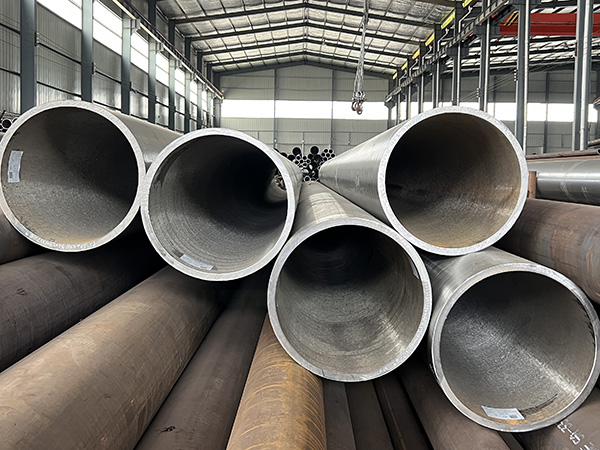
Carbon steel tubes serve economizers, air preheaters, and low-pressure feedwater heaters where corrosion remains manageable. These tubes offer excellent thermal conductivity and economic pricing, though susceptibility to corrosion limits service life in aggressive environments. Boiler tubes operating under sustained high temperatures require specification of appropriate ASTM grades with certified elevated-temperature properties.
Stainless steel tubes—including austenitic grades 304, 316, and specialty alloys—inhibit corrosion in chemical processing, refining, and pharmaceutical applications. Duplex stainless tubes combine strength with corrosion resistance, serving seawater cooling systems and chloride-bearing streams. For extreme conditions, Inconel, titanium, and zirconium tubes provide corrosion resistance that justifies their substantial cost premiums.
Shell-and-Tube Configuration Options
Shell-and-tube exchangers represent the most common industrial configuration, suspending tube bundles within cylindrical shells. The simplest designs employ straight tubes secured at both tube sheets, enabling straightforward cleaning but limiting thermal expansion accommodation. U-tube designs allow differential expansion between shell and tube sides while reducing required tube sheets from two to one.
Fixed tube sheet exchangers maintain alignment between tube and shell coordinates, preventing vibration-induced tube failures but restricting thermal expansion accommodation. Floating head designs incorporate packed or sealed expansion joints that permit tube bundle removal for cleaning and inspection. The selection depends on temperature differentials, maintenance requirements, and fouling tendencies.
Finned Tubes for Enhanced Heat Transfer
Finned tubes increase surface area on the shell side, where lower heat transfer coefficients otherwise limit overall performance. High-fin tubes (typically 0.75 to 1.25 inches fin height with 0.075 inches fin thickness) attach fins through tension winding or焊接, providing 3-5 times bare tube surface area. These configurations excel in gas-side applications where increasing surface area proves more economical than adding more tubes.
Studded tubes employ discrete protrusions rather than continuous fins, offering enhanced turbulence and surface area for particulates-laden streams. The irregular surface discourages deposit accumulation that would blanket continuous fins. Serrated fins improve turbulence generation compared to plain fins, though at some penalty in fouling resistance.
Sizing Considerations and Performance Calculation
Heat exchanger design begins with specifying required heat duty, fluid flow rates, and inlet/outlet temperatures. These parameters determine the fundamental heat transfer equation Q = U × A × LMTD, where U represents overall heat transfer coefficient and A indicates surface area. Iterative calculation balances these variables against available space, allowable pressure drop, and economic optimization.
Tube side pressure drop calculations account for entrance and exit losses, friction along tube length, and any flow obstructions from baffles or tube support plates. Shell side pressure drops depend on cross-flow fractions, window areas, and bypass stream magnitudes. These calculations—typically performed using industry-standard methods like Bell-Delaware or stream analysis—verify that designs remain within acceptable operating ranges.
Cleaning Methods and Maintenance Strategies
Fouling accumulates on heat transfer surfaces over time, reducing performance and eventually requiring intervention. Tube side fouling in water services often responds to chemical cleaning, introducing acids or chelating agents that dissolve scales and deposits. The cleaning frequency and chemical selection depend on water quality, temperature, and tube metallurgy.
Mechanical cleaning methods address stubborn deposits that resist chemical treatment. Hydrojetting pushes high-pressure water streams through tubes, dislodging scale and biological growth. Mechanical scrapers—either rotating or propelled—remove tenacious deposits from internal surfaces. These methods require exchanger isolation, bundle removal, and access to tube interiors, making regular maintenance planning essential.
Failure Mechanisms and Life Extension
Tube failures typically result from corrosion, erosion, vibration, or overheating. Internal corrosion attacks tube walls from process fluids, manifesting as uniform thinning, pitting, or stress corrosion cracking. External corrosion attacks from shell side fluids or under-deposit concentration cells. Material upgrades, coating application, or operating condition modification address specific failure modes.
Erosion from high-velocity streams or suspended solids gradually thins tube walls, eventually causing breach. Flow restriction at tube inlets and reduction of stream velocities mitigate erosion rates. Tube vibration—excited by flow-induced vortex shedding—causes fatigue failures at tube supports or tube sheet connections. Baffle spacing, tube patterns, and flow velocities require vibration analysis for high-shell-side-velocity designs.
Inviting global distributors to join our heat exchanger components supply network. We welcome distributors serving chemical, refining, power generation, and HVAC industries who can provide technical support and responsive service to their customers.
References
ASME Section VIII: Pressure Vessels, Division 1
TEMA Standards: Standards of the Tubular Exchanger Manufacturers Association, 10th Edition
ASTM A178/A178M-19: Standard Specification for Electric-Resistance-Welded Carbon Steel and Carbon Manganese Steel Boiler Tubes
API 530: Measurement of Shrouds Used in Fired Heaters for the Petroleum Industry
Chemical Engineering, March 2021: Heat Exchanger Performance Optimization
 Recommended Products
 Contact us
—— Contact:Manager
—— Tel:+86 15231788966
—— Email:info@zhantongpipe.com
—— Url:https://www.zhantongpipe.com
—— Address:Mengcun Hui Autonomous County, Cangzhou City, Hebei Province