
NewsDetails
Advances in Seamless Tube Heat Treatment for Structural Engineering
author:Zhantong time:2025-11-10 15:59:39 Click:109
Seamless Steel Tubes and the Future of Structural Reliability
In the world of structural engineering, seamless steel tubes have become the backbone of high-strength frameworks, from bridge girders and industrial towers to offshore installations. Their unmatched strength, pressure resistance, and smooth uniformity make them indispensable for demanding environments.
But the real performance of a seamless tube depends on one key factor — heat treatment. Through controlled heating and cooling, the tube’s internal structure is optimized for mechanical balance and long-term endurance.
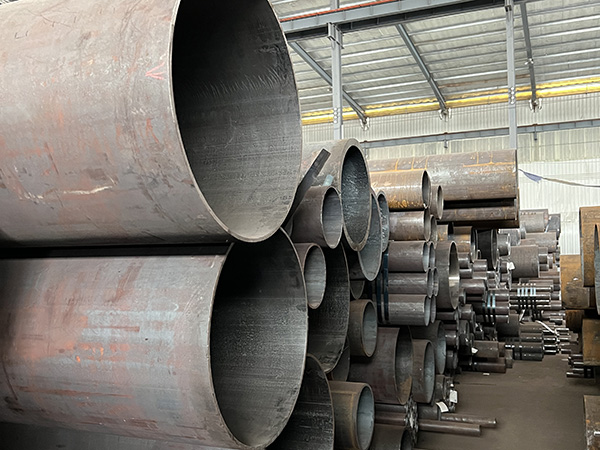
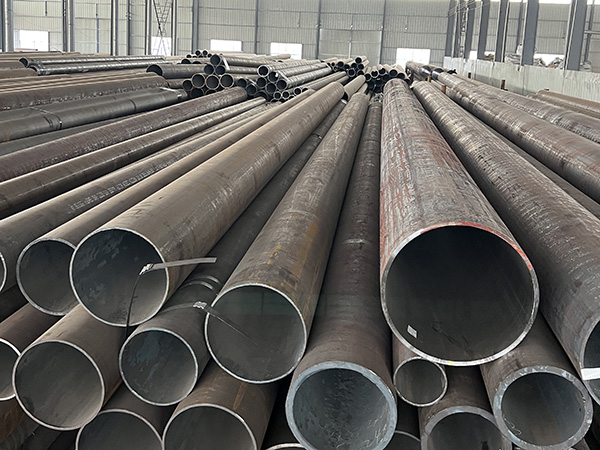
As we move toward 2026, rapid advancements in thermal processing, smart monitoring, and material control are transforming how manufacturers approach tube production. Many construction and energy firms now turn to a China manufacturer or China supplier capable of bulk seamless tube supply, ensuring consistency and traceability for large-scale engineering projects.
1. Why Heat Treatment Matters in Seamless Tube Manufacturing
Heat treatment determines how a seamless tube behaves under stress. Without precise temperature control and phase management, even the highest-grade steel can fail under load or corrosion.
Through annealing, normalizing, quenching, and tempering, metallurgists control the transformation of microstructures — adjusting hardness, ductility, and resistance to fatigue. This process fine-tunes the steel’s mechanical equilibrium, making it suitable for long-term structural service.
In modern facilities, heat treatment has evolved into a digitally controlled, data-driven operation rather than a purely manual craft.
2. Controlled Annealing and Normalizing for Consistency
Among the most widely used treatments for seamless steel tubes are annealing and normalizing. These processes remove internal stress, refine grain structures, and stabilize material dimensions after hot forming.
Today’s annealing lines use continuous roller-hearth furnaces with multi-zone heating, ensuring each tube experiences uniform exposure. Automated sensors maintain precise temperature profiles, preventing surface scaling and reducing oxidation.
Normalizing, by contrast, is used to restore microstructural balance after deformation. When executed correctly, it improves tensile strength and reduces brittleness — essential for structural stability under dynamic loads.
Recent upgrades in energy-efficient gas systems and induction-assisted heating have made these methods faster, cleaner, and more environmentally responsible.
3. Quenching and Tempering — Building Strength for Harsh Environments
For applications exposed to high stress, such as offshore platforms or long-span bridges, quenching and tempering (Q&T) is indispensable. The steel is first heated to the austenitic phase and then rapidly cooled — often by water or polymer solutions — to increase hardness. A controlled tempering stage follows, which restores ductility and toughness.
The latest Q&T systems integrate infrared pyrometry, smart quenching control, and adaptive cooling algorithms to guarantee microstructural consistency across every batch.
This digital precision enables China seamless tube manufacturers to produce components that meet or exceed ASTM and EN standards — matching global quality benchmarks while maintaining cost efficiency for bulk supply.
4. Induction Heat Treatment — Fast, Targeted, and Efficient
Induction heating is now reshaping how seamless steel tubes are treated. Unlike traditional furnaces that rely on conduction, induction creates heat directly inside the metal using electromagnetic fields.
This results in:
·Faster heating and cooling cycles
·Minimal surface oxidation
·Lower energy consumption
·Accurate zone-specific treatment
For structural projects requiring specific strength in localized areas — such as connection joints or stress-bearing ends — induction offers unmatched flexibility. Furthermore, the technology supports green manufacturing goals by significantly cutting CO₂ emissions and energy waste, helping China manufacturers align with global sustainability standards.
5. Microstructural Simulation and Predictive Heat Treatment
One of the biggest leaps in tube processing is the integration of computational modeling. Using finite element analysis (FEA) and digital twin simulations, engineers can now predict how steel microstructures evolve during heat cycles.
This predictive approach allows for better control over:
·Austenite formation and transformation
·Martensitic hardening
·Residual stress distribution
Manufacturers can therefore tailor the process to achieve exact mechanical outcomes, minimizing rework and ensuring consistency across seamless steel tubes produced in different lots.
Such data-driven production systems help large China suppliers deliver stable quality in bulk supply, meeting global clients’ performance and certification needs.
6. Quality Control and Non-Destructive Validation
Every heat-treated tube must pass rigorous non-destructive testing (NDT) before shipment. Ultrasonic inspection, eddy-current scanning, and dimensional laser measurements are now standard.
Modern quality management systems record data from each test, allowing full traceability for every tube. This transparent documentation assures structural engineers and project owners that every component meets the required mechanical properties, tolerance, and safety levels.
7. Sustainable Manufacturing and Supply Chain Integration
Environmental responsibility is increasingly shaping how seamless steel tubes are made. Manufacturers are shifting toward low-carbon furnaces, waste heat recovery systems, and closed-loop cooling circuits to reduce emissions and energy waste.
In parallel, global contractors are consolidating their sourcing by choosing China manufacturers with bulk supply capability — ensuring lower logistical costs, stable availability, and compliance with international green standards. This alignment between manufacturing efficiency and sustainability gives the structural industry a long-term competitive edge.
Conclusion — Smart Heat Treatment, Stronger Structures
The next generation of seamless steel tubes is defined by smarter heat treatment, tighter process control, and sustainable energy practices. From advanced annealing to digital quenching, each innovation contributes to stronger, safer, and more resilient infrastructure worldwide.
Collaborating with a trusted China manufacturer or China supplier offering bulk seamless tube supply ensures reliable quality, cost efficiency, and compliance with the world’s most demanding engineering standards — making it the cornerstone of modern structural excellence.
References
GB/T 7714:Li Z, Zhang R, Chen D, et al. Quenching stress of hot-rolled seamless steel tubes under different cooling intensities based on simulation[J]. Metals, 2022, 12(8): 1363.
MLA:Li, Zhenlei, et al. "Quenching stress of hot-rolled seamless steel tubes under different cooling intensities based on simulation." Metals 12.8 (2022): 1363.
APA:Li, Z., Zhang, R., Chen, D., Xie, Q., Kang, J., Yuan, G., & Wang, G. (2022). Quenching stress of hot-rolled seamless steel tubes under different cooling intensities based on simulation. Metals, 12(8), 1363.
 Recommended Products
 Contact us
—— Contact:Manager
—— Tel:+86 15231788966
—— Email:info@zhantongpipe.com
—— Url:https://www.zhantongpipe.com
—— Address:Mengcun Hui Autonomous County, Cangzhou City, Hebei Province