
NewsDetails
Alloy Steel Pipes for High-Temperature Service: A Practical Guide
author:Zhantong time:2026-07-31 15:59:48 Click:189
When operating temperatures climb beyond the comfort zone of carbon steel, chrome-molybdenum alloy pipes step in. These materials hold their strength at heat, resist the slow deformation known as creep, and shrug off the oxidation that would degrade lesser steels. Power plants, refineries, and petrochemical units rely on them for the hottest circuits, and understanding their behavior is essential for anyone specifying piping in high-temperature service.
Why Carbon Steel Falls Short at High Heat
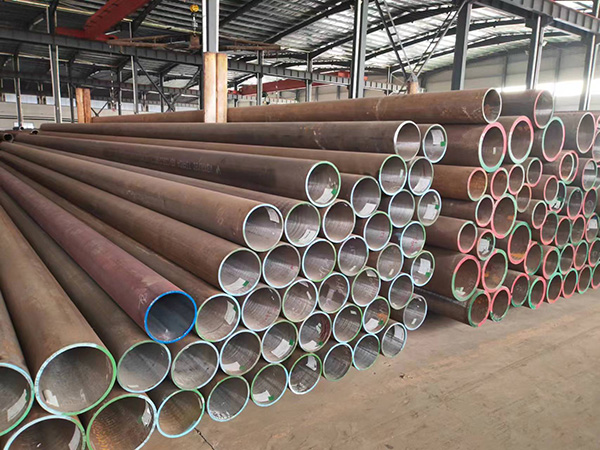
Carbon steel loses strength steadily as temperature rises, and above roughly 425°C it becomes vulnerable to creep, a gradual stretching under sustained load that eventually leads to failure. It also oxidizes more rapidly at elevated temperatures. Alloy steels overcome these limits by adding chromium for oxidation resistance and molybdenum for high-temperature strength and creep resistance.
The result is a family of pipes that keeps its mechanical integrity where carbon steel would slowly deform, making alloy steel the natural choice for steam lines, superheater connections, and hot process piping.
Common Chrome-Moly Grades
Several grades serve different temperature bands. Grade P11, with about 1.25 percent chromium and half a percent molybdenum, suits moderately elevated temperatures. Grade P22, carrying roughly 2.25 percent chromium and one percent molybdenum, handles higher heat and appears widely in power and refining service. Grade P91, a modified 9 percent chromium steel with additions of vanadium and niobium, offers superior creep strength for the most demanding high-temperature applications, allowing thinner walls for the same duty.
Selecting the right grade balances the operating temperature, pressure, and design life against material and fabrication cost. Higher grades cost more and demand tighter welding control, so they are chosen where their performance is genuinely required.
Applications Across Industries
Alloy steel pipes carry high-pressure steam in power boilers, connect superheaters and reheaters, and transport hot hydrocarbons through refinery heaters and reactors. In petrochemical plants they serve cracking furnaces and other high-temperature process units. Wherever heat and pressure combine to defeat carbon steel, these pipes provide the strength and stability the service demands.
Because failures in these circuits can be dangerous and costly, operators insist on certified material with full traceability, sourced from a manufacturer that controls quality from melting through final inspection.
Welding and Heat Treatment
Chrome-moly steels require careful welding. Preheat, controlled interpass temperature, and post-weld heat treatment prevent cracking and restore proper microstructure in the weld zone. Higher grades such as P91 are especially sensitive, demanding precise thermal control and qualified procedures to achieve their rated creep strength.
Skipping or mishandling these steps can leave hard, brittle zones that fail in service, so fabrication of alloy piping belongs to experienced welders working to documented procedures. Proper material certificates from the supply source confirm the pipe entered the shop with the correct chemistry.
Material Selection and Supply
Specifying alloy pipe starts with the design temperature and pressure, then considers the fluid, the required life, and the applicable code. Seamless pipe is common in high-pressure high-temperature service because it lacks a weld seam that could become a weak point. Standards such as ASTM A335 govern seamless ferritic alloy pipe for these applications.
A dependable manufacturer supplies alloy pipe with complete documentation, including chemistry, mechanical properties, and heat treatment records. Buying from a well-organized factory that maintains consistent quality protects the integrity of circuits where the margin for error is small.
Inspection and Life Management
High-temperature alloy piping deserves ongoing attention through its service life. Because creep damage accumulates slowly and invisibly, operators of critical circuits perform periodic inspection to detect early signs of degradation. Replication metallography, hardness testing, and dimensional checks for swelling reveal how the material is aging under sustained heat and pressure. Grade P91 in particular requires careful monitoring, since improper heat treatment or overheating can quietly reduce its creep strength.
Good records tie each length of pipe to its material heat, heat treatment, and welding history, so inspectors know exactly what they are examining years after installation. This traceability starts at the factory, where certified documentation follows the pipe from the mill. Choosing a manufacturer that supplies complete records, and specifying seamless pipe where the highest reliability is needed, lays the groundwork for a long, safe service life in the hottest circuits a plant operates.
Balancing Cost and Performance
Every alloy selection weighs performance against cost. A higher grade may allow thinner walls and lower total weight, offsetting part of its price premium, while a lower grade may suffice where temperatures are only moderately elevated. Matching the grade precisely to the duty avoids both under-specification, which risks failure, and over-specification, which wastes money on capability the service never uses.
We supply a full range of alloy steel pipe grades for high-temperature service and are inviting global distributors to join our network to bring reliable, traceable material to more customers around the world.
References
ASTM A335/A335M: Standard Specification for Seamless Ferritic Alloy-Steel Pipe for High-Temperature Service
ASME B31.1: Power Piping
ASME Boiler and Pressure Vessel Code, Section II, Part A
API 530: Calculation of Heater-Tube Thickness in Petroleum Refineries
EPRI: Guidelines for the Fabrication and Service of Grade 91 Steel
 Recommended Products
 Contact us
—— Contact:Manager
—— Tel:+86 15231788966
—— Email:info@zhantongpipe.com
—— Url:https://www.zhantongpipe.com
—— Address:Mengcun Hui Autonomous County, Cangzhou City, Hebei Province