

NewsDetails
Blind Flange: Secure Closure and Easy Access for Pipe Systems
author:Zhantong time:2026-09-25 12:15:47 Click:197
Sometimes a pipeline end must be closed now but opened later. The blind flange—a solid disc with bolt holes—does exactly that: a permanent, pressure-tight seal that unbolts for access, inspection or tie-in.
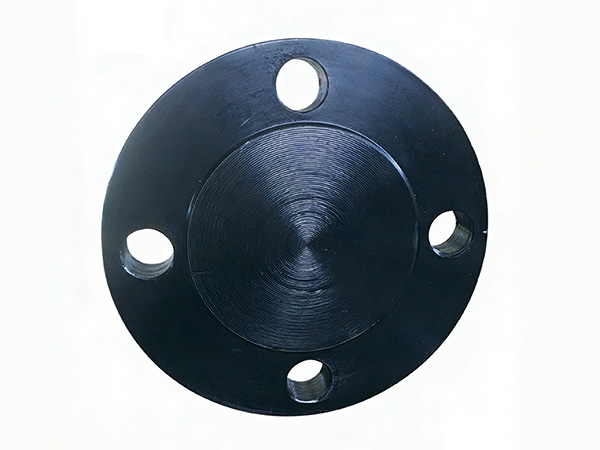
Zhantong manufactures blind flanges in all standards and materials. This article covers when a blind is the right closure.
Blind Flange Design
A blind flange is a bolted solid disc with no bore, matching the flange face of the mating pipe flange. Its thickness is greater than a matching ring flange to resist the full internal pressure across the unrelieved face.
Because it bolts on, it can be removed without cutting the pipe.
Standards and Ratings
Blind flanges follow ASME B16.5 / B16.47, DIN, JIS, EN and GB, rated to the same Class/PN as the mating flange (150–2500). Zhantong supplies raised or flat faces in carbon, stainless, alloy and duplex.
Thickness grows quickly with size and rating, so handling and support matter for large blinds.
Materials and Faces
Material matches the line to avoid galvanic issues; gasket choice depends on media and temperature. RF blinds pair with ring gaskets, FF with full-face gaskets for cast-iron or low-pressure joints.
Identification tags help crews know which blinds are temporary during commissioning.
Blind vs Cap vs Plug
A blind is bolted and reversible—ideal for access and future tie-ins. A cap is welded and permanent. A plug screws into a threaded outlet. Choose blind when the end will be reopened for maintenance or expansion.
For high-pressure isolation during maintenance, blinds are the standard safe closure.
Applications
Blinds seal dead-end headers, isolate equipment for maintenance, close future tie-in stubs and provide test isolation. They are also used as spectacle-blind halves for positive isolation.
In pig-launch systems, blinds cap the launcher during operation.
Selection and Installation
Specify standard, size, class, face, material and gasket. Use calibrated bolt torque in a star pattern and confirm the gasket is centered. For temporary blinds in testing, ensure rating exceeds test pressure.
Support large blinds to avoid flange bending and bolt overload.
Frequently Asked Questions
When use a blind instead of a cap?
When the end must be reopened for access, inspection or future tie-in.
What pressure can a blind take?
Same Class/PN as the mating flange; thickness is sized for the unrelieved face.
Which standard covers blinds?
ASME B16.5 / B16.47, with DIN, JIS, EN and GB equivalents.
Are blinds used for isolation?
Yes, including spectacle blinds for positive, verifiable isolation during maintenance.
Conclusion
Blind flanges combine a secure pressure-tight closure with the flexibility to reopen a line. Correctly rated and bolted, they are the safe, reversible choice for isolation and future access.
To discuss specifications, request a quote, or download full datasheets, visit www.zhantongpipe.com or contact our engineering team directly. Hebei Zhantong Pipeline Equipment Manufacturing Co., Ltd supports OEM drawings, third-party inspection, and worldwide shipping for every order.
 Recommended Products
 Contact us
—— Contact:Manager
—— Tel:+86 15231788966
—— Email:info@zhantongpipe.com
—— Url:https://www.zhantongpipe.com
—— Address:Mengcun Hui Autonomous County, Cangzhou City, Hebei Province