

NewsDetails
Blind Flanges Applications Pressure Sealing Guide
author:Zhantong time:2026-08-01 16:13:28 Click:195
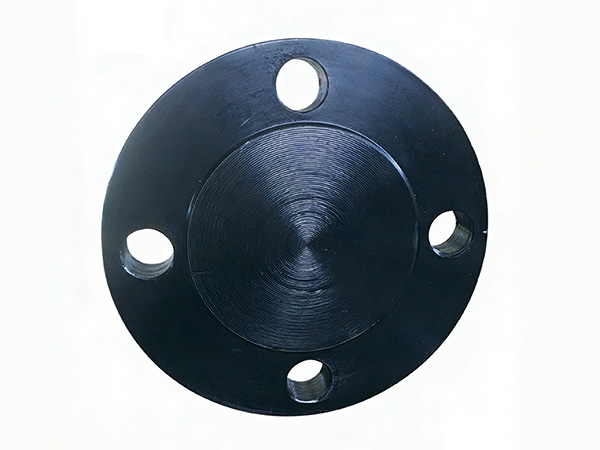
A blind flange is a solid disc used to close the end of a piping run, a nozzle, or a vessel opening. It looks simple, yet it does critical work: sealing a system against full internal pressure while allowing future access when bolts are removed. Understanding how blind flanges behave under load and how to install them correctly protects both the process and the people around it.

The Purpose of a Solid Closure
Blind flanges terminate lines that may need to be extended or serviced later. Unlike a welded cap, a bolted blind flange can be removed to inspect, clean, or connect additional piping. This reusability makes blind flanges the natural choice at points where the system layout is expected to change or where inspection ports are required.
They also serve as convenient test points and isolation boundaries. During commissioning, a blind flange can seal a branch so a section can be pressure tested independently, then be replaced by piping once the test is complete.
Pressure Behavior of a Flat Disc
Although a blind flange carries no bore, it experiences some of the highest bending stresses of any flange type. Internal pressure pushes against the full face of the disc, and the unsupported center must resist that load. For this reason, blind flanges are often the thickest members in a flange family at a given size and class, and large high-pressure blinds can be surprisingly heavy.
Design calculations follow the same pressure-temperature rating framework as other flanges, but the disc thickness reflects the bending demand. Engineers confirm that the selected class and material comfortably cover the design pressure at operating temperature before the blind is installed.
Bolting and Gasket Practice
A sound blind flange joint depends on correct bolting. Bolts are tightened in a crossing pattern and in stages so the gasket compresses evenly, preventing a cocked flange that leaks on one side. Proper bolt lubrication delivers accurate preload for a given torque, while calibrated tools help achieve consistent results across every stud.
Gasket selection matches the face type. Raised face blinds accept spiral wound or sheet gaskets, while ring-type joint blinds seat metal rings in machined grooves for severe service. Matching gasket rating to the flange class keeps the sealing element from becoming the weak link.
Materials for Different Services
Carbon steel blind flanges to ASTM A105 handle general service, while alloy and stainless grades under ASTM A182 suit corrosive or high-temperature media. Low-temperature applications call for impact-tested materials such as ASTM A350 to guard against brittle fracture. Choosing a material that matches both the process fluid and the connected piping avoids galvanic and corrosion issues at the joint.
A quality-focused manufacturer supplies blind flanges with certified test reports, giving buyers confidence that the disc will perform when it stands between full pressure and the open air.
Practical Installation Tips
Before bolting a blind flange, inspectors check the gasket seating surface for scratches or corrosion that could create a leak path. The gasket is centered carefully, and studs are installed hand-tight before torqueing begins. On large blinds, lifting lugs or tapped holes help crews handle the heavy disc safely.
Where a line is blinded for maintenance isolation, tagging and documentation confirm that the closure is intentional and rated for the trapped pressure. Good practice treats a blind flange as a pressure boundary deserving the same care as any other component in the system.
A Small Part with a Big Role
Blind flanges rarely draw attention until they are needed, yet they safeguard countless systems every day. Sourcing them from a supplier with a consistent factory process and full traceability ensures that this quiet component never becomes a surprise failure point.
Handling and Storage Considerations
Large blind flanges rank among the heaviest single components in a piping system, and their weight demands respect during handling and storage. Dropping a blind can nick the gasket seating surface, and even a small scratch across the sealing face can turn into a persistent leak once the joint is pressurized. Crews use proper lifting points, padded contact surfaces, and correct rigging to move large blinds without damaging the critical face.
During storage, blind flanges should rest with the sealing face protected from impact, moisture, and grit. Many suppliers ship blinds with protective covers over the face for exactly this reason. Inspecting the face immediately before installation, and again if the flange has been stored for a long period, ensures no corrosion or mechanical damage has crept in. A blind flange sourced from a careful manufacturer arrives with a clean, well-machined face and traceable documentation, giving the installer a sound starting point for a reliable pressure boundary.
We support projects worldwide with a full range of flange products and are inviting global distributors to join our network, extending reliable supply of blind flanges and companion fittings to more customers.
References
ASME B16.5: Pipe Flanges and Flanged Fittings, NPS 1/2 Through NPS 24
ASME B16.47: Large Diameter Steel Flanges
ASME Boiler and Pressure Vessel Code, Section VIII, Division 1
ASTM A350/A350M: Standard Specification for Carbon and Low-Alloy Steel Forgings for Low-Temperature Service
ASME PCC-1: Guidelines for Pressure Boundary Bolted Flange Joint Assembly
 Recommended Products
 Contact us
—— Contact:Manager
—— Tel:+86 15231788966
—— Email:info@zhantongpipe.com
—— Url:https://www.zhantongpipe.com
—— Address:Mengcun Hui Autonomous County, Cangzhou City, Hebei Province