
NewsDetails
Carbon Steel Seamless Pipe vs Welded Pipe: Key Differences Explained
author:Zhantong time:2026-04-27 18:23:18 Click:83
Carbon steel pipes are extensively utilized in various industries, including oil and gas, construction, power generation, and manufacturing. Among the numerous types of carbon steel pipes, seamless pipes and welded pipes are the two most prevalent variants. While they may bear a superficial resemblance, their production techniques, performance characteristics, and application scenarios differ significantly. Grasping these differences is crucial when choosing the appropriate pipe for your project—especially in cases where pressure resistance, structural strength, and durability are critical factors.
1. What Is a Carbon Steel Seamless Pipe?
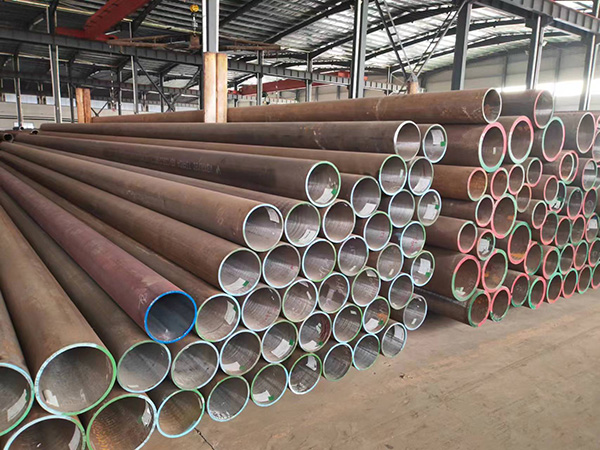
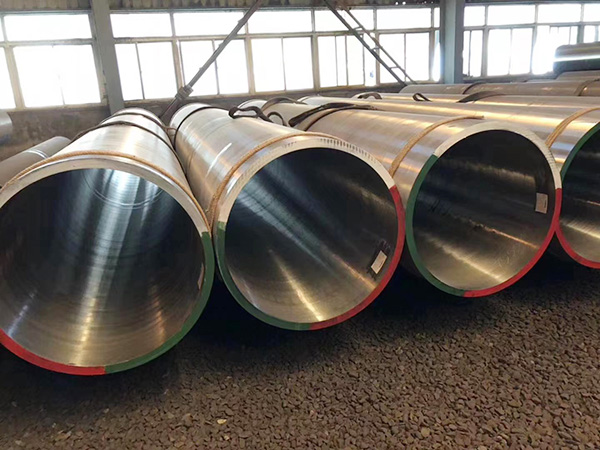
A carbon steel seamless pipe is produced from a solid round steel billet. The billet is first heated to a high temperature and then pierced to form a hollow tube, which is manufactured without any welding seams.
Key Features:
No welding joints or seams anywhere on the pipe
Uniform internal and external structure throughout the entire pipe
Superior strength when subjected to high pressure
Enhanced corrosion resistance in certain environments
Due to the absence of welds, seamless pipes are generally regarded as more reliable for applications involving high pressure and high temperature.
2. What Is a Carbon Steel Welded Pipe?
A carbon steel welded pipe is fabricated by rolling a flat steel plate or steel strip into a cylindrical shape, followed by welding the seam either longitudinally or spirally to form a complete tube.
Key Features:
Features a visible or internal weld seam along its length
More cost-effective to produce compared to seamless pipes
Easily available in larger diameters
Suitable for low to medium pressure applications
Thanks to advancements in modern welding technology, the quality of welded pipes has improved substantially, making them suitable for a wide range of industrial applications.
3. Manufacturing Process Differences
Seamless Pipe Manufacturing Process:
Selection of high-quality solid steel billets
Heating the billet to an extremely high temperature
Piercing the heated billet to form a hollow tube
Rolling and elongating the tube to achieve the desired size
Heat treatment to enhance performance and finishing processes
Welded Pipe Manufacturing Process:
Preparation of steel coils or flat steel plates
Forming the steel into a cylindrical tube shape
Welding the seam using processes such as ERW (Electric Resistance Welding) or SAW (Submerged Arc Welding)
Sizing and straightening the pipe to meet specifications
Testing for quality and final finishing
The lack of welding in seamless pipes eliminates potential weak points that may exist at weld seams in welded pipes.
4. Strength and Performance Comparison
Seamless Pipe:
Exceptional pressure resistance, suitable for high-pressure environments
Superior mechanical strength and structural integrity
More uniform stress distribution across the entire pipe
Ideal for critical applications where reliability is paramount
Welded Pipe:
Slightly lower strength at the weld seam compared to the rest of the pipe
Adequate strength for most structural and general industrial uses
Can be reinforced through specialized welding processes if needed
Suitable for large-scale installations where cost and availability are key
In extreme operating environments—such as high pressure, high temperature, or corrosive conditions—seamless pipes are often the preferred choice due to their superior structural integrity.
5. Cost Differences
One of the most significant distinctions between seamless and welded pipes lies in their cost:
Seamless pipes → More expensive, primarily due to their complex manufacturing process and higher raw material requirements
Welded pipes → More economical, as they are easier to produce in bulk and require less raw material
If budget is a primary concern and the application does not involve extreme conditions, welded pipes are often the most practical choice.
6. Size and Availability
Seamless pipes: Limited size range, particularly when it comes to very large diameters
Welded pipes: Available in a wide variety of diameters and lengths, offering greater flexibility
For large-scale infrastructure projects that require pipes with large diameters, welded pipes are commonly used due to their flexibility in sizing and availability.
7. Applications
Seamless Pipe Applications:
High-pressure oil and gas pipelines
Boiler systems and heat exchangers
Chemical processing plants
Power generation facilities
Hydraulic and pneumatic systems
Welded Pipe Applications:
Water supply and drainage systems
Structural engineering (e.g., building frames, bridges)
Low-pressure fluid transport
Piling and construction projects
HVAC (Heating, Ventilation, and Air Conditioning) systems
8. How to Choose Between Seamless and Welded Pipe?
When selecting the right carbon steel pipe for your project, consider the following key factors:
Pressure level: High-pressure applications → Seamless pipes
Budget constraints: Cost-sensitive projects → Welded pipes
Size requirements: Large diameters → Welded pipes
Safety requirements: Critical systems (e.g., high-pressure fluid transport) → Seamless pipes
Corrosion environment: Harsh or corrosive conditions → Seamless pipes are preferred
Conclusion
Both carbon steel seamless pipes and welded pipes play indispensable roles in modern industry. Seamless pipes offer superior strength, pressure resistance, and reliability, making them ideal for demanding and critical environments. Welded pipes, on the other hand, provide cost efficiency, size flexibility, and ease of bulk production, making them suitable for general industrial and structural applications. The choice between the two types ultimately depends on balancing your project’s performance requirements, budget constraints, and specific operating conditions.
References
GB/T 7714:Carbon Steel Seamless vs Welded Pipes: Performance and Application Comparison. Journal of Industrial Piping Technology
MLA:Manufacturing Process Differences Between Seamless and Welded Carbon Steel Pipes. International Journal of Materials Engineering
APA:A Guide to Selecting Carbon Steel Pipes: Seamless vs Welded. Industrial Engineering and Design
 Recommended Products
 Contact us
—— Contact:Manager
—— Tel:+86 15231788966
—— Email:info@zhantongpipe.com
—— Url:https://www.zhantongpipe.com
—— Address:Mengcun Hui Autonomous County, Cangzhou City, Hebei Province