
NewsDetails
Carbon_Steel_vs_Stainless_Steel_Pipes_Comparison_Guide
author:Zhantong time:2026-07-02 16:40:14 Click:88
Selecting between carbon steel and stainless steel pipes ranks among the most consequential decisions in pipeline engineering. Each material brings distinct advantages and limitations that influence project economics, operational performance, and long-term maintenance requirements. Understanding these differences empowers engineers and procurement professionals to make informed choices that optimize system reliability while managing costs effectively.
Fundamental Properties and Metallurgical Differences
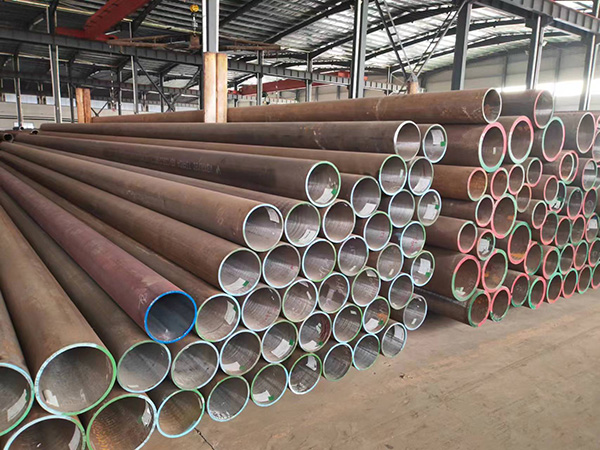
Carbon steel, primarily iron with controlled carbon content (typically 0.05-2.1%), delivers robust mechanical strength at economical price points. The carbon concentration determines hardness and tensile properties—higher carbon produces stronger but less ductile materials. These pipes serve admirably in countless applications where corrosive conditions remain moderate and budget constraints exist.
Stainless steel alloys contain chromium at minimum 10.5%, creating a passive oxide layer that dramatically enhances corrosion resistance. Additional elements like nickel, molybdenum, and nitrogen improve specific properties—nickel stabilizes the austenitic structure, while molybdenum boosts pitting resistance. This metallurgical sophistication translates to superior performance in challenging environments but at considerably higher material costs.
Mechanical Strength and Pressure Handling
Carbon steel pipes exhibit impressive tensile and yield strengths, making them ideal for high-pressure applications. ASTM A106 Grade B seamless pipes routinely handle pressures exceeding 10,000 psi in smaller sizes, while larger diameters operate safely at proportionally reduced pressures. The material's ductility accommodates thermal expansion without cracking, a valuable characteristic in systems experiencing temperature cycles.
Stainless steel variants—particularly austenitic grades like 304 and 316—provide comparable or superior strength with enhanced toughness at cryogenic temperatures. Duplex stainless steels combine strength roughly twice that of standard austenitic grades with excellent corrosion resistance, enabling thinner walls and reduced weight. These properties prove particularly valuable in offshore platforms and mobile equipment where weight penalties apply.
Corrosion Behavior and Service Environments
Unprotected carbon steel rusts when exposed to moisture and oxygen, limiting its service life in corrosive environments. However, proper design—adequate painting, cathodic protection, or internal coatings—extends usable life considerably. In neutral water services, buried installations, and atmospheric exposures, carbon steel often remains economical despite corrosion allowances.
Stainless steel's chromium oxide layer self-repairs when damaged, provided oxygen access remains adequate. This passive protection proves invaluable in chemical processing, coastal atmospheres, and food-grade applications where contamination concerns prohibit corrosion products. The initial investment frequently recovers through extended service life and reduced maintenance frequency.
Temperature Performance Ranges
Carbon steel maintains satisfactory mechanical properties through approximately 800°F (425°C), though creep resistance diminishes at higher temperatures. For elevated-temperature services like steam distribution, molysulfide dispersion strengthened grades (ASTM A335 P11, P22, P91) extend usable temperature ranges significantly. These alloy additions enhance high-temperature strength and oxidation resistance.
Stainless steel encompasses broader temperature ranges depending on specific grades. Austenitic stainless steels perform well from cryogenic conditions through moderate elevated temperatures, while ferritic grades like 430 serve in lower-stress elevated-temperature applications. High-temperature grades like 310S withstand sustained service to 2000°F in oxidation-only conditions, finding application in furnace components and heat treatment equipment.
Economic Considerations and Total Cost Analysis
Material cost differentials between carbon and stainless steel fluctuate with commodity markets but typically range from 2:1 to 5:1 depending on specific grades and sizes. Carbon steel's lower cost makes it the default choice for straightforward applications. Installation expenses—including welding procedures, preheating requirements, and post-weld heat treatment—often favor carbon steel when such processes prove simpler.
Total cost analyses must account for lifecycle factors beyond initial purchase price. Maintenance painting, repair frequency, replacement intervals, and operational interruptions all influence true project economics. Systems requiring decades of maintenance-free operation often favor stainless steel despite higher upfront costs. Conversely, applications with frequent modification or limited service life expectations typically justify carbon steel's lower initial investment.
Application-Specific Selection Guidance
Water distribution and municipal sewage systems frequently employ carbon steel with internal cement mortar linings or external polyethylene encasement. These protective measures address corrosion concerns while preserving carbon steel's cost advantage. Fire protection systems similarly benefit from carbon steel's strength and machinability.
Chemical processing, pharmaceutical manufacturing, food and beverage production, and marine environments typically demand stainless steel's corrosion resistance. Desalination plants, offshore platforms, and coastal facilities benefit from 316L or duplex stainless grades that withstand chloride exposure. The pharmaceutical and food industries additionally value stainless steel's smooth surfaces that facilitate cleaning and minimize contamination risks.
Inviting global distributors to join our expanding network of industrial suppliers. We welcome partnerships with distributors experienced in serving chemical, petrochemical, food processing, and municipal water sectors.
References
ASM International: Steel Heat Treatment Handbook, 2nd Edition
ASTM A53/A53M-20: Standard Specification for Pipe, Steel, Black and Hot-Dipped, Zinc-Coated, Welded and Seamless
ASTM A312/A312M-20: Standard Specification for Seamless, Welded, and Heavily Cold Worked Stainless Steel Pipes
Metal Handbook, Volume 13: Corrosion
Chemical Engineering Progress, February 2021: Materials Selection for Corrosive Service
 Recommended Products
 Contact us
—— Contact:Manager
—— Tel:+86 15231788966
—— Email:info@zhantongpipe.com
—— Url:https://www.zhantongpipe.com
—— Address:Mengcun Hui Autonomous County, Cangzhou City, Hebei Province