
NewsDetails
ERW_Steel_Pipes_Manufacturing_Industrial_Uses
author:Zhantong time:2026-07-02 16:35:30 Click:138
Electric resistance welding (ERW) ranks among the most productive steel pipe manufacturing methods, converting flat steel strips or sheets into cylindrical shapes through the application of localized heat and mechanical pressure. This technique produces pipes ranging from fractional inches to massive diameters, serving applications from hydraulic lines to structural supports. Understanding ERW capabilities and limitations helps procurement professionals select appropriate products for specific project requirements.
The ERW Manufacturing Process Explained
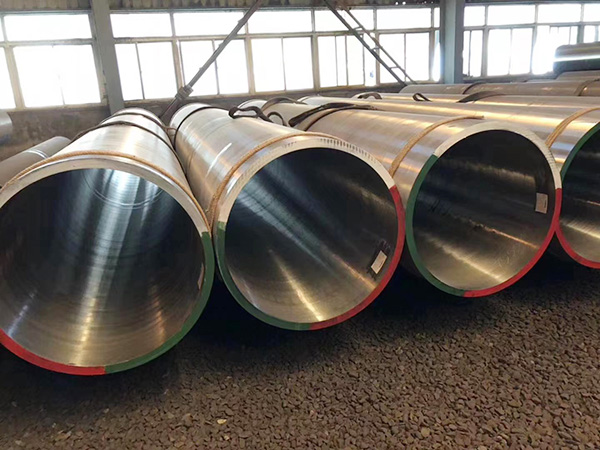
The ERW process begins with coiled steel that passes through a series of forming rolls, gradually shaping the flat material into an open cylindrical configuration. The edges—where welding will occur—heated rapidly through electrical resistance. As the edges reach welding temperature, pressure rolls forge them together, creating a metallurgical bond that rivals parent metal strength in properly executed welds.
Modern high-frequency ERW (HFW) employs radio frequency or medium frequency alternating current—typically 100-800 kHz—to generate resistance heating. This high-frequency energy concentrates precisely at the weld line, producing consistent heat input regardless of line speed variations. The result is a narrow heat-affected zone that minimizes microstructural changes and produces reliable, repeatable welds.
Quality Characteristics and Testing Requirements
ERW pipe integrity depends critically on weld seam quality. Online testing systems employing ultrasonic examination, eddy current testing, or electromagnetic flux leakage detect seam discontinuities during production, enabling immediate rejection of defective sections. These non-destructive examination methods have largely replaced hydrostatic testing as the primary online quality verification tool.
Complete characterization requires additional testing beyond online inspection. Transverse tensile testing verifies both base metal and weld seam strength. Flattening tests assess ductility and weld soundness. Charpy impact testing—conducted at specified temperatures—demonstrates notch toughness essential for service in cold climates or high-stress applications. API 5L and ASTM specifications define mandatory testing protocols that accredited manufacturers follow rigorously.
Size Ranges and Dimensional Capabilities
ERW production lines accommodate diverse dimensional ranges. Small-diameter lines (½ to 2½ inches) produce tubing for furniture, fencing, and low-pressure instrumentation. Medium-diameter lines (2 to 24 inches) serve structural and pressure piping applications. Large-diameter ERW lines (up to 60 inches) compete with spiral welding for transmission pipeline projects, though the forming limitations of flat strip coils restrict very large diameters.
Wall thickness capabilities span from light-gauge structural tubing (0.035 inches) to heavy-wall pressure pipes (0.750 inches or more). The relationship between coil width and pipe circumference limits available sizes—larger diameters require correspondingly wider coils that may exceed mill capabilities. Manufacturers maintain flexibility through inventory stocking of commonly specified sizes while accepting orders for non-standard dimensions.
Competitive Advantages and Limitations
ERW pipes offer compelling economics compared to seamless alternatives, particularly for larger nominal sizes. The continuous production process achieves superior throughput rates, spreading fixed costs across greater pipe quantities. Material efficiency benefits from using precisely dimensioned coils, minimizing trim losses that increase seamless pipe costs. These advantages make ERW the dominant choice for line pipe and structural applications where cost sensitivity prevails.
However, the weld seam represents a metallurgical discontinuity that some applications cannot accommodate. High-pressure gas transmission standards often prefer seamless pipe for sour service or high-stress applications, though modern ERW with proper quality control meets most API 5L requirements. The decision ultimately balances cost savings against specific application demands and regulatory preferences.
Surface Finish and End Preparation
ERW pipes typically emerge from the mill with an oxide scale coating requiring removal through blasting or pickling for corrosion-sensitive applications. Structural applications often accept as-welded surfaces, while pressure piping for painting or coating demands cleaned surfaces. The mill scale removal process influences coating adhesion and long-term corrosion protection.
End preparation methods vary by intended application. Plain end (cut to length) serves roll-forming and some mechanical joining methods. Square cut ends suit certain coupling connections. Beveled ends facilitate field welding with varying groove angles matched to wall thickness and welding procedure requirements. Threaded and coupled (T&C) ends incorporate manufactured threads for rapid assembly in water well and plumbing applications.
Applications Across Industrial Sectors
Structural ERW pipes support buildings, bridges, and infrastructure as columns, braces, and casings. The consistent wall thickness and circular cross-section provide efficient section modulus for load-bearing applications. Hollow structural sections (HSS) represent a major market segment where ERW's dimensional consistency and surface quality satisfy architectural and structural requirements.
Line pipe applications transport oil, gas, water, and other fluids across distances ranging from wellhead to processing facilities to end users. API 5L specifications govern line pipe requirements, with ERW pipes qualified for various service conditions based on demonstrated testing performance. Water transmission mains, municipal distribution systems, and industrial process lines all utilize ERW products extensively.
Inviting global distributors to join our network of ERW pipe suppliers. We welcome partnerships with structural steel distributors, waterworks suppliers, and oil field equipment distributors seeking quality products at competitive prices.
References
API 5L: Specification for Line Pipe, 46th Edition
ASTM A500/A500M-21: Standard Specification for Cold-Formed Welded and Seamless Carbon Steel Structural Tubing in Rounds and Shapes
ASTM A53/A53M-20: Standard Specification for Pipe, Steel, Black and Hot-Dipped, Zinc-Coated, Welded and Seamless
ISO 3183:2012: Petroleum and natural gas industries—Steel pipe for pipeline transportation systems
Modern Steel Construction, August 2020: ERW vs Seamless Tubing
 Recommended Products
 Contact us
—— Contact:Manager
—— Tel:+86 15231788966
—— Email:info@zhantongpipe.com
—— Url:https://www.zhantongpipe.com
—— Address:Mengcun Hui Autonomous County, Cangzhou City, Hebei Province