
NewsDetails
Flange Types and Applications Guide for Industrial Piping Systems
author:Zhantong time:2026-05-23 15:26:02 Click:199
Industrial flanges serve as critical connecting components in piping systems, enabling disassembly for maintenance, inspection, and equipment replacement while maintaining pressure boundary integrity. These precision-engineered components, manufactured by specialized pipeline equipment suppliers, integrate standardized dimensions, pressure ratings, and sealing surface configurations to deliver reliable performance across diverse industrial applications. Understanding flange types, material selection criteria, and application considerations enables engineers and maintenance professionals to specify appropriate flange solutions for optimal system performance and safety.

Flange Types and Design Configurations
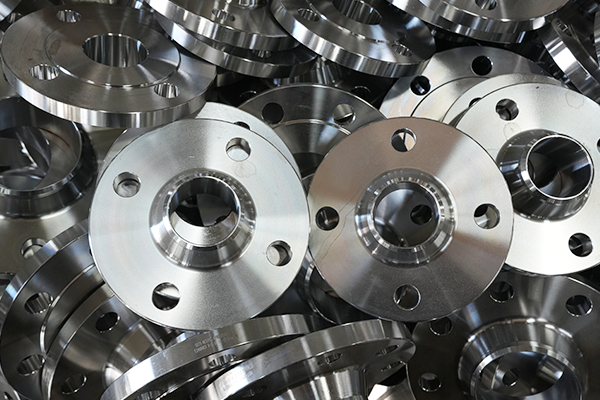
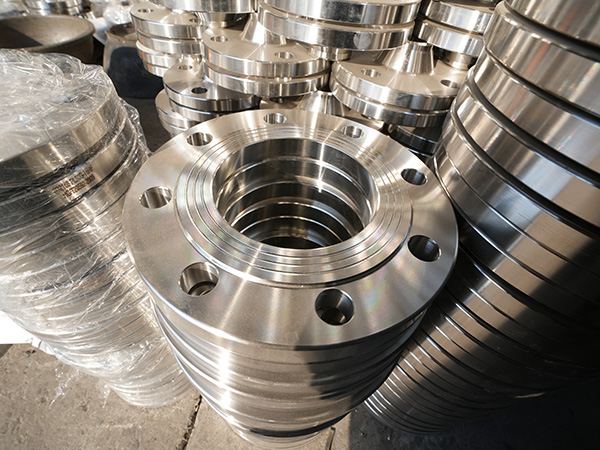
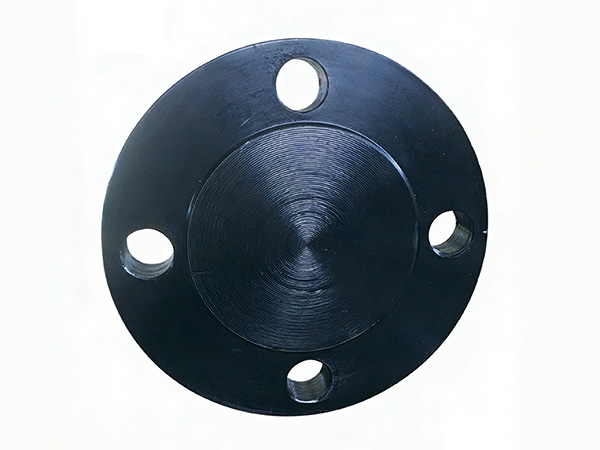
Industrial flanges encompass multiple design configurations including weld neck, slip-on, socket weld, lap joint, threaded, and blind flanges, each optimized for specific piping configurations, pressure requirements, and installation constraints. Weld neck flanges feature tapered hub transitions that distribute stress concentrations, making them suitable for high-pressure, high-temperature applications in refinery and power generation facilities.
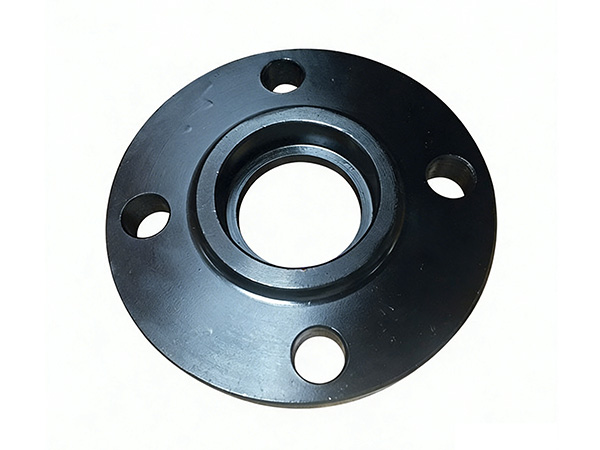
Slip-on flanges offer economical installation with fillet welding on both internal and external flange faces, though they provide lower fatigue strength compared to weld neck designs. Socket weld flanges suit small-diameter, high-pressure applications where pipe insertion into flange socket enables precise alignment and reduced weld defects. Reputable flange manufacturers provide comprehensive product catalogs covering ASME B16.5, EN 1092, and DIN standardization requirements.
Material Selection and Pressure Ratings
Flange material selection significantly influences system performance, corrosion resistance, and service life in aggressive process environments. Carbon steel flanges (ASTM A105, A350 LF2) provide economical solutions for ambient temperature services, while alloy steel flanges (A182 F11, F22) deliver enhanced strength and creep resistance for elevated temperature applications exceeding 400°C.
Pressure-temperature ratings (PT ratings) define allowable working pressures across operating temperature ranges, with Class 150, 300, 600, 900, 1500, and 2500 designations representing increasing pressure capabilities. Flange selection must accommodate system design pressure, operating temperature, and fluid compatibility to ensure adequate safety margins. Professional flange suppliers offer material certification, pressure testing, and traceability documentation to meet project quality requirements.
Sealing Surface Configurations and Gasket Compatibility
Flange sealing surfaces encompass raised face (RF), flat face (FF), ring joint (RTJ), and tongue-and-groove configurations, each designed for specific gasket types and sealing performance requirements. Raised face flanges provide economical sealing with elastomeric or semi-metallic gaskets, suitable for moderate pressure and temperature applications in petroleum and chemical processing.
Ring joint flanges incorporate precision-machined groove dimensions that accommodate metal ring gaskets for high-pressure, high-temperature services where reliable sealing is critical. These flanges require careful surface finish control (125-250 microinches typical) and proper ring gasket installation to achieve leak-free performance. Leading pipeline equipment manufacturers provide sealing surface specifications and gasket selection guides to optimize joint integrity.
Installation Practices and Quality Assurance
Proper flange installation demands meticulous bolt torque procedures, gasket handling, and alignment verification to prevent joint leakage and ensure long-term reliability. Bolt tightening sequences (cross-pattern) and incremental torque application prevent gasket crushing, flange misalignment, and bolt overstress that compromise joint integrity. Torque values depend on bolt material, diameter, lubrication condition, and flange rating.
Quality assurance encompasses dimensional inspection, surface finish verification, and pressure testing to validate flange performance before system commissioning. Non-destructive testing methods (ultrasonic, magnetic particle, dye penetrant) detect subsurface defects that could propagate during service. Comprehensive documentation packages, provided by experienced flange suppliers, enable project traceability and regulatory compliance for critical service applications.
References
ASME B16.5 - Pipe Flanges and Flanged Fittings
ASTM A105 - Standard Specification for Carbon Steel Forgings for Piping Applications
API 6A - Specification for Wellhead and Christmas Tree Equipment
EN 1092-1 - Flanges and their joints - Circular flanges for pipes, valves, fittings and accessories
MSS SP-44 - Steel Pipeline Flanges
 Recommended Products
 Contact us
—— Contact:Manager
—— Tel:+86 15231788966
—— Email:info@zhantongpipe.com
—— Url:https://www.zhantongpipe.com
—— Address:Mengcun Hui Autonomous County, Cangzhou City, Hebei Province