
NewsDetails
Flange Face Types: RF, FF and RTJ Explained
author:Zhantong time:2026-09-06 09:15:00 Click:80
Two flanges can share the same size, class and bolt pattern yet behave completely differently in service, and the reason is often sitting right on the face. The facing style determines which gasket the joint takes, how much bolt load reaches the seal, and whether the connection can hold 20 bar or 200 bar. Specifying the right face is not a detail; it is the difference between a flange joint that seals first time and one that haunts the maintenance log for years.
Why the Face Matters as Much as the Flange
The flange face is the engineered surface where the seal happens. The bolts squeeze the two faces together, compressing the gasket between them, and the compressed gasket blocks the passage of fluid. Everything that affects that squeeze — the area of the face, the shape of the contact surface, the finish of the machined metal — affects the seal. The same pressure rating can be delivered with different face designs, but each design has its own gasket rules and its own operating envelope.
Raised Face (RF): The Everyday Standard
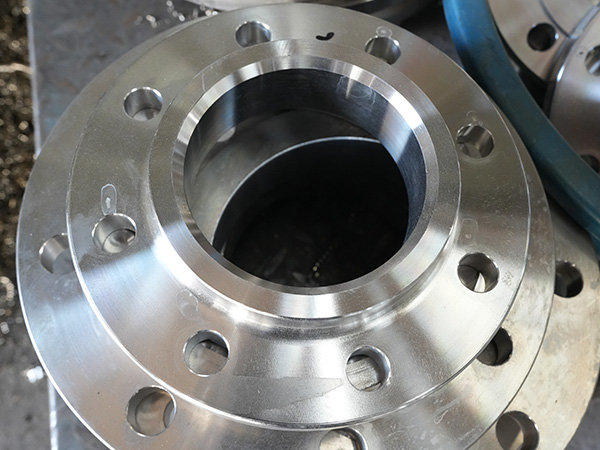
The raised face flange has a small circular land raised above the bolt face, typically 1.6 mm high for Class 150 and 300, and 6.4 mm high for Class 400 and above. The gasket sits on this raised land, so the bolt load concentrates on a narrow ring instead of spreading across the whole face. That concentration is what makes RF joints seal reliably at moderate pressure.
RF is the default face for carbon steel and stainless steel flanges in general process service. It works with a wide range of gaskets — spiral wound, sheet, gasket with a ring, metal jacketed — and it is the face most flange manufacturers stock in volume. If a drawing just says "flange" without specifying a face, it is RF that arrives.
The one caution: RF flanges must not be bolted to flat face flanges of brittle materials. The raised land concentrates load on a narrow area of the mating face, and a cast iron or ductile iron flange can crack under that concentrated bending. That is why pumps, valves and equipment made of cast iron come with flat faces, and why the piping on either side of them must match.
Flat Face (FF): When Cast Iron and Ductile Iron Are Involved
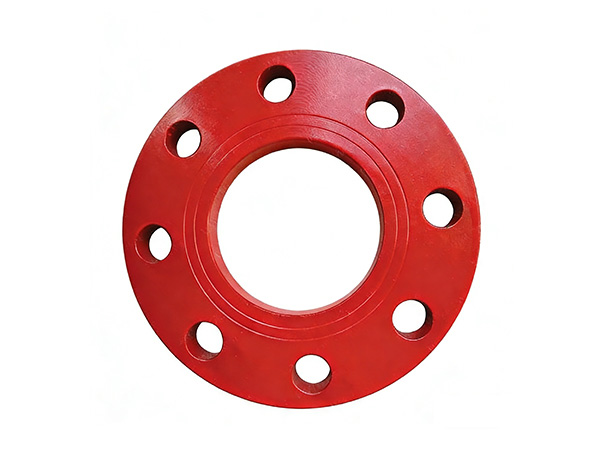
The flat face flange is exactly what it sounds like: the entire face is flat, with no raised land. The gasket covers the full face area, which spreads the bolt load across the whole surface. That spread is gentle on brittle flanges, so FF is the required companion for cast iron and ductile iron equipment.
The trade-off is sealing efficiency. Because the load spreads over a larger area, the pressure per square millimeter on the gasket is lower, and FF joints typically cannot hold the same pressures as RF joints of the same class. They are common in low-pressure water, sewage and utility systems, where cast iron valves and fittings dominate and the pressures stay modest. When an RF pipe flange meets an FF equipment flange, the rule is to use a full-face gasket and tighten carefully — the mismatch is workable at low pressure, but designers avoid it where possible.
Ring Type Joint (RTJ): For High Pressure and High Temperature
The RTJ face carries a machined groove that holds a solid metal ring gasket, usually oval or octagonal in cross-section. When the bolts are tightened, the ring deforms into the groove walls and forms a metal-to-metal seal. No soft gasket material to degrade, no organic filler to burn out — just steel against steel.
RTJ flanges belong to high-pressure and high-temperature service: Class 600 and above, steam systems, gas wellheads, and lines where a soft gasket would fail or where fire safety demands a metal seal. The joint is sensitive to surface finish and ring quality; a scratched groove or a reused ring invites leakage. The rings themselves are consumables and must be replaced when damaged, which makes RTJ joints slower to assemble than RF joints but far more robust once in service.
Face Finish and Its Effect on Sealing
Even a correctly shaped face can leak if the finish is wrong. Gasket manufacturers specify a surface roughness range, usually given as an average roughness value like 125 to 250 microinches for sheet gaskets, and tighter values for metal gaskets. Too smooth, and the gasket lacks the teeth-grip it needs; too rough, and the fluid finds a path along the machining ridges.
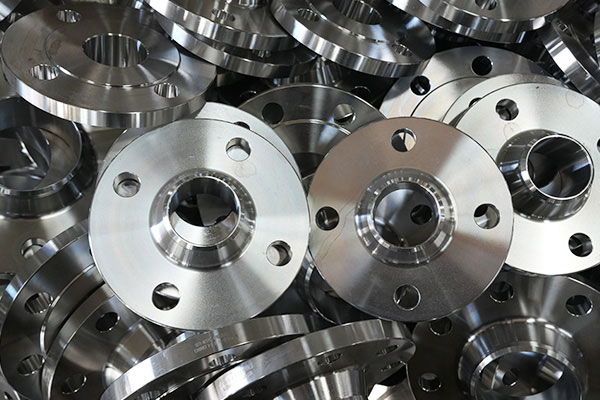
The standard finish on new flanges is a concentric or spiral serrated cut. Concentric grooves give slightly better sealing with soft gaskets; spiral cuts are common on larger faces. A flange manufacturer machines these finishes at the factory, and buyers can request a specific finish for a specific gasket. Inspect the face on delivery: handling damage, corrosion pits and weld spatter all ruin a finish that cost real money to produce.
Matching Flanges and Gaskets Correctly
The rule that prevents most face-related failures is simple: the two flanges in a joint must have compatible faces, and the gasket must match both. RF to RF with a gasket sized for the raised face. FF to FF with a full-face gasket. RTJ to RTJ with the correct ring size and material. Mixed faces are sometimes tolerated at low pressure, but every mixing of RF and FF creates a joint that depends on luck as much as engineering.
Before ordering, check the equipment data sheets: if the pump, valve or vessel nozzle says flat face, buy flat face flanges for the adjacent piping. If the line operates above Class 600 or in sour gas, confirm whether the design calls for RTJ and order the rings with the flanges so they arrive together. A flange supplier that stocks RF, FF and RTJ in the same sizes and classes makes this matching straightforward — one purchase order covers the whole bolted joint, gaskets included.
References
ASME B16.5: Pipe Flanges and Flanged Fittings, NPS 1/2 Through NPS 24
ASME B16.47: Large Diameter Steel Flanges, NPS 26 Through NPS 60
ASME PCC-1: Guidelines for Pressure Boundary Bolted Flange Joint Assembly
MSS SP-44: Steel Pipeline Flanges
API Specification 6A: Specification for Wellhead and Christmas Tree Equipment
ASME B31.3: Process Piping
 Recommended Products
 Contact us
—— Contact:Manager
—— Tel:+86 15231788966
—— Email:info@zhantongpipe.com
—— Url:https://www.zhantongpipe.com
—— Address:Mengcun Hui Autonomous County, Cangzhou City, Hebei Province