
NewsDetails
High Pressure Boiler Tubes: Material Selection and Heat-Resistant Design
author:Zhantong time:2026-09-27 13:01:03 Click:100
Power plants live or die by their boiler tubing. High pressure boiler tubes operate under steam pressure, elevated temperature and thermal cycling that would destroy ordinary pipe within hours. Material choice is therefore a safety-critical decision.
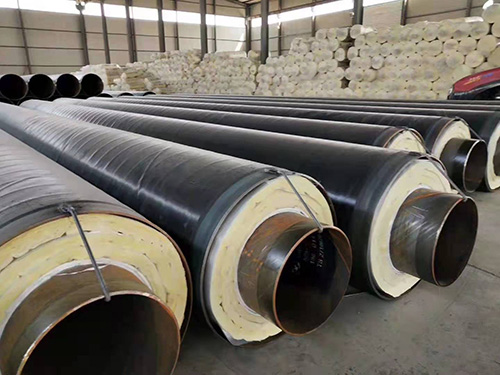
Zhantong supplies seamless boiler tubes to ASTM and GB standards. This article covers grade selection, design limits and quality control for reliable steam service.
Why Boiler Tubes Are Special
Boiler tubes carry water, steam and flue gas while bearing internal pressure and external heat. They must resist creep (slow deformation under stress at temperature), oxidation scaling and thermal fatigue from start-stop cycles.
Only seamless tubes with controlled chemistry and heat treatment meet these combined demands.
Key Grades and Standards
Carbon grades follow ASTM A192 (A192M) for high-pressure service and ASTM A210 for medium-carbon seamless tubes. Alloy superheater and reheater tubes use ASTM A213 (T11, T22, T91, T92).
Chinese equivalents include 20G, 15CrMoG and 12Cr1MoVG, widely used in domestic thermal plants.
Creep and Oxidation Limits
Each grade has a maximum metal temperature for creep rupture and oxidation. Carbon steel stops near 450 °C; low-alloy Cr-Mo extends to ~565 °C; T91/T92 martensitic grades reach ~620 °C.
Exceeding limits accelerates creep and scale exfoliation, which can block tubes and cause overheating failure.
Manufacturing and Testing
Tubes are seamless, normalized or quenched-tempered, and often cold-drawn for dimensional control. Zhantong applies flattening, flaring, hardness and ultrasonic tests plus heat analysis per order.
For superheater bends, controlled bending and post-bend heat treatment preserve properties at the most stressed sections.
Application in Power Plants
Boiler tubes appear in water walls, economizers, superheaters and reheaters. Alloy grades dominate the hottest zones; carbon grades suit economizer and feedwater lines.
Correct grade mapping by zone prevents premature replacement and unscheduled outages.
Selection and Life Management
Specify grade by design temperature and pressure, then confirm wall thickness for allowable stress and oxidation margin. Plan periodic thickness and hardness checks to track creep and decarburization.
For retrofit, upgrading to T91/T92 in hot zones can raise steam temperature and efficiency.
Frequently Asked Questions
Which standard covers carbon boiler tubes?
ASTM A192 for high-pressure seamless, ASTM A210 for medium-carbon; equivalents 20G in GB.
What temperature can T91 handle?
Around 620 °C maximum metal temperature for creep and oxidation control.
Why must boiler tubes be seamless?
Seamless structure avoids weld defects under combined pressure, heat and cycling.
How is remaining life managed?
By periodic wall-thickness and hardness inspection tracking creep and decarburization.
Conclusion
High pressure boiler tubes demand precise grade mapping to temperature and pressure. With the right alloy and inspection, plants achieve safe, efficient steam generation for decades.
To discuss specifications, request a quote, or download full datasheets, visit www.zhantongpipe.com or contact our engineering team directly. Hebei Zhantong Pipeline Equipment Manufacturing Co., Ltd supports OEM drawings, third-party inspection, and worldwide shipping for every order.
 Recommended Products
 Contact us
—— Contact:Manager
—— Tel:+86 15231788966
—— Email:info@zhantongpipe.com
—— Url:https://www.zhantongpipe.com
—— Address:Mengcun Hui Autonomous County, Cangzhou City, Hebei Province