
NewsDetails
How an Insulated Pipeline Supplier Ensures Thermal Efficiency in Long-Distance Pipelines
author:Zhantong time:2025-12-29 14:30:55 Click:83
The Critical Role of an Insulated Pipeline Supplier
In energy transmission, industrial processing, and infrastructure development, maintaining thermal efficiency across long-distance pipelines is a major technical and economic challenge. Heat loss over extended pipeline networks can significantly increase operational costs, reduce system performance, and compromise safety.
This is where a reliable insulated pipeline supplier becomes essential. Acting not only as a product provider but also as a technical manufacturer, such suppliers combine engineering expertise with controlled production processes to deliver insulation systems designed for durability, consistency, and large-scale application. For projects requiring bulk supply, supplier capability directly determines long-term system efficiency.
Why Thermal Efficiency Matters in Long-Distance Pipelines
Long-distance pipelines are commonly used to transport hot fluids such as steam, oil, gas, or chemical media. Without proper insulation, thermal energy dissipates rapidly into the surrounding environment, leading to:
·Increased energy consumption
·Reduced delivery temperature at endpoints
·Higher operating costs
·Accelerated pipeline wear
A qualified insulated pipeline supplier designs insulation systems that minimize heat transfer, ensuring stable temperature control throughout the pipeline’s entire length.
Engineering Design for Thermal Performance
Optimized Insulation Layer Structure
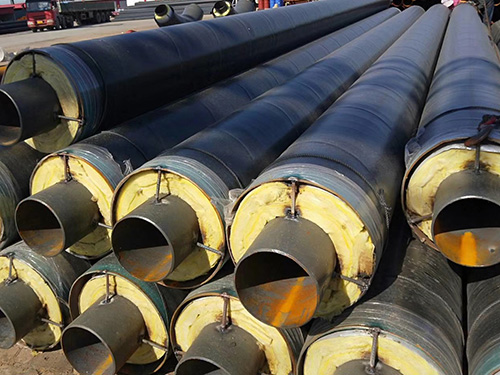
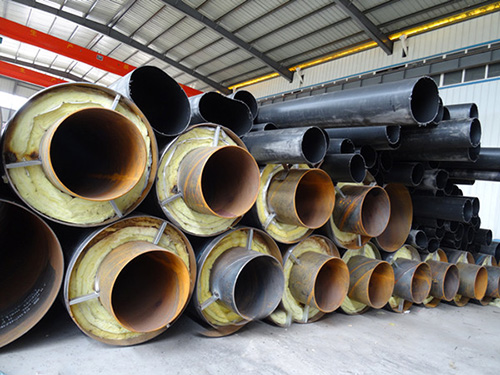
Thermal efficiency begins with engineering design. Advanced insulated pipelines typically use multi-layer insulation systems, including inner insulation, protective cladding, and external barriers. Each layer serves a specific function—thermal resistance, moisture protection, or mechanical strength.
A professional manufacturer evaluates operating temperature, environmental conditions, and pipeline length to determine the most effective insulation configuration during the production stage.
Precision Manufacturing and Consistent Production Quality
Even the best insulation materials fail without precise manufacturing. High-quality insulated pipeline suppliers rely on standardized production processes, including automated fabrication, dimensional control, and continuous quality inspection.
Consistency across bulk orders is critical. Uniform insulation thickness and material density ensure predictable thermal performance, especially in long-distance pipeline projects where variations can cause heat imbalance and efficiency loss.
Material Selection for Long-Term Thermal Stability
Material choice directly impacts thermal efficiency and service life. Insulated pipelines often incorporate materials such as polyurethane foam, mineral wool, or advanced composite insulation depending on temperature requirements.
An experienced insulated pipeline supplier selects materials based on:
·Thermal conductivity
·Moisture resistance
·Compression strength
·Long-term aging behavior
By integrating material science into production planning, manufacturers ensure pipelines maintain insulation performance over years of operation.
Reducing Heat Loss Through Structural Integrity
Thermal efficiency is not solely about insulation—it also depends on structural integrity. Gaps, compression damage, or misalignment can significantly reduce insulation effectiveness.
Manufacturer-level production processes emphasize:
·Tight bonding between insulation and pipe surface
·Protective outer layers to resist mechanical damage
·Precision end-joint insulation for seamless installation
These measures reduce thermal bridges and maintain consistent insulation performance across long distances.
Supporting Large-Scale and Bulk Pipeline Projects
Long-distance pipeline systems often involve hundreds or thousands of pipe sections. A capable insulated pipeline supplier must demonstrate reliable bulk supply capacity to support project timelines.
Key capabilities include:
·Scalable production lines
·Stable raw material sourcing
·Batch-level quality control
·Standardized packaging and logistics coordination
Working directly with a qualified manufacturer ensures uniform quality across all pipeline segments, which is essential for maintaining thermal efficiency at scale.
Quality Control and Performance Verification
Thermal efficiency must be verified, not assumed. Leading suppliers implement strict inspection protocols throughout production, including:
·Thermal conductivity testing
·Dimensional accuracy checks
·Moisture resistance evaluation
·Surface integrity inspection
These quality controls ensure that every insulated pipeline section meets design specifications before delivery, reinforcing system-wide thermal performance.
Installation Compatibility and System Integration
Even the most advanced insulation design can fail if installation is inefficient. An experienced insulated pipeline supplier considers ease of installation during the design and manufacturing stages.
Standardized dimensions, joint insulation solutions, and protective coatings help installers maintain insulation integrity during field assembly. This integration-focused approach preserves thermal efficiency from factory production to on-site operation.
Long-Term Operational Benefits of Professional Manufacturing
Choosing an insulated pipeline solution from a reliable manufacturer delivers measurable long-term benefits:
·Reduced energy losses and operating costs
·Stable temperature control over extended distances
·Lower maintenance requirements
·Extended pipeline service life
For industries operating continuous thermal systems, these benefits directly improve profitability and system reliability.
Conclusion: Why the Right Insulated Pipeline Supplier Makes the Difference
Thermal efficiency in long-distance pipelines is the result of careful design, material expertise, and disciplined production control. A professional insulated pipeline supplier combines these elements to deliver insulation systems that perform consistently across large-scale applications.
By partnering with a capable manufacturer offering reliable bulk supply, project owners gain not only insulated pipelines but also long-term thermal performance, operational stability, and cost efficiency. In demanding pipeline projects, selecting the right supplier is not just a procurement decision—it is a strategic investment in system performance.
References
GB/T 7714:Bergman T L. Fundamentals of heat and mass transfer[M]. John Wiley & Sons, 2011.
MLA:Bergman, Theodore L. Fundamentals of heat and mass transfer. John Wiley & Sons, 2011.
APA:Bergman, T. L. (2011). Fundamentals of heat and mass transfer. John Wiley & Sons.
 Recommended Products
 Contact us
—— Contact:Manager
—— Tel:+86 15231788966
—— Email:info@zhantongpipe.com
—— Url:https://www.zhantongpipe.com
—— Address:Mengcun Hui Autonomous County, Cangzhou City, Hebei Province