
NewsDetails
How Temperature Affects Flange Pressure Rating
author:Zhantong time:2026-01-21 17:19:05 Click:127
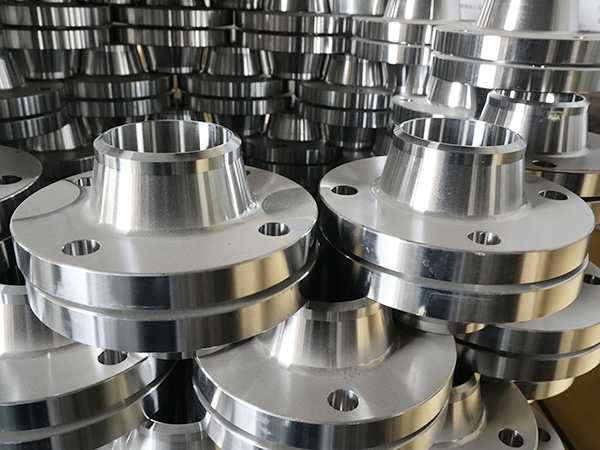
Understanding the relationship between flange pressure rating vs temperature is essential for safe and reliable piping system design. Flanges are critical connection components used in oil and gas, chemical processing, power generation, water treatment, and industrial transport systems. While pressure ratings are often referenced at room temperature, real-world applications expose flanges to a wide range of thermal conditions.
A professional approach to flange engineering does not stop at nominal pressure class selection. With advanced manufacturer production processes and factory batch supply capability, modern flanges are engineered with material consistency, dimensional accuracy, and thermal performance in mind. Knowing how temperature influences pressure rating helps engineers, contractors, and system designers avoid leakage, deformation, and catastrophic failure.
This article explains how temperature affects flange pressure rating, why the relationship matters, and how manufacturer production and factory control ensure performance stability.

What Is Flange Pressure Rating?
Flange pressure rating defines the maximum allowable internal pressure a flange can safely withstand at a specific temperature. It is not a single fixed number. Instead, it changes with temperature because material strength varies as heat increases or decreases.
In practice, flange pressure rating vs temperature is expressed through pressure–temperature charts. These charts show allowable working pressure at different temperatures for specific flange materials and classes.
Key factors behind pressure rating include:
·Yield strength of the flange material
·Bolt load capacity
·Gasket sealing behavior
·Structural geometry of the flange
During manufacturer production, these variables are controlled through material selection, forging or casting processes, and precision machining to maintain consistent performance across factory batch supply.
Why Temperature Changes Pressure Capacity
As temperature rises, most metallic materials lose mechanical strength. The molecular structure becomes more active, reducing resistance to stress and deformation.
This directly impacts flange pressure rating vs temperature in several ways:
·Reduced yield strength at high temperature
·Lower bolt preload retention
·Increased gasket relaxation
·Thermal expansion affecting sealing stress
At lower temperatures, materials may become brittle, increasing the risk of cracking under pressure.
Professional manufacturer production takes these behaviors into account by choosing alloys and heat treatment methods that stabilize mechanical performance across expected temperature ranges.
Material Behavior Under Temperature
Material choice is the core factor behind how temperature affects flange pressure rating.
Common flange materials include:
·Carbon steel for moderate temperature and pressure
·Stainless steel for corrosion and heat resistance
·Alloy steel for high-temperature service
·Nickel-based alloys for extreme environments
Each material exhibits a different curve in flange pressure rating vs temperature charts.
In controlled factory production, raw materials are tested for chemical composition and mechanical properties. Heat treatment processes are applied to optimize microstructure for both strength and thermal stability.
Without proper production control, material inconsistencies can cause unpredictable pressure behavior under thermal load.
Thermal Expansion and Mechanical Stress
Temperature does not only weaken material strength; it also causes expansion and contraction.
When a flange assembly heats up:
·The flange body expands
·Bolts elongate
·Gaskets compress differently
·Contact stress distribution changes
These movements affect sealing integrity and pressure capability.
The relationship between mechanical stress and flange pressure rating vs temperature becomes critical in systems with frequent temperature cycling.
Through advanced manufacturer production, flange geometry, surface finish, and bolt-hole tolerances are controlled to maintain uniform stress distribution across operating temperatures.
Gasket Performance vs Temperature
Gaskets are a major contributor to flange sealing performance. Their behavior changes significantly with temperature.
At elevated temperatures:
·Soft gaskets may creep
·Elastomeric materials lose elasticity
·Graphite may oxidize
·Sealing stress relaxes
This affects the effective flange pressure rating vs temperature, because even if the flange body is strong, loss of gasket stress leads to leakage.
In professional factory production environments, flange surface finish and flatness are precisely machined to optimize gasket contact behavior across temperature ranges.
Bolt Load Retention at High Temperature
Bolts clamp the flange assembly and maintain gasket sealing stress. Temperature changes influence bolt preload retention.
High temperature causes:
·Bolt relaxation
·Creep deformation
·Reduced tensile strength
As bolt load drops, sealing performance declines, lowering the effective pressure capacity.
Understanding flange pressure rating vs temperature therefore requires analyzing not just the flange body, but the full bolting system.
During manufacturer production, bolt-hole accuracy and contact surfaces are machined to ensure consistent load transfer in batch-supplied flanges.
Pressure-Temperature Charts in Practice
Engineers rely on pressure–temperature charts to evaluate allowable operating conditions. These charts show how pressure rating decreases as temperature increases.
When working with flange pressure rating vs temperature, best practice includes:
·Selecting pressure class based on maximum operating temperature
·Including safety margins
·Accounting for transient temperature spikes
·Verifying material compatibility
Through standardized factory production, flanges are manufactured to dimensional and material tolerances that align with pressure–temperature design assumptions.
Manufacturer Production and Quality Control
The reliability of flange pressure performance is directly linked to production quality.
A structured manufacturer production process includes:
·Chemical composition verification
·Mechanical property testing
·Heat treatment control
·Dimensional inspection
·Surface finish management
With organized factory batch supply, every flange maintains consistent thickness, strength, and sealing geometry across large orders.
This consistency ensures that real-world performance matches theoretical flange pressure rating vs temperature calculations.
Customization for Temperature-Sensitive Applications
Different industries operate under very different temperature conditions.
A professional production approach allows:
·Material upgrades for high-temperature service
·Modified thickness for stress control
·Surface treatments for thermal stability
·Custom dimensions for expansion management
Through flexible factory production capability, flanges can be optimized for applications where temperature variation strongly affects pressure behavior.
This helps stabilize flange pressure rating vs temperature performance in demanding environments.
Applications Where Temperature Impact Is Critical
Understanding temperature effects is especially important in:
·Oil and gas processing
·Power generation plants
·Chemical reactors
·Steam pipelines
·District heating systems
In these fields, incorrect interpretation of flange pressure rating vs temperature can lead to leaks, downtime, and safety hazards.
Professional manufacturer production and factory batch supply reduce these risks by delivering consistent, thermally stable flange components.
Conclusion
The relationship between flange pressure rating vs temperature defines the real operating limits of flange connections. As temperature changes, material strength, bolt load, gasket behavior, and thermal expansion interact to reduce allowable pressure.
A professional manufacturer production system with factory batch supply capability ensures that flanges are produced with controlled material properties, accurate geometry, and stable mechanical behavior across temperature ranges.
By understanding how temperature affects flange pressure rating and by sourcing flanges from consistent production processes, engineers and operators can achieve safer, more reliable, and longer-lasting pipeline systems based on accurate flange pressure rating vs temperature performance.
References
GB/T 7714:Link R E. An introduction to the design and behavior of bolted joints[J]. Journal of Testing and Evaluation, 1991, 19(5): 417-418.
MLA:Link, R. E. "An introduction to the design and behavior of bolted joints." Journal of Testing and Evaluation 19.5 (1991): 417-418.
APA:Link, R. E. (1991). An introduction to the design and behavior of bolted joints. Journal of Testing and Evaluation, 19(5), 417-418.
 Recommended Products
 Contact us
—— Contact:Manager
—— Tel:+86 15231788966
—— Email:info@zhantongpipe.com
—— Url:https://www.zhantongpipe.com
—— Address:Mengcun Hui Autonomous County, Cangzhou City, Hebei Province