
NewsDetails
How TPEP Pipes Improve Anti-Corrosion Performance in Harsh Environments
author:Zhantong time:2026-01-01 16:12:34 Click:195
Anti-Corrosion Challenges Demand Advanced TPEP Pipes
Pipelines operating in harsh environments face constant threats from corrosion, chemical exposure, moisture, and mechanical stress. Whether used in oil and gas transmission, water supply systems, chemical processing, or infrastructure projects, corrosion-related failures can lead to high maintenance costs, safety risks, and operational downtime. As a result, material selection has become a critical decision for long-term pipeline performance.
TPEP pipes, manufactured through advanced production processes and supplied in bulk by professional manufacturers, have emerged as an effective solution for enhancing anti-corrosion performance. By combining multiple protective layers into a single system, TPEP pipes offer reliable protection in environments where conventional pipelines struggle to perform.
What Are TPEP Pipes and How Are They Produced
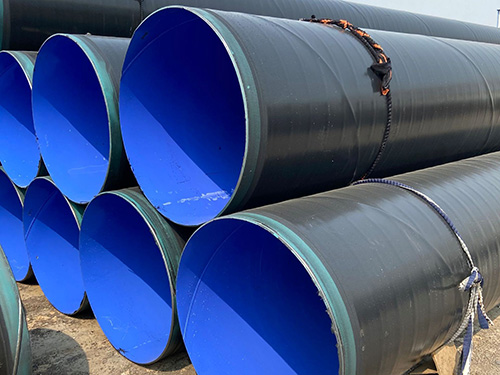
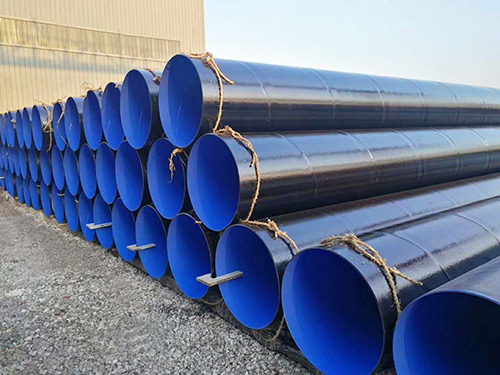
TPEP pipes, also known as three-layer polyethylene epoxy-coated pipes, are designed to provide comprehensive corrosion resistance. They typically consist of an internal epoxy coating, a middle adhesive layer, and an external polyethylene protective layer. This multilayer structure is engineered to protect the steel substrate from both internal and external corrosive factors.
From a manufacturer and production perspective, TPEP pipes are produced using controlled coating technologies that ensure uniform thickness, strong adhesion, and consistent quality. Large-scale production capability allows manufacturers to deliver bulk quantities while maintaining strict performance standards.
Why Harsh Environments Accelerate Pipeline Corrosion
Harsh environments significantly increase the risk of pipeline corrosion due to factors such as:
·High soil moisture and salinity
·Chemical exposure from industrial waste or process fluids
·Temperature fluctuations
·Mechanical abrasion and external impact
Traditional steel pipes without advanced coatings often degrade quickly under these conditions. TPEP pipes are specifically engineered to address these challenges by forming a durable barrier between the pipeline and its surrounding environment.
How TPEP Pipes Improve Anti-Corrosion Performance
Multi-Layer Protection System
The key advantage of TPEP pipes lies in their three-layer protective structure. The internal epoxy layer provides excellent resistance to chemical corrosion and reduces fluid friction, while the adhesive layer ensures strong bonding between coatings. The outer polyethylene layer acts as a robust shield against moisture, soil corrosion, and mechanical damage.
This integrated system significantly outperforms single-layer coatings in harsh environments.
Superior Adhesion and Coating Integrity
Advanced production processes ensure that each layer of a TPEP pipe adheres tightly to the steel surface. Strong adhesion prevents coating delamination, which is a common cause of corrosion failure in conventional pipeline systems. Consistent coating integrity is especially important for long-distance pipelines exposed to varying environmental conditions.
Enhanced Durability for Long-Term Operation
TPEP pipes are designed for long service life, even under continuous exposure to aggressive environments. The polyethylene outer layer provides excellent resistance to abrasion, impact, and ultraviolet radiation, while the epoxy inner layer protects against internal corrosion caused by transported media.
For infrastructure and industrial projects requiring long-term reliability, sourcing from a TPEP pipes manufacturer with stable production and bulk supply capability ensures uniform durability across all pipeline sections.
Applications of TPEP Pipes in Harsh Environments
Due to their anti-corrosion advantages, TPEP pipes are widely used in:
·Oil and gas transmission pipelines
·Chemical and petrochemical plants
·Municipal water supply and drainage systems
·Underground and offshore pipeline installations
Their ability to maintain performance in corrosive soil, high-humidity regions, and chemically aggressive environments makes them a preferred choice for critical pipeline systems.
Production Quality and Bulk Supply Reliability
Anti-corrosion performance depends not only on design but also on manufacturing quality. Professional TPEP pipe manufacturers implement strict quality control measures during production, including coating thickness inspection, adhesion testing, and surface preparation verification.
With large-scale production lines and bulk supply capabilities, manufacturers can support major infrastructure projects while maintaining consistent product performance. This reliability is essential for projects with tight schedules and high safety requirements.
Cost Efficiency and Lifecycle Benefits
While TPEP pipes may have a higher initial cost compared to uncoated steel pipes, their long-term benefits outweigh the investment. Reduced maintenance, fewer repairs, and extended service life significantly lower overall lifecycle costs.
From a project management standpoint, choosing TPEP pipes supplied directly from a manufacturer with mass production capacity minimizes procurement risks and ensures stable pricing for bulk orders.
Environmental and Safety Advantages
Improved corrosion resistance also contributes to environmental protection. By reducing the risk of leaks and failures, TPEP pipes help prevent soil and water contamination. Their smooth internal epoxy surface further improves flow efficiency, reducing energy consumption during pipeline operation.
These advantages align with modern industry requirements for sustainable and safe infrastructure development.
Conclusion: TPEP Pipes as a Reliable Anti-Corrosion Solution
TPEP pipes play a vital role in improving anti-corrosion performance in harsh environments through their advanced multilayer coating system, strong adhesion, and long-term durability. They offer reliable protection against chemical, environmental, and mechanical corrosion threats.
By partnering with a professional TPEP pipes manufacturer offering advanced production technology and bulk supply capability, project owners can ensure consistent quality, operational safety, and long-term cost efficiency. In demanding environments where corrosion resistance is critical, TPEP pipes provide a dependable foundation for modern pipeline systems.
References
GB/T 7714:Silman H. Corrosion and Corrosion Control: An introduction to corrosion science and engineering[J]. 1972.
MLA:Silman, H. "Corrosion and Corrosion Control: An introduction to corrosion science and engineering." (1972): 98-98.
APA:Silman, H. (1972). Corrosion and Corrosion Control: An introduction to corrosion science and engineering.
 Recommended Products
 Contact us
—— Contact:Manager
—— Tel:+86 15231788966
—— Email:info@zhantongpipe.com
—— Url:https://www.zhantongpipe.com
—— Address:Mengcun Hui Autonomous County, Cangzhou City, Hebei Province