
NewsDetails
Long Radius Short Radius Elbows Comparison Guide
author:Zhantong time:2026-08-03 16:53:28 Click:193
Elbows change the direction of a piping run, and the radius of that turn shapes how the fluid behaves, how much space the fitting needs, and how long the bend survives in abrasive service. Choosing between a long radius and a short radius elbow is a routine decision that carries real consequences for pressure loss and durability. Knowing the trade-offs makes that choice deliberate rather than accidental.
Defining the Two Radii
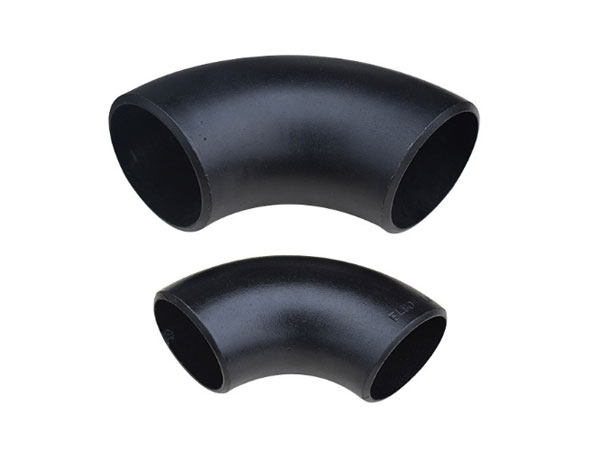
A long radius elbow has a centerline radius equal to 1.5 times the nominal pipe diameter, while a short radius elbow bends at a radius equal to the nominal diameter itself. That difference sounds small, but the tighter turn of a short radius elbow forces the fluid to change direction more sharply, raising turbulence and pressure drop.
Both types come in 45 and 90 degree versions, with the 90 degree elbow being the workhorse for right-angle turns and the 45 degree elbow handling gentler direction changes and offsets.
Flow Resistance and Energy Cost
The gentler sweep of a long radius elbow lets fluid negotiate the turn with less turbulence, producing a lower pressure drop. Over a long system with many bends, that reduced resistance saves pumping or compression energy year after year. For this reason, long radius elbows are the default choice wherever flow efficiency matters and space permits.
Short radius elbows create more turbulence and a higher pressure drop, so they are reserved for situations where their compact turn is genuinely needed rather than chosen for convenience.
When Space Forces the Short Radius
Tight equipment layouts, congested pipe racks, and compact skids sometimes leave no room for the wider sweep of a long radius elbow. Here the short radius elbow earns its keep, fitting a direction change into a space the gentler bend could never occupy. The designer accepts the higher pressure drop as the price of fitting the piping into the available envelope.
Balancing these factors is part of good layout practice: use long radius elbows as the standard and reach for short radius only where the geometry demands it.
Erosion and Abrasive Service
In lines carrying slurries or particle-laden fluids, the elbow radius affects wear. The sharper turn of a short radius elbow concentrates impact on the outer wall, accelerating erosion at that spot. Long radius elbows spread the change of direction over a longer arc, distributing wear and extending service life. For heavy abrasive duty, some operators specify extra wall thickness or wear-resistant materials at bends regardless of radius.
Anticipating erosion during design prevents the frustration of replacing prematurely worn elbows in an otherwise sound system.
Standards and Manufacture
Butt-weld elbows follow ASME B16.9 for dimensions, with materials specified under ASTM A234 for carbon and alloy steel and A403 for stainless. Elbows are typically formed by bending or hot forming pipe, then sized and heat treated to relieve forming stresses. Wall thickness matches the connected pipe schedule so welds join equal sections.
A capable manufacturer holds tight tolerances on radius, angle, and wall thickness so the elbow aligns correctly during fit-up. Certified material reports from a trusted supply source confirm the fitting meets its specification before it enters the weld.
Making the Choice
Choose long radius elbows for efficiency, lower pressure drop, and abrasive resistance whenever space allows. Turn to short radius elbows when a compact layout leaves no alternative. Matching material to the fluid completes a decision that keeps the line flowing smoothly for its full service life.
The Role of 45 Degree Elbows
While the 90 degree elbow handles right-angle turns, the 45 degree elbow deserves its own attention. It changes direction more gently, producing even less turbulence and pressure drop than a 90 degree bend. Designers use pairs of 45 degree elbows to create offsets that route piping around obstacles smoothly, and they favor the gentler angle in lines where minimizing flow disturbance is a priority.
Combining 45 degree elbows with straight runs offers flexibility that sharp turns cannot match, letting a route weave through congested areas while keeping energy losses low. In abrasive service, the shallower direction change also spreads wear over a wider area, further extending life.
Verifying Fit and Quality
Whatever radius and angle a project needs, the elbow must align accurately during fit-up. Tight control of radius, angle, and wall thickness ensures the fitting mates cleanly with the pipe, and certified material reports confirm the metallurgy suits the service. Sourcing elbows from a consistent supply partner avoids the mismatches that appear when fittings are gathered from scattered origins.
Our factory manufactures long and short radius elbows in a broad range of sizes and grades, and we are inviting global distributors to join our supply program to bring dependable pipe fittings to more regional markets.
References
ASME B16.9: Factory-Made Wrought Buttwelding Fittings
ASME B16.28: Wrought Steel Buttwelding Short Radius Elbows and Returns
ASTM A234/A234M: Standard Specification for Piping Fittings of Wrought Carbon Steel and Alloy Steel
ASTM A403/A403M: Standard Specification for Wrought Austenitic Stainless Steel Piping Fittings
ASME B31.3: Process Piping
 Recommended Products
 Contact us
—— Contact:Manager
—— Tel:+86 15231788966
—— Email:info@zhantongpipe.com
—— Url:https://www.zhantongpipe.com
—— Address:Mengcun Hui Autonomous County, Cangzhou City, Hebei Province