
NewsDetails
Material Selection Insights: How an Insulated Pipeline Supplier Optimizes Performance
author:Zhantong time:2026-01-20 16:34:52 Click:153
An experienced Insulated Pipeline Supplier plays a critical role in modern energy, industrial, and construction infrastructure. Insulated pipelines are designed to control heat transfer, protect transported media, reduce energy loss, and extend service life across demanding operating environments. Selecting the right materials is not only a technical decision but also a strategic manufacturing process that affects efficiency, safety, and lifecycle cost.
With advanced manufacturer production systems and factory batch supply capability, insulated pipeline solutions are no longer simple assemblies. They are engineered products built through careful material evaluation, thermal modeling, mechanical testing, and controlled production. Understanding how an insulated pipeline supplier optimizes performance through material selection helps project owners and engineers achieve reliable and long-term pipeline operation.
This article explores the key material insights behind high-performance insulated pipeline systems.
The Role of an Insulated Pipeline Supplier
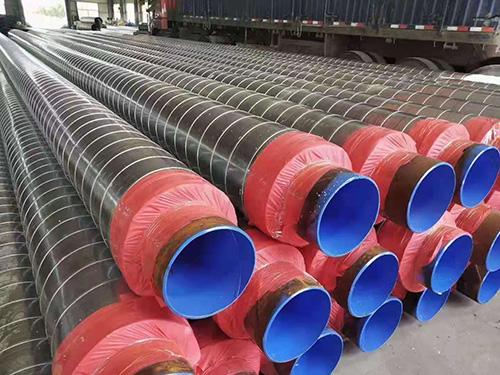
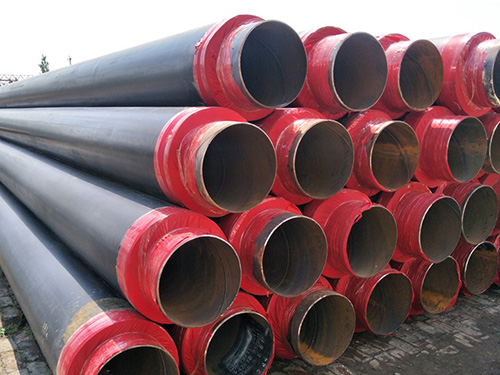
An insulated pipeline supplier is responsible for designing, producing, and delivering pipeline systems that maintain temperature stability while protecting against corrosion, pressure, and environmental stress.
A professional Insulated Pipeline Supplier integrates:
·Thermal insulation engineering
·Structural pipe material selection
·Protective coating systems
·Quality control through production
Through organized factory production, pipelines are manufactured in controlled environments to ensure consistent thickness, bonding strength, and insulation uniformity across batch supply orders.
Core Pipe Material Selection
At the heart of any insulated pipeline is the carrier pipe. Material choice depends on pressure, temperature, chemical exposure, and mechanical load.
Common structural materials include:
·Carbon steel for strength and pressure resistance
·Stainless steel for corrosion protection
·Alloy steels for high-temperature applications
·Composite pipes for lightweight installations
A qualified Insulated Pipeline Supplier evaluates operating conditions before selecting the base pipe. During manufacturer production, pipes are formed, welded, and tested to meet dimensional and mechanical standards before insulation layers are applied.
Proper base material selection ensures structural stability under long-term thermal and mechanical cycling.
Insulation Material Performance
Insulation controls thermal transfer and protects energy efficiency. The insulation layer must resist compression, moisture, and aging while maintaining low thermal conductivity.
Typical insulation materials include:
·Polyurethane foam
·Mineral wool
·Glass wool
·Elastomeric insulation
An experienced Insulated Pipeline Supplier selects insulation based on temperature range, environmental exposure, and installation method.
In controlled factory production, insulation is injected or wrapped uniformly around the pipe, ensuring consistent density and bonding strength throughout batch supply orders. This prevents thermal bridges and performance degradation over time.
Protective Jacket and Coating Systems
Beyond insulation, pipelines require outer protection against mechanical damage, UV exposure, and corrosion.
Protective layers may include:
·High-density polyethylene jackets
·Aluminum cladding
·Anti-corrosion coatings
·Moisture barriers
A professional Insulated Pipeline Supplier integrates these protective systems into the design stage. During manufacturer production, coatings are applied using calibrated processes to maintain thickness, adhesion, and impact resistance.
This layered structure protects insulation integrity and extends pipeline service life in harsh environments.
Mechanical Strength and Thermal Compatibility
Material selection must consider the interaction between mechanical loads and thermal movement.
Important factors include:
·Expansion and contraction behavior
·Vibration resistance
·Compression strength
·Long-term fatigue performance
An advanced Insulated Pipeline Supplier evaluates how pipe, insulation, and jacket materials respond together under changing temperature and pressure.
Through simulation and factory production testing, materials are matched to avoid cracking, delamination, or loss of insulation performance during operation.
Environmental and Chemical Resistance
Pipelines often operate in environments involving moisture, chemicals, and soil exposure.
Material selection focuses on:
·Water absorption resistance
·Chemical stability
·UV protection
·Microbial resistance
A reliable Insulated Pipeline Supplier integrates additives and coatings during manufacturer production to improve resistance against corrosion, moisture intrusion, and environmental aging.
This ensures long-term performance even in underground, offshore, or industrial installations.
Quality Control in Manufacturer Production
Performance optimization does not end with material choice. It depends on consistent production execution.
A structured manufacturer production process includes:
·Incoming material inspection
·Dimensional and density testing
·Adhesion strength verification
·Thermal conductivity measurement
With organized factory batch supply, every insulated pipeline unit is produced under repeatable conditions to deliver uniform quality for large-scale projects.
Quality control protects the performance designed into the material system.
Customization and Application Matching
Every project has different thermal and mechanical requirements.
An experienced Insulated Pipeline Supplier offers:
·Custom insulation thickness
·Pipe diameter selection
·Jacket material options
·Length and joint configurations
Through flexible factory production capability, batch supply can be adapted for district heating, oil and gas, chemical processing, HVAC, and industrial transport systems.
Customization ensures material systems are optimized for real operating conditions, not generic assumptions.
Sustainability and Efficiency Considerations
Modern pipeline systems must also consider energy efficiency and environmental responsibility.
Material selection now focuses on:
·Low thermal conductivity
·Long service life
·Reduced maintenance
·Recyclable materials
A forward-looking Insulated Pipeline Supplier integrates sustainability into material strategy during manufacturer production, helping reduce heat loss, operational cost, and environmental impact across the pipeline lifecycle.
Applications Benefiting from Optimized Materials
Optimized insulated pipelines are widely used in:
·District heating networks
·Oil and gas transport
·Chemical processing plants
·Industrial steam systems
·HVAC distribution
Through engineered material systems, an Insulated Pipeline Supplier ensures stable thermal performance and mechanical reliability in every application scenario.
Conclusion
Material selection is the foundation of insulated pipeline performance. A professional Insulated Pipeline Supplier optimizes results by carefully choosing carrier pipe materials, insulation systems, protective jackets, and coatings while ensuring compatibility between thermal and mechanical behavior.
With advanced manufacturer production systems and factory batch supply capability, insulated pipelines achieve consistent quality, durability, and efficiency across large-scale projects. By understanding how materials are selected and produced, engineers and project owners can partner with an Insulated Pipeline Supplier to achieve reliable, long-term pipeline performance with optimized energy efficiency and structural safety.
References
GB/T 7714:Incropera F P, DeWitt D P, Bergman T L, et al. Fundamentals of heat and mass transfer[M]. New York: Wiley, 1996.
MLA:Incropera, Frank P., et al. Fundamentals of heat and mass transfer. Vol. 6. New York: Wiley, 1996.
APA:Incropera, F. P., DeWitt, D. P., Bergman, T. L., & Lavine, A. S. (1996). Fundamentals of heat and mass transfer (Vol. 6, p. 116). New York: Wiley.
 Recommended Products
 Contact us
—— Contact:Manager
—— Tel:+86 15231788966
—— Email:info@zhantongpipe.com
—— Url:https://www.zhantongpipe.com
—— Address:Mengcun Hui Autonomous County, Cangzhou City, Hebei Province