
NewsDetails
Oil and Gas Pipeline Materials Selection: A Project Execution Guide
author:Zhantong time:2026-07-05 17:50:35 Click:82
Pipeline projects demand meticulous materials selection that balances technical performance against economic constraints. The consequences of poor material choices extend far beyond initial procurement—they manifest as leaks, failures, regulatory sanctions, and reputational damage that can persist for decades. This guide addresses the key decisions that pipeline engineers, project managers, and procurement professionals confront during project development.
Line Pipe Grade Selection and Performance Requirements
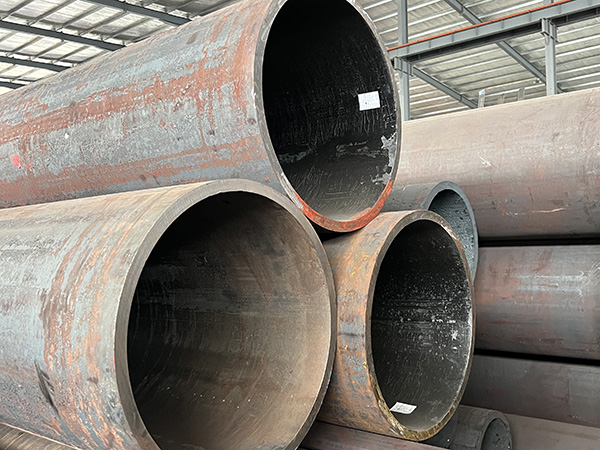
API 5L specifies line pipe grades ranging from Grade B through X100, with numbers indicating minimum yield strength in ksi. Grade B (42 ksi) serves low-pressure gathering lines, while X70 (70 ksi) and X80 (80 ksi) dominate long-distance transmission pipelines. Higher grades enable thinner walls for equivalent pressure ratings, reducing material quantities and welding time—but require careful consideration of fracture control properties.
Fracture toughness requirements vary by operating conditions. High-pressure gas pipelines in populated areas demand Charpy impact values sufficient to prevent brittle fracture propagation—a phenomenon where running fractures accelerate beyond critical velocity. Designers specify minimum toughness values based on material grade, operating temperature, and location classification, with corresponding requirements for DWTT (Drop Weight Tear Test) behavior.
Wall Thickness Calculation and Design Margins
Wall thickness calculations follow established formulas that account for internal pressure, pipe diameter, material yield strength, and design margins specified in applicable codes. The basic Barlow formula provides starting points, but detailed design incorporates factors for temperature derating, mill tolerance allowances, and corrosion/erosion margins. Offshore pipeline design additionally addresses external pressure buckling and collapse scenarios.
Industry practice typically specifies manufacturing tolerance allowances of 12.5% of nominal wall thickness, reducing effective design stress accordingly. Corrosion allowance—typically 0.125 to 0.250 inches—accommodates internal and external corrosion during design life. These adjustments can increase required wall thickness by 20-30% beyond bare pressure containment calculations, significantly influencing material costs.
Coating System Selection for Pipeline Protection
External coating selection depends on installation environment, temperature requirements, and compatibility with cathodic protection systems. Fusion-bonded epoxy (FBE) dominates for temperatures to approximately 230°F (110°C), providing excellent adhesion and cathodic disbondment resistance. Three-layer polyethylene (3PE) or polypropylene (3PP) systems add mechanical protection for demanding installations involving rocky terrain, high operating temperatures, or aggressive soils.
Field joint coating presents ongoing challenges despite decades of research and development. Heat-shrink sleeves, liquid epoxy systems, and polyurethane coatings each offer advantages depending on ambient conditions, applicator skill, and performance requirements. The weakest link concept reminds us that field joints—representing perhaps 1% of total coating area—can compromise protection across entire pipeline lengths if improperly executed.
Welding Procedure Qualification and Workmanship Standards
Pipeline welding procedures require rigorous qualification testing that demonstrates acceptable mechanical properties and radiographic examination results. Procedure qualification records (PQRs) document specific parameters—welding process, filler metal classification, base metal grades, thickness ranges, and position restrictions—that limit production welding to qualified parameters.
Workmanship standards define acceptance criteria for production welds, including maximum imperfection sizes for various defect types. Radiographic examination (RT), ultrasonic examination (UT), or automated ultrasonic testing (AUT) detect internal flaws, while visual inspection and magnetic particle/penetrant testing identify surface defects. Non-destructive examination percentages specified in project quality plans balance cost against risk tolerance.
Procurement Strategies and Supply Chain Management
Major pipeline projects consume enormous quantities of line pipe, fittings, and valves that strain global manufacturing capacity. Lead times for large-diameter, heavy-wall pipe can exceed twelve months, making early procurement essential for project schedule compliance. Manufacturer capacity reservations—backed by advance payments and take-or-pay provisions—protect against market-driven allocation shortfalls.
Quality surveillance during manufacturing provides confidence that products meet specification requirements before shipment. Third-party inspection agencies deploy inspectors at mills to witness testing, verify dimensions, and review documentation. This surveillance investment proves worthwhile for critical projects where failures incur enormous consequences—environmental remediation, production interruption, and potential liability claims.
Logistics and Construction Planning Integration
Materials delivery scheduling must synchronize with construction phase timing, avoiding both late delivery that halts construction and early arrival that burdens laydown yard capacity. Transportation modes—rail, truck, barge, or ocean vessel—impose dimensional and weight constraints that influence procurement specifications. Coastal or river-accessible mills reduce land transportation requirements, while remote project locations demand careful logistics coordination.
Construction productivity depends critically on consistent materials flow. Pipe inventory management systems track location and status of every joint from mill through installation. RFID tracking, GPS monitoring, and integration with construction management software provide visibility that enables proactive exception management. These capabilities prove especially valuable for projects spanning thousands of miles across multiple jurisdictions.
Inviting global distributors to join our pipeline materials supply network. We partner with experienced distributors who understand project execution requirements and can provide just-in-time delivery capabilities for major pipeline construction programs.
References
ASME B31.4: Pipeline Transportation Systems for Liquids and Slurries
ASME B31.8: Gas Transmission and Distribution Piping Systems
API 5L: Specification for Line Pipe, 46th Edition
ISO 3183:2012: Petroleum and natural gas industries—Steel pipe for pipeline transportation systems
Pipeline & Gas Journal, January 2021: Pipeline Project Execution Strategies
 Recommended Products
 Contact us
—— Contact:Manager
—— Tel:+86 15231788966
—— Email:info@zhantongpipe.com
—— Url:https://www.zhantongpipe.com
—— Address:Mengcun Hui Autonomous County, Cangzhou City, Hebei Province