
NewsDetails
Pipe Elbow 45° and 90°: Dimensional Standards and Flow Design
author:Zhantong time:2026-09-30 13:27:37 Click:68
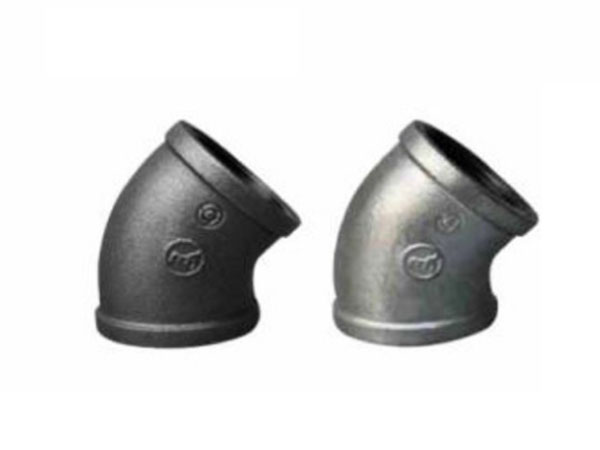
Every pipeline must turn a corner, and the pipe elbow does it with controlled flow. Whether 45° for a gentle bend or 90° for a right-angle turn, elbow geometry directly affects pressure drop, space and cost.
Zhantong manufactures butt-weld elbows to ANSI, DIN, JIS and GB. This article explains the choices that matter at specification time.
Elbow Angles and Use
A 90° elbow makes a right-angle turn; a 45° elbow gives a gentler directional change, often chained to achieve odd angles with less turbulence. Selection depends on layout constraints and allowable pressure loss.
Both are stocked in large quantities for plant and pipeline construction.
Long Radius vs Short Radius
Long radius (LR, R=1.5D) elbows are standard, giving lower pressure drop and erosion; short radius (SR, R=1.0D) fits tight spaces at the cost of higher loss. LR is default unless space forbids.
For slurry or abrasive service, LR is strongly preferred to reduce wear at the bend.
Standards and Schedules
Butt-weld elbows follow ASME B16.9 (ANSI), with DIN 2605, JIS B2311 and GB/T 12459 also common. Wall schedule (SCH 10–160, STD, XS, XXS) must match the pipe to keep the bore continuous.
Zhantong marks size, schedule and heat number for traceability.
Materials and Manufacturing
Elbows are made from carbon, stainless, alloy and low-temperature steels, formed by hot or cold pressing and then heat-treated. Seamless elbows avoid welds; welded types use inspected seams.
Large diameters may be fabricated from bent pipe with reinforced walls.
Flow and Pressure Considerations
Elbows are the main contributor to minor (local) pressure loss in a line. Using LR and avoiding unnecessary bends keeps pumping cost down. In clean water LR loss is small; in slurry it dominates wear.
Computational layout tools help minimize total equivalent length.
Selection and Installation
Specify angle, radius, diameter, schedule, material, standard and end type. Align the bore during welding to avoid steps that cause turbulence and erosion at the joint.
For high-temperature lines, match elbow and pipe materials and post-weld heat treat as required.
Frequently Asked Questions
Long or short radius elbow?
Long radius (1.5D) is standard for lower loss; short radius fits tight layouts.
Which standard covers elbows?
ASME B16.9 for butt-weld, with DIN 2605 and GB/T 12459 also common.
How does an elbow affect pressure?
It is the main local loss source; LR and fewer bends reduce pumping cost.
Can elbows be seamless?
Yes; seamless elbows avoid seams and are preferred for high-pressure duty.
Conclusion
Pipe elbows turn flow efficiently when radius, schedule and material are matched to service. Long-radius butt-weld elbows remain the reliable default for most pipelines.
To discuss specifications, request a quote, or download full datasheets, visit www.zhantongpipe.com or contact our engineering team directly. Hebei Zhantong Pipeline Equipment Manufacturing Co., Ltd supports OEM drawings, third-party inspection, and worldwide shipping for every order.
 Recommended Products
 Contact us
—— Contact:Manager
—— Tel:+86 15231788966
—— Email:info@zhantongpipe.com
—— Url:https://www.zhantongpipe.com
—— Address:Mengcun Hui Autonomous County, Cangzhou City, Hebei Province