
NewsDetails
Pipe Reducer: Concentric and Eccentric Types for Flow Transition
author:Zhantong time:2026-10-01 13:33:36 Click:162
Pipelines rarely stay one diameter end to end. The pipe reducer bridges sizes, and the choice between concentric and eccentric forms decides whether flow stays smooth or air pockets accumulate.
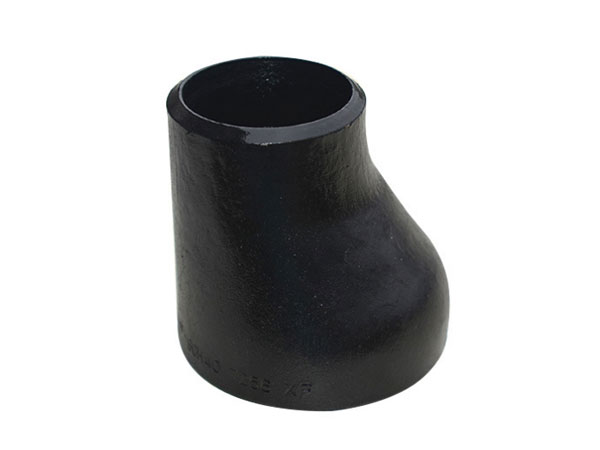
Zhantong supplies both reducer types to ANSI, DIN, JIS and GB. This article explains when each is correct.
Concentric vs Eccentric
A concentric reducer tapers symmetrically about the centerline—ideal for vertical lines and pump suctions where uniform flow matters. An eccentric reducer is flat on one side, used in horizontal lines to keep the bore aligned and prevent air or sediment traps.
The flat side can face up or down depending on whether you need to avoid vapor or solids accumulation.
Standards and Geometry
Butt-weld reducers follow ASME B16.9, with DIN 2616 and GB/T 12459 equivalents. They are specified by large-end and small-end diameters and wall schedule, formed by pressing or spinning.
Zhantong marks both ends and heat number for traceability and correct orientation.
Materials and Schedules
Available in carbon, stainless, alloy and low-temperature steels across SCH 10–160. The reducer wall is often matched or thickened to the heavier adjacent pipe to keep pressure rating continuous.
Seamless reducers avoid welds at the transition for high-pressure duty.
Flow and Orientation Rules
In horizontal liquid lines, an eccentric reducer with the flat side up prevents vapor accumulation at pump suction; flat side down avoids solids settling. Concentric reducers suit vertical flow and most pump discharges.
Correct orientation is critical in suction lines to avoid cavitation.
Applications
Reducers appear at pump connections, vessel nozzles, meter runs and anywhere diameter changes. Eccentric types dominate horizontal process and water lines; concentric types serve vertical and skid piping.
They also ease connection between mismatched equipment flanges.
Selection and Installation
Specify large/small ends, type, schedule, material and standard. During welding keep bores aligned and orientation correct; mark "flat-up/down" on drawings to avoid field mistakes.
For high-temperature lines, match materials and apply PWHT per procedure.
Frequently Asked Questions
Concentric or eccentric reducer?
Concentric for vertical/symmetric flow; eccentric for horizontal lines to control air or solids.
Which way does the flat side face?
Up to avoid vapor pockets at pump suction; down to avoid solids settling.
What standard covers reducers?
ASME B16.9, with DIN 2616 and GB/T 12459 common.
Must schedule match the pipe?
Yes, to keep bore continuous and pressure rating consistent across the joint.
Conclusion
Pipe reducers manage diameter changes while protecting flow quality. Choosing concentric or eccentric—and orienting it correctly—prevents cavitation, air locks and solids buildup.
To discuss specifications, request a quote, or download full datasheets, visit www.zhantongpipe.com or contact our engineering team directly. Hebei Zhantong Pipeline Equipment Manufacturing Co., Ltd supports OEM drawings, third-party inspection, and worldwide shipping for every order.
 Recommended Products
 Contact us
—— Contact:Manager
—— Tel:+86 15231788966
—— Email:info@zhantongpipe.com
—— Url:https://www.zhantongpipe.com
—— Address:Mengcun Hui Autonomous County, Cangzhou City, Hebei Province