
NewsDetails
Pipeline Flange Connection Standards
author:Zhantong time:2026-06-03 23:40:58 Click:86
Pipeline Flange Connection Standards
Introduction to Flange Standardization
Flange connection standards establish the dimensional, material, and performance requirements that ensure interchangeability and reliability of flanged connections in pipeline systems. These standards, developed by international organizations and industry bodies, provide engineers and procurement professionals with clear specifications for selecting appropriate flanges for various applications. Hebei Zhantong Pipeline Equipment Manufacturing Co., Ltd. manufactures flanges conforming to major international standards, supporting global infrastructure development.
Adherence to recognized standards is essential for ensuring the safety and integrity of pipeline systems. Standards define pressure-temperature ratings, dimensions, tolerances, material requirements, and testing protocols. By specifying flanges that comply with established standards, engineers can be confident in the performance and reliability of flanged connections under defined operating conditions.
ASME and ANSI Standards
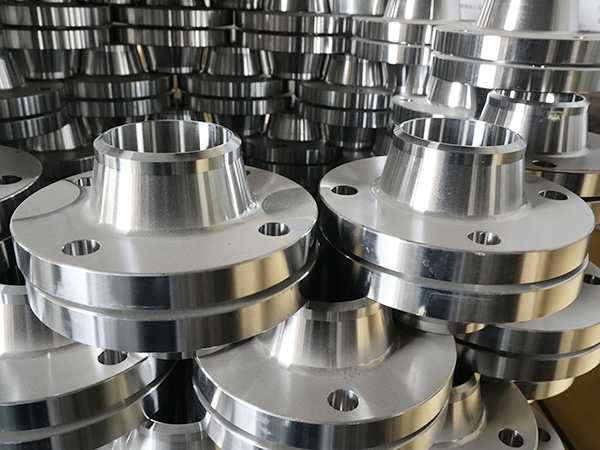
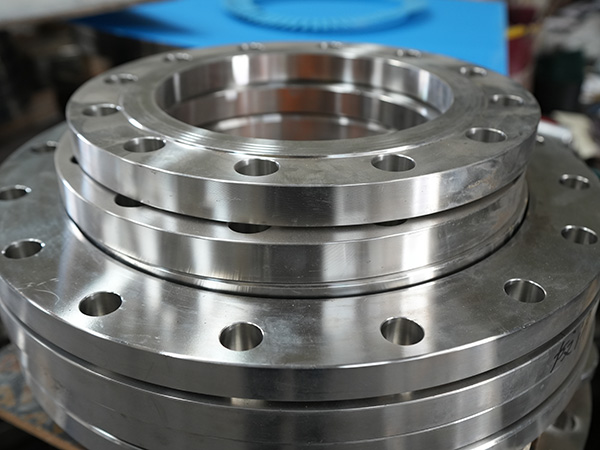
The American Society of Mechanical Engineers (ASME) standards are among the most widely recognized and implemented globally. ASME B16.5 defines pipe flanges and flanged fittings for sizes up to 24 inches, covering pressure classes from 150 to 2500. This standard provides comprehensive dimensional data, pressure-temperature ratings, and material specifications for flanges used in process piping systems.
ASME B16.47 covers large diameter steel flanges for sizes 26 inches and above, providing two series of dimensions. Series A flanges are dimensionally equivalent to MSS SP-44, while Series B dimensions align with API 605. Understanding these series distinctions is important when designing or specifying large-diameter flanged connections.
Hebei Zhantong Pipeline Equipment Manufacturing Co., Ltd. produces flanges in accordance with ASME standards, ensuring dimensional accuracy and pressure integrity. The company's quality management system includes verification of conformance to standard requirements through dimensional inspection, material testing, and pressure testing.
European and International Standards
European standards for flanges are published by the European Committee for Standardization (CEN). EN 1092 defines steel flanges for use in piping systems, providing dimensions, pressure-temperature ratings, and technical delivery requirements. This standard is widely used throughout Europe and in regions adopting European technical specifications.
The International Organization for Standardization (ISO) publishes ISO 7005, which specifies metal flanges in multiple parts covering steel, cast iron, and copper alloy flanges. ISO standards provide an internationally harmonized approach to flange specifications, facilitating global trade and standardization.
JIS (Japanese Industrial Standards) and DIN (German Standards) continue to be referenced in specific applications and regions. Manufacturers serving global markets must maintain capability to produce flanges conforming to various regional standards, ensuring customers can obtain products suitable for their specific project requirements.
Pressure-Temperature Ratings
Pressure-temperature ratings define the maximum allowable working pressure at specified temperatures for different flange classes and materials. These ratings are fundamental to proper flange selection, ensuring that flanged connections can safely contain the operating pressures and temperatures of the piping system. Ratings vary based on flange material grade and service temperature.
As operating temperature increases, the allowable pressure decreases due to reductions in material strength and creep resistance. Standards provide pressure-temperature tables that enable engineers to select appropriate flange classes and materials for their specific operating conditions. Applying these ratings correctly is essential for safe system design.
It is important to note that pressure-temperature ratings assume proper gasket selection, bolt tightening, and flange assembly procedures. Deviations from recommended practices can result in reduced pressure capacity or leakage. Comprehensive flange design considers not only the flange itself but also the entire bolted connection assembly.
Material Specifications
Flange material specifications are integral to connection performance and integrity. Standards designate specific material grades with defined chemical compositions and mechanical properties. Common materials include carbon steel grades such as ASTM A105 for forged flanges and ASTM A350 for low-temperature service.
Stainless steel flanges are specified for corrosive services or applications requiring enhanced oxidation resistance. ASTM A182 defines forging specifications for various stainless steel grades, including austenitic, ferritic, and martensitic stainless steels. The selection of appropriate grade depends on the specific corrosive environment and temperature conditions.
Alloy steel flanges, such as those conforming to ASTM A182 F11 or F22 specifications, provide enhanced high-temperature strength for elevated temperature applications. These materials are commonly specified in power generation and petrochemical processing where operating temperatures exceed the capability of standard carbon steel grades.
Quality Assurance and Certification
Quality assurance programs verify that manufactured flanges conform to specified standards. This includes material certification from steel suppliers, dimensional verification against standard drawings, and non-destructive examination of critical features. Pressure testing validates the integrity of flange assemblies under simulated service conditions.
Manufacturers like Zhantong maintain quality management systems certified to ISO 9001, demonstrating commitment to consistent quality and continuous improvement. Third-party inspection and certification provide additional assurance for critical applications where verification by independent organizations is required.
Conclusion
Flange connection standards provide the foundation for reliable, safe pipeline connections across diverse industries and applications. Understanding these standards and their requirements is essential for engineers, procurement professionals, and manufacturers. Hebei Zhantong Pipeline Equipment Manufacturing Co., Ltd. delivers flanges manufactured to international standards, supporting customers in developing robust and compliant pipeline systems.
References
1. Journal of Pressure Vessel Technology, "Pressure-temperature rating methodology for pipeline flanges", 2020.
2. International Journal of Pressure Vessels and Piping, "Comparison of international flange standards and their implications for global projects", 2021.
3. Engineering Failure Analysis, "Root cause analysis of flange connection failures attributed to specification issues", 2019.
4. Materials & Design, "Material selection for high-pressure high-temperature flange applications", 2022.
5. Process Safety and Environmental Protection, "Quality assurance in flange manufacturing: Best practices and standards compliance", 2021.
 Recommended Products
 Contact us
—— Contact:Manager
—— Tel:+86 15231788966
—— Email:info@zhantongpipe.com
—— Url:https://www.zhantongpipe.com
—— Address:Mengcun Hui Autonomous County, Cangzhou City, Hebei Province