
NewsDetails
Pneumatic Pipeline Systems: Industrial Powder Handling and Material Transport Solutions
author:Zhantong time:2026-07-08 18:44:16 Click:168
Pneumatic conveying employs air or inert gas streams to transport bulk solids through pipeline systems, eliminating mechanical conveyors and enabling flexible plant layouts. These systems serve countless industries—from cement and grain processing to plastics manufacturing and pharmaceutical production. The diversity of materials handled spans cohesive powders, abrasive granules, fragile food products, and hazardous chemicals, each demanding tailored system designs that ensure reliable transport without product degradation.
Conveying Modes and Transport Mechanisms
Dilute phase conveying suspends materials in high-velocity air streams, achieving velocities typically exceeding 3000 feet per minute. Particles remain airborne throughout transport, generating low pressure drops but imposing significant product attrition from particle-to-particle and particle-to-wall collisions. This mode suits non-abrasive materials that tolerate mechanical stress, with systems commonly operating at 10-15 psig pressure.
Dense phase conveying moves materials in slow-moving, high-pressure streams where product forms a moving bed or slug pattern. Velocities typically remain below 1000 feet per minute, dramatically reducing product degradation and abrasion. The trade-off involves higher pressure drops and careful system sizing to maintain stable flow patterns. Dense phase excels for fragile, friable, or abrasive materials where product integrity matters.
Pipeline Materials and Construction Considerations
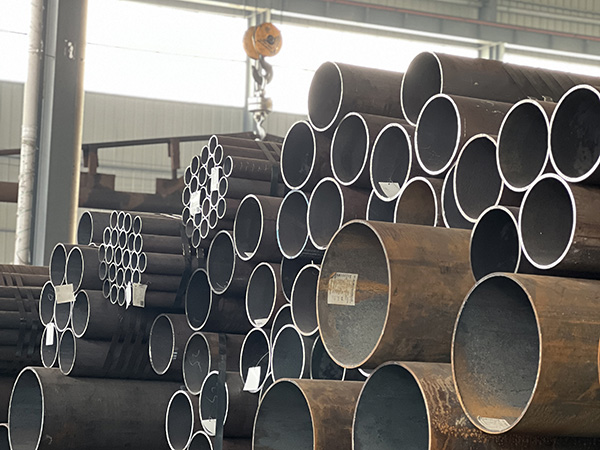
Carbon steel pipelines serve general pneumatic applications where abrasion remains moderate and system pressure ratings accommodate design requirements. Schedule 40 or extra-strong pipes provide adequate strength for typical conveying pressures up to 100 psig. The smooth internal surface minimizes product accumulation, while weld integrity ensures leak-free operation essential for maintaining conveying velocity.
Abrasion-resistant materials become necessary for highly abrasive materials like sand, glass, or mineral powders. Hard-faced overlay welding on standard pipe provides cost-effective wear resistance. Specialized wear-resistant pipe—incorporating ceramic inserts, chrome carbide linings, or polyurethane coatings—extends service life in severe applications, though at substantially higher material costs.
System Components and Design Architecture
Receiver tanks at material supply points introduce product into the pneumatic system under controlled conditions. These vessels—typically cylindrical pressure vessels with appropriately sized inlet and outlet connections—meter material into conveying lines based on volumetric or gravimetric measurements. Proper sizing prevents flooding or starvation that would destabilize transport.
Filter receivers at discharge points separate product from air streams through filter elements. Bag or cartridge filters capture particles while allowing air passage to downstream filters or exhaust systems. Pulse jet cleaning maintains filter permeability, extending time between maintenance interventions. The filter area selection balances air-to-cloth ratios against expected dust loading and cleaning frequency.
Pipeline Layout and Route Optimization
Pipeline routing significantly influences system performance and operating costs. Long horizontal runs accumulate material deposits unless velocities remain adequately high throughout. Vertical lifts consume available pressure differential, limiting achievable throughput. Bend radius selection prevents product impact damage and excessive wear at directional changes.
Bend configurations range from standard radius (3D or 5D) to wide-radius sweeps that reduce impact forces and wear rates. Mitered bends provide intermediate options for space-constrained installations where standard radii prove impractical. Wear back plates at bend exits protect against erosion-accelerated failures, with replaceable wear pieces extending component life.
Air Supply System Design and Energy Consumption
Positive displacement blowers and rotary air compressors provide the driving force for pneumatic conveying systems. Blower selection depends on required pressure and flow rate, with roots-type blowers serving lower-pressure applications and sliding vane or screw compressors providing higher pressures for dense phase or long-distance conveying. Variable frequency drives enable flow modulation that saves energy during reduced throughput operation.
Energy consumption represents a substantial operating cost component, often exceeding 50% of total system operating expenses. System designs that minimize pressure drop—through appropriate pipe sizing, efficient routing, and low-wear components—reduce required air flow and associated energy costs. The tradeoff between pipe size (capital cost) and operating cost (energy) drives economic optimization calculations.
Troubleshooting and Performance Optimization
Product degradation and pipeline blockages represent common pneumatic system problems requiring systematic diagnosis. Degradation often indicates excessive conveying velocities or unsuitable bend configurations. Blockages typically result from insufficient air flow, improper material feed rates, or accumulated deposits dislodging during transient conditions. Pressure monitoring throughout the system pinpoints problem locations.
Performance optimization involves iterative adjustment of operating parameters—air flow rate, material feed rate, conveying pressure—to achieve target throughput without product damage or system instability. Automated control systems continuously monitor performance and adjust parameters to maintain optimal operation. These systems pay for themselves through improved throughput and reduced operator attention requirements.
Inviting global distributors to join our pneumatic conveying components supply network. We seek distributors with experience in material handling systems who can provide technical application support to manufacturing customers across diverse industries.
References
ASME B31.3: Process Piping
ISO 21360: Determination of Particle Density of Powders
Pneumatic Conveying Design Guide, 3rd Edition, David Mills
Chemical Engineering, May 2021: Optimizing Pneumatic Conveying Systems
Bulk Solids Handling, April 2020: Dense Phase Conveying Technology Advances
 Recommended Products
 Contact us
—— Contact:Manager
—— Tel:+86 15231788966
—— Email:info@zhantongpipe.com
—— Url:https://www.zhantongpipe.com
—— Address:Mengcun Hui Autonomous County, Cangzhou City, Hebei Province