
NewsDetails
Seamless vs Welded Pipes Comparison Selection Guide
author:Zhantong time:2026-07-09 18:45:26 Click:88
The choice between seamless and welded pipe products influences project economics, performance margins, and supply chain reliability across industrial applications. Both manufacturing routes produce quality products that serve their intended markets effectively—yet fundamental differences in production methods, cost structures, and capability ranges guide application-specific selection. Understanding these distinctions enables procurement professionals and engineers to optimize material selection for specific project requirements.
Seamless Pipe Manufacturing Processes
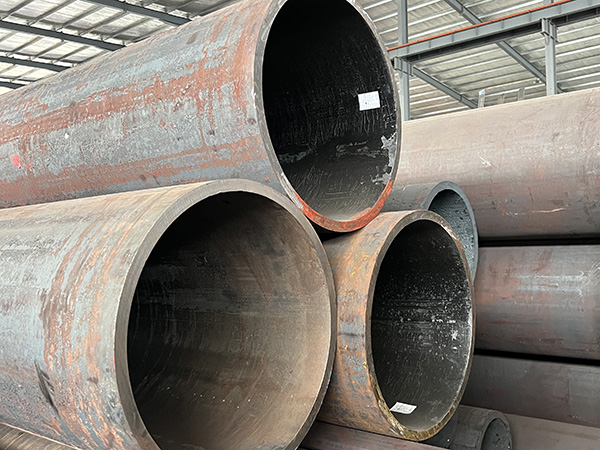
Seamless pipe production eliminates circumferential welds through hot working processes that form solid billets into hollow tubes. The Mannesmann mill—employing two obliquely positioned rolls that drive a piercer through the billet center—initiates the transformation from solid cylinder to hollow shell. Subsequent elongation mandrels, plug mills, or push bench operations reduce wall thickness and achieve final dimensions.
Modern seamless mills achieve extraordinary production rates through continuous mandrel mills andAssel mills that approach welded pipe productivity while maintaining the seamless product advantages. The piercer nose angle, roll spacing, and elongation rates determine internal quality and surface finish. These parameters—closely held proprietary knowledge among tube manufacturers—differentiate quality producers from commodity suppliers.
Electric Resistance Welding Production Methodology
Electric resistance welded (ERW) pipe production begins with flat steel coils that progressive forming rolls shape into cylindrical form. As the abutting edges approach each other, high-frequency current—induced through induction or direct contact—heats the material to welding temperature. Immediate pressure application forges the heated edges together, creating a metallurgical bond that in quality products equals base metal strength.
The weld seam represents both the advantage and limitation of ERW production. The advantage lies in manufacturing efficiency—the continuous process achieves throughput rates impossible in seamless production. The limitation involves the seam itself, which constitutes a microstructural and geometric discontinuity requiring careful quality control. Modern ERW mills employing online ultrasonic examination effectively address seam quality concerns for most applications.
Submerged Arc Welding for Large Diameter Applications
Submerged arc welding (SAW) produces large-diameter line pipe through either longitudinal (LSAW) or spiral (SSAW) welding processes. LSAW pipes form plates into cylinders before internal and external SAW passes complete the seam. The JCOE or UOE forming processes impart cold work that supplements the weld strength, enabling thinner walls for equivalent pressure ratings.
Spiral welding spirals strips at controlled angles, achieving diameter flexibility from single-width coils. This process suits mills positioned near coil sources but distant from plate production facilities. The spiral seam orientation—diagonal rather than longitudinal—influences stress distribution in ways that sometimes require consideration in high-pressure designs. However, for most transmission pipeline applications, spiral weld performance matches longitudinal weld capabilities.
Mechanical Property Comparisons and Performance Characteristics
Seamless pipes typically demonstrate more consistent mechanical properties across wall sections, lacking the microstructural variations that heat-affected zones introduce in welded products. This consistency proves valuable for applications demanding precise strain hardening behavior or predictable fracture toughness. Cold-drawn seamless tubing achieves exceptional surface finish and dimensional tolerance essential for precision hydraulic cylinders or instrumentation applications.
Modern welded pipe with proper quality control matches seamless performance for most applications. The weld seam's heat-affected zone experiences microstructural changes that initially reduce notch toughness, but controlled heat input and appropriate filler metal selection minimize these effects. Post-weld heat treatment further normalizes weld properties when applications demand it. API 5L and ASTM specifications impose identical mechanical requirements regardless of manufacturing method.
Cost Structure and Economic Considerations
Seamless production involves higher raw material costs—solid billets versus flat rolled coils—and less efficient material utilization. The piercing process generates center discard that the tube manufacturer cannot sell at billet prices. These factors establish seamless pipe's higher baseline cost that persists regardless of market conditions.
Welded pipe benefits from coil or plate sourcing flexibility—mills can select among global suppliers competing for orders. The continuous production process spreads fixed costs across greater tonnage. Material efficiency from flat products converting to round pipes exceeds seamless efficiency. These advantages make welded pipe the economical choice for most applications where welded performance proves acceptable.
Application-Specific Selection Recommendations
High-pressure applications in chemical processing, refinery, and power generation frequently specify seamless products for critical services. The absence of longitudinal welds eliminates one potential failure mode, providing margin against unexpected overpressure or thermal stress conditions. Nuclear and high-temperature steam applications typically mandate seamless materials through regulatory requirements.
Transmission pipelines—the dominant market for large-diameter pipe—overwhelmingly employ SAW products where the seam's orientation and quality receive careful specification and verification. Long-distance gas transmission often specifies ERW or SAW line pipe with proven fracture control properties. Water transmission, municipal distribution, and structural applications similarly accept welded products with confidence in their performance.
Inviting global distributors to join our comprehensive pipe products distribution network. We supply both seamless and welded pipe products, enabling our distributor partners to serve diverse application requirements from single-source suppliers.
References
API 5L: Specification for Line Pipe, 46th Edition
ASTM A53/A53M-20: Standard Specification for Pipe, Steel, Black and Hot-Dipped, Zinc-Coated, Welded and Seamless
ASTM A106/A106M-19: Standard Specification for Seamless Carbon Steel Pipe for High-Temperature Service
ISO 3183:2012: Petroleum and natural gas industries—Steel pipe for pipeline transportation systems
Tube & Pipe Technology, June 2020: Manufacturing Process Comparison
 Recommended Products
 Contact us
—— Contact:Manager
—— Tel:+86 15231788966
—— Email:info@zhantongpipe.com
—— Url:https://www.zhantongpipe.com
—— Address:Mengcun Hui Autonomous County, Cangzhou City, Hebei Province