
NewsDetails
Slip-On Flange: Cost-Effective Connection for Low-Pressure Systems
author:Zhantong time:2026-10-06 15:42:35 Click:195
Not every joint needs the muscle of a welding neck. The slip-on flange (SO) slides over the pipe and is welded on both sides, giving a simpler, lower-cost connection that is easy to align and assemble.

Zhantong produces slip-on flanges across standards and materials. This article covers when the SO flange is the right economical choice.
Design and How It Fits
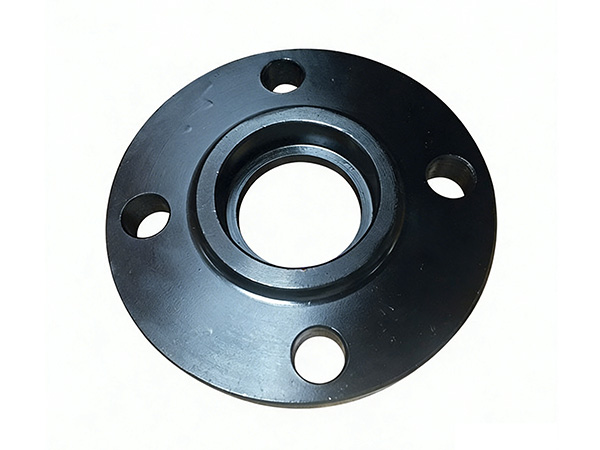
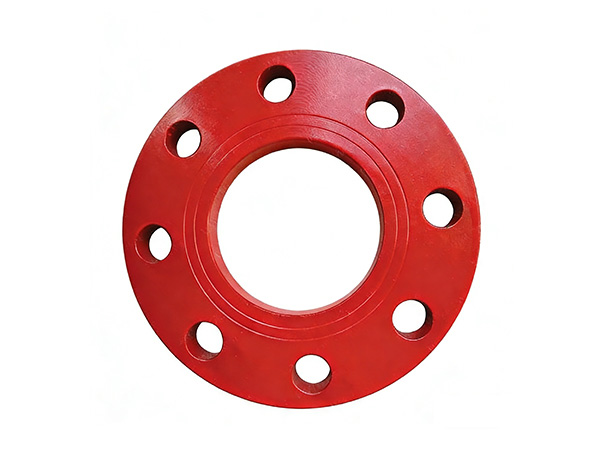
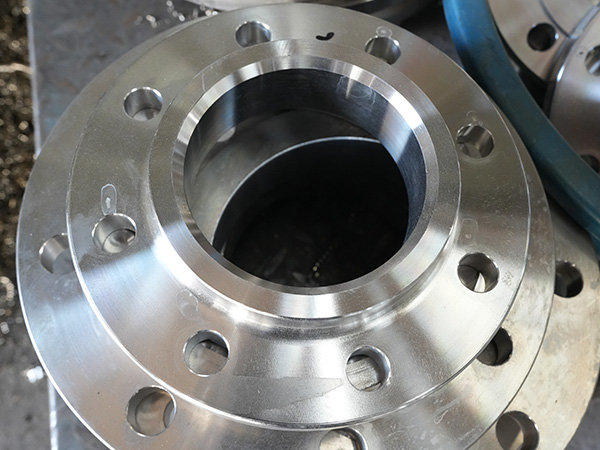
A slip-on flange has a hub with a bore slightly larger than the pipe OD, letting the pipe pass through. Two fillet welds—one at the inside face, one at the outside—secure it. This makes alignment forgiving during fit-up.
Its shorter profile reduces material and machining cost versus a WN flange.
Standards and Availability
SO flanges are built to ASME B16.5 / B16.47, DIN, JIS, EN and GB, in DN15–DN600 typically, classes 150–300 (PN10–PN40). Zhantong stocks carbon and stainless grades with standard RF faces.
They are among the most common flanges in utilities and skid-mounted packages.
Welding and Assembly
The pipe should be set so it protrudes slightly past the flange face, then welded inside and out. Proper fit-up and weld size per ASME VIII / B31.3 ensure the joint carries its rated load.
Because the welds are fillet rather than full penetration, procedure qualification still matters for pressure integrity.
Advantages and Trade-offs
Benefits are low cost, easy alignment, quick installation and less precise cutting. The trade-off is lower fatigue and pressure rating than WN, and the small bore step can cause minor turbulence.
For non-critical, low-pressure air, water and utility lines, these trade-offs are usually acceptable.
Typical Applications
SO flanges suit HVAC water loops, plant utilities, low-pressure process lines, ventilation and skid plumbing. They are common where the system is frequently modified.
Avoid them in severe cyclic, cryogenic or high-temperature hazardous service where WN is preferred.
Selection Guidance
Specify by standard, size, class, face type and material. Confirm the service pressure and temperature stay within the SO rating, and choose compatible gasket and bolting.
For borderline duty, step up to a WN flange rather than over-rating an SO.
Frequently Asked Questions
When should I use a slip-on flange?
For low-pressure, non-critical utility and process lines where cost and easy alignment matter.
How is it welded?
With two fillet welds after the pipe is slipped through and set to protrude past the face.
What pressure classes exist?
Typically Class 150–300 (PN10–PN40) in common sizes.
Is it as strong as a WN flange?
No; it has lower fatigue and pressure ratings, so avoid it for severe cyclic or high-pressure duty.
Conclusion
The slip-on flange is the pragmatic, budget-friendly connection for low-pressure systems. Right-sized to its rating, it delivers reliable service with fast, simple installation.
To discuss specifications, request a quote, or download full datasheets, visit www.zhantongpipe.com or contact our engineering team directly. Hebei Zhantong Pipeline Equipment Manufacturing Co., Ltd supports OEM drawings, third-party inspection, and worldwide shipping for every order.
 Recommended Products
 Contact us
—— Contact:Manager
—— Tel:+86 15231788966
—— Email:info@zhantongpipe.com
—— Url:https://www.zhantongpipe.com
—— Address:Mengcun Hui Autonomous County, Cangzhou City, Hebei Province