
NewsDetails
Stainless Steel Flange for Corrosive and Hygienic Service
author:Zhantong time:2026-10-07 15:44:10 Click:160
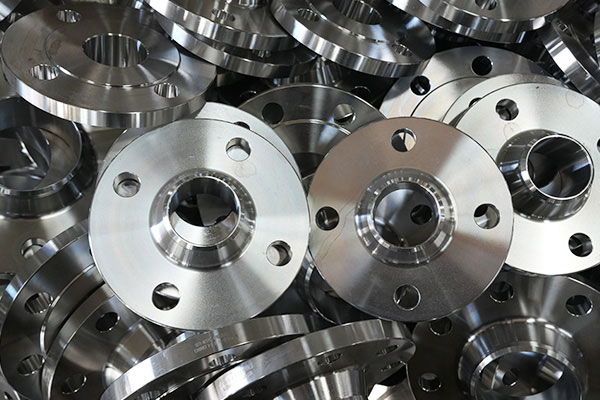
Where carbon steel would rust away, stainless steel flanges keep pipelines clean and intact. From chemical plants to food and pharmaceutical lines, the right stainless grade prevents contamination and costly leakage.

Zhantong supplies stainless flanges in 304/304L, 316/316L and duplex. This guide covers grade selection, surface finish and standards.
Why Stainless for Flanges
Stainless steels form a passive chromium oxide film that self-heals in air, resisting rust and many chemicals. This protects both structural integrity and product purity in sensitive processes.
For flanges, stainless also avoids the galvanic and coating issues of carbon steel in wet or corrosive environments.
Grade Selection: 304 vs 316L
304/304L suits general atmospheric and mild chemical duty; 316L adds molybdenum for superior resistance to chlorides and seawater. The "L" (low carbon) grades minimize sensitization during welding.
Duplex grades offer higher strength and chloride resistance for aggressive offshore or brine service.
Surface Finish and Hygiene
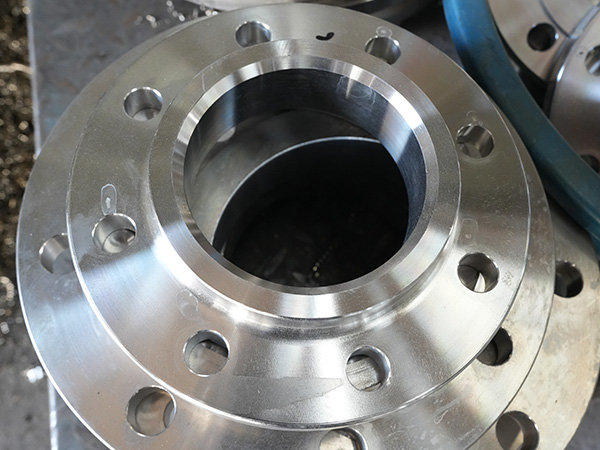
Hygienic applications need smooth finishes (e.g., Ra ≤ 0.8 µm, often polished) on wetted faces to prevent bacterial harbor and ease cleaning. Zhantong provides mill, brushed or mirror-polished finishes per spec.
For sanitary lines, Ra values and passivation are documented to support validation.
Standards and Forms
Stainless flanges follow ASME B16.5, DIN, JIS, EN and GB in WN, SO, blind and lap-joint forms. Zhantong supplies with EN 10204 3.1 mill certificates and PMI verification on request.
Dimensions match carbon-steel counterparts so mixed-material systems assemble without special fittings.
Applications
Use spans food and beverage, pharmaceuticals, desalination, marine, chemical processing and clean utilities. In any line where product purity or corrosion dominates, stainless is specified.
316L is the default for coastal or chloride-exposed plants.
Installation Notes
Use compatible stainless or insulated bolting to avoid galvanic corrosion, and select gaskets (PTFE, EPDM, graphite) rated for the media and temperature. Protect polished faces during handling.
Passivation after welding restores corrosion resistance at the heat-affected zone.
Frequently Asked Questions
Which stainless grade for seawater?
316L or duplex; 304 is prone to chloride pitting in marine environments.
What does the L mean?
Low carbon, which reduces sensitization and intergranular corrosion after welding.
Are hygienic finishes available?
Yes; polished Ra finishes and passivation are supplied with documentation for validation.
Do stainless flanges match carbon sizes?
Yes, dimensions follow the same ASME/DIN standards for mixed-material assembly.
Conclusion
Stainless steel flanges protect both equipment and product in corrosive or hygienic service. Matching grade and finish to the media ensures long life and clean operation.
To discuss specifications, request a quote, or download full datasheets, visit www.zhantongpipe.com or contact our engineering team directly. Hebei Zhantong Pipeline Equipment Manufacturing Co., Ltd supports OEM drawings, third-party inspection, and worldwide shipping for every order.
 Recommended Products
 Contact us
—— Contact:Manager
—— Tel:+86 15231788966
—— Email:info@zhantongpipe.com
—— Url:https://www.zhantongpipe.com
—— Address:Mengcun Hui Autonomous County, Cangzhou City, Hebei Province