
NewsDetails
Seamless Steel Tube Manufacturing Process Explained
author:David Miller time:2026-11-08 13:58:36 Click:0
Seamless steel tubes are valued for their superior strength and pressure-bearing capability. Unlike welded pipes, they have no longitudinal seam, making them ideal for high-pressure, high-temperature applications. This article explains the seamless tube manufacturing process from start to finish.
1. Raw Material
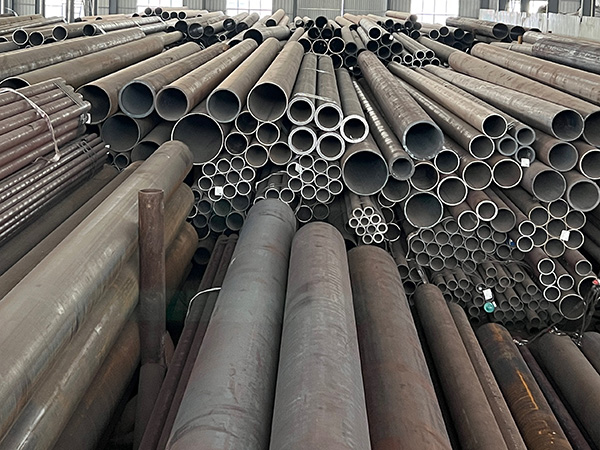
The process starts with a solid round steel billet, typically made from carbon steel or alloy steel. The billet is inspected for surface defects and dimensional accuracy before entering the production line.
2. Heating and Piercing
The billet is heated in a rotary hearth furnace to around 1200–1280°C. It is then fed into a piercing mill where a rotating mandrel pierces the center of the billet, creating a hollow shell called a bloom or mother tube.
3. Elongation and Sizing
The hollow shell is elongated in a plug mill or continuous rolling mill, reducing its wall thickness and diameter. After elongation, the tube passes through a sizing mill that brings it to the final outside diameter and wall thickness tolerances.
4. Heat Treatment
Depending on the steel grade and application, the tube may undergo normalizing, annealing or quenching and tempering to achieve the required mechanical properties.
5. Finishing and Inspection
The finished tube is straightened, cut to length, inspected by ultrasonic testing, hydrostatic testing and visual inspection. It is then marked, coated and packaged for shipment.
Quality Control in Seamless Tube Manufacturing
Quality control is critical in seamless tube production. Manufacturers perform ultrasonic testing (UT), hydrostatic testing, eddy current testing and dimensional inspection on every batch. The finished tube must meet the chemical composition and mechanical property requirements of the relevant standard (ASTM A106, API 5L, etc.). Always request a mill test report (MTR) to verify compliance.
Quality Control in Seamless Tube Manufacturing
Quality control is critical in seamless tube production. Manufacturers perform ultrasonic testing (UT), hydrostatic testing, eddy current testing and dimensional inspection on every batch. The finished tube must meet the chemical composition and mechanical property requirements of the relevant standard (ASTM A106, API 5L, ASTM A335, etc.). Always request a mill test report (MTR) to verify compliance. For critical applications, third-party inspection by SGS, BV or TUV is recommended.
Common Defects and How to Detect Them
Seamless tubes can have internal and external defects that compromise performance. Common defects include: laps, seams, slivers, internal cracks, wall thickness variation and ovality. Ultrasonic testing detects internal flaws, while eddy current testing finds surface defects. Hydrostatic testing verifies pressure integrity. Visual and dimensional inspection catches surface and geometry issues. Reputable manufacturers test 90% of tubes for critical applications.
- Ultrasonic testing (UT) — detects internal laminations, cracks and inclusions.
- Eddy current testing (ECT) — finds surface and near-surface defects.
- Hydrostatic test — verifies pressure integrity at 1.5× working pressure.
- Dimensional inspection — checks OD, ID, wall thickness and straightness.
Seamless Tube FAQ
Answers to the most common questions about seamless steel tubes.
- What is the difference between seamless and welded pipe? — Seamless pipe has no welded seam, making it stronger and more reliable for high pressure. Welded pipe (ERW, LSAW) is cheaper but has a weld seam that can be a weak point. Use seamless for high pressure, high temperature and critical service.
- What standards do seamless tubes meet? — Common standards include ASTM A106 (carbon steel high temperature), API 5L (line pipe), ASTM A335 (alloy steel high temperature), and ASTM A213 (boiler tubes). Always specify the correct standard on your order.
- How is seamless tube made? — The process involves: piercing a heated billet to create a hollow shell, then elongating and reducing it to the desired size through rotary rolling or pilger rolling. The result is a uniform, seam-free tube.
- Can seamless tube be threaded? — Yes, but only for wall thicknesses suitable for threading. Thin-wall seamless tube should be butt welded, not threaded. Always check the thread standard (NPT, BSPT, etc.) on your order.
- What is the typical lead time for seamless tube? — Standard sizes in popular grades are usually in stock and ship within 7–15 days. Custom sizes or special grades require 30–45 days.
Seamless vs Welded: Cost Comparison
Seamless tube typically costs 20–50% more than welded pipe of the same size and grade. However, for high-pressure or critical applications, the cost premium is justified by the increased reliability. For low-pressure, non-critical service such as structural or low-pressure water lines, welded pipe is the economical choice.
Writer David Miller
David Miller is a technical writer and engineer with over 12 years of experience in the industry. He specializes in technical documentation, product specification and application engineering. David Miller holds a Bachelor's degree in Mechanical Engineering and has contributed to numerous technical publications on pipeline design, corrosion protection and industrial solutions.
 Recommended Products
 Contact us
—— Contact:Manager
—— Tel:+86 15231788966
—— Email:info@zhantongpipe.com
—— Url:https://www.zhantongpipe.com
—— Address:Mengcun Hui Autonomous County, Cangzhou City, Hebei Province