
NewsDetails
Line Pipe Steel Grades Explained: API 5L X42 to X70
author:David Miller time:2026-11-12 14:55:55 Click:0
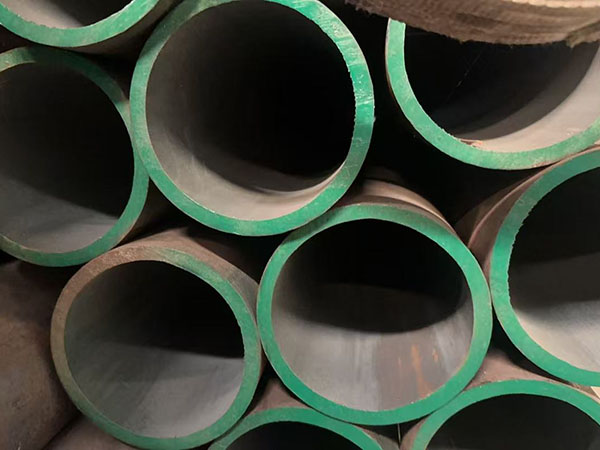
Line pipe is used to transport crude oil, natural gas and produced water over long distances. The API 5L standard defines various steel grades, each with different strength and toughness properties.
1. What Is API 5L?
API 5L is the industry standard for line pipe. It specifies seamless and welded steel pipes for use in pipeline transportation systems in the petroleum and natural gas industries.
2. Common Grades
- X42 — minimum yield strength 42,000 psi (290 MPa). Used for low-pressure gathering lines and distribution networks.
- X52 — minimum yield strength 52,000 psi (360 MPa). Common in medium-pressure transmission pipelines.
- X60 — minimum yield strength 60,000 psi (415 MPa). Used in high-pressure long-distance transmission.
- X70 — minimum yield strength 70,000 psi (485 MPa). High-strength grade for large-diameter, high-pressure pipelines.
3. Grade Selection
Higher grades allow thinner wall thickness and lower material cost, but also require more stringent welding and toughness requirements. The choice depends on design pressure, pipe diameter, installation environment and cost optimization.
Line Pipe Manufacturing Standards
Line pipe is manufactured to API 5L, which covers both seamless and welded (ERW, LSAW, HSAW) pipe. The standard specifies chemical composition, mechanical properties, dimensional tolerances and testing requirements. PSL1 and PSL2 are two specification levels — PSL2 adds more stringent toughness and NDT requirements.
Line Pipe Manufacturing Standards
Line pipe is manufactured to API 5L, which covers both seamless and welded (ERW, LSAW, HSAW) pipe. The standard specifies chemical composition, mechanical properties, dimensional tolerances and testing requirements. PSL1 and PSL2 are two specification levels — PSL2 adds more stringent toughness and NDT requirements. Always specify the correct PSL level on the purchase order, along with any supplementary requirements such as sour service (NACE MR0175) or low temperature impact testing.
Sour Service and HIC Testing
Sour service pipelines carry wet gas containing H2S, which can cause sulfide stress cracking (SSC) and hydrogen induced cracking (HIC). NACE MR0175 / ISO 15156 defines requirements for materials used in sour service. Line pipe for sour service must have controlled hardness (HRC < 22), low sulfur content, and undergo HIC and SSC testing. Always specify NACE MR0175 compliance for wet sour gas applications.
- NACE MR0175 / ISO 15156 — standard for sour service materials.
- HIC test — hydrogen induced cracking resistance test.
- SSC test — sulfide stress cracking resistance test.
- Hardness limit — typically HRC < 22 for sour service.
Line Pipe Grade FAQ
Answers to the most common questions about API 5L line pipe steel grades.
- What does X70 mean? — The number after X is the specified minimum yield strength in ksi. X70 means 70,000 psi (about 483 MPa) minimum yield strength. Higher grades allow higher operating pressure or thinner walls for the same duty.
- What is PSL1 vs PSL2? — PSL1 is the standard quality level. PSL2 has tighter chemistry control, mandatory CVN impact testing and full NDT. For sour service and critical pipelines, PSL2 is required.
- Which grade should I choose for my pipeline? — It depends on the design pressure, pipe diameter and wall thickness. For short, low-pressure pipelines, Grade B or X42 is sufficient. For long-distance high-pressure transmission, X60–X70 is common.
- What is sour service pipe? — Sour service pipe is used in pipelines carrying wet gas with H2S. It must comply with NACE MR0175 / ISO 15156, with controlled hardness, low sulfur content, and HIC/SSC testing.
- Can I bend line pipe on site? — Yes, but only within the allowable bending radius. Cold bending is common for field bends. Always follow the bending procedure and re-inspect after bending.
Line Pipe Manufacturing Process
Line pipe is manufactured either seamless or welded. Welded line pipe types include ERW (Electric Resistance Welded), LSAW (Longitudinal Submerged Arc Welded) and HSAW (Helical Submerged Arc Welded). Each method has advantages for different sizes and applications.
Writer John Anderson
John Anderson is a technical writer and engineer with over 12 years of experience in the industry. He specializes in technical documentation, product specification and application engineering. John Anderson holds a Bachelor's degree in Mechanical Engineering and has contributed to numerous technical publications on pipeline design, corrosion protection and industrial solutions.
 Recommended Products
 Contact us
—— Contact:Manager
—— Tel:+86 15231788966
—— Email:info@zhantongpipe.com
—— Url:https://www.zhantongpipe.com
—— Address:Mengcun Hui Autonomous County, Cangzhou City, Hebei Province