
NewsDetails
Butt Weld Fittings vs Socket Weld Fittings: Which to Choose
author:David Miller time:2026-11-13 15:05:33 Click:0
When specifying pipe fittings, engineers often choose between butt weld (BW) and socket weld (SW) ends. Both create a permanent leak-tight joint, but they differ in size range, alignment and application.
1. Butt Weld Fittings
Butt weld fittings have the same outside diameter as the pipe and are joined by a full penetration weld around the joint. They are available in a full range of sizes (1/2 inch to 48 inch and beyond).
- Best for large diameter and high pressure piping.
- Smooth internal bore, low turbulence.
- Available in ASME B16.9, MSS SP-75 and other standards.
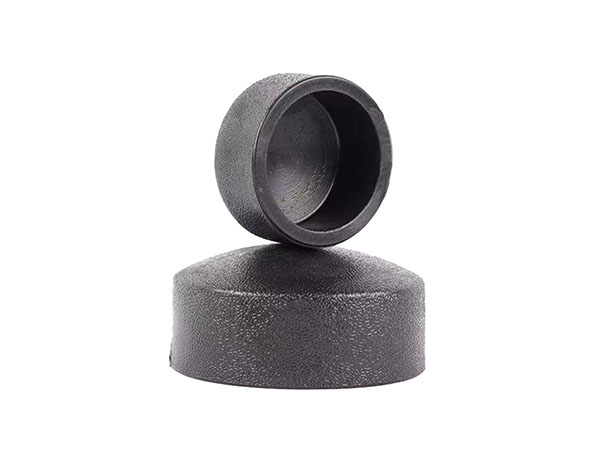
2. Socket Weld Fittings
Socket weld fittings have a socket into which the pipe is inserted, then fillet-welded around the opening. They are mainly used for small-bore pipe (NPS 1/2 to NPS 4).
- Easier alignment and faster welding.
- Good for instrument and small-bore tubing.
- Covered by ASME B16.11.
3. Which to Choose?
- Use BW for process piping, large lines and high pressure.
- Use SW for small-bore, instrument and utility lines.
- BW fittings are stronger and more robust; SW fittings are more economical for small sizes.
Welding BW vs SW Fittings
Butt weld and socket weld fittings require different welding procedures. BW fittings need full penetration butt welds, while SW fittings use fillet welds around the socket opening. Qualified WPS is required for both. Inspectors typically use radiography for BW joints and visual/magnetic particle for SW fillet welds.
Welding BW vs SW Fittings
Butt weld and socket weld fittings require different welding procedures. BW fittings need full penetration butt welds, while SW fittings use fillet welds around the socket opening. Qualified WPS (Welding Procedure Specification) is required for both. Inspectors typically use radiography for BW joints and visual/magnetic particle for SW fillet welds. Always follow the project's welding specification and NDT requirements.
Welding Inspection and NDT Methods
Non-destructive testing (NDT) verifies weld quality without destroying the part. Common methods for pipe welding include: radiography (RT) — x-ray or gamma ray to detect internal flaws; ultrasonic testing (UT) — high frequency sound waves for internal defects; magnetic particle (MT) — detects surface cracks in ferromagnetic materials; liquid penetrant (PT) — finds surface-breaking cracks. The required NDT method and acceptance criteria are specified in the project code (ASME B31.3, API 1104, etc.).
| NDT Method | Detects | Best For |
|---|---|---|
| Radiography (RT) | Internal voids, slag, cracks | BW butt welds |
| Ultrasonic (UT) | Internal and surface defects | Thick wall, stainless |
| Magnetic Particle (MT) | Surface cracks | Carbon steel SW fillets |
| Liquid Penetrant (PT) | Surface-breaking cracks | Stainless steel, all positions |
Butt Weld vs Socket Weld FAQ
Answers to the most common questions about choosing between BW and SW fittings.
- What is the main difference between BW and SW? — Butt weld fittings are welded directly to the pipe end with a full penetration butt weld. Socket weld fittings have a socket that the pipe slides into, then a fillet weld around the opening.
- Which is stronger: BW or SW? — Butt weld joints are stronger because the full wall thickness is fused. Socket weld fillet joints are adequate for low-pressure service but are not recommended for high-stress or cyclic applications.
- When should I use socket weld fittings? — SW fittings are ideal for small-bore piping (2 inches and smaller), instrument connections, and low-pressure systems where ease of installation is important. They are also easier to align than BW fittings.
- What welding procedure do I need? — Both BW and SW require a qualified WPS (Welding Procedure Specification). The procedure must be approved by a third party for critical applications. Welders must be certified.
- How are BW and SW joints inspected? — BW butt welds are typically radiographed (RT) or ultrasonically tested (UT). SW fillet welds are usually visually inspected and may receive magnetic particle (MT) or liquid penetrant (PT) testing.
Welding Cost Comparison
Socket weld fittings are slightly cheaper than butt weld fittings, but the welding labor is similar. The main cost difference is that SW fittings are faster to install (no alignment of the weld gap), which can reduce installation time on projects with many small-bore connections.
Writer John Anderson
John Anderson is a technical writer and engineer with over 12 years of experience in the industry. He specializes in technical documentation, product specification and application engineering. John Anderson holds a Bachelor's degree in Mechanical Engineering and has contributed to numerous technical publications on pipeline design, corrosion protection and industrial solutions.
 Recommended Products
 Contact us
—— Contact:Manager
—— Tel:+86 15231788966
—— Email:info@zhantongpipe.com
—— Url:https://www.zhantongpipe.com
—— Address:Mengcun Hui Autonomous County, Cangzhou City, Hebei Province