
NewsDetails
How to Measure Pipe Wall Thickness and Schedule Number
author:David Miller time:2026-11-14 15:11:47 Click:0
Pipe wall thickness is identified by the Schedule number, which directly determines the pressure-bearing capacity of the pipe. Understanding Schedule is essential for proper piping design.
1. What Is Schedule?
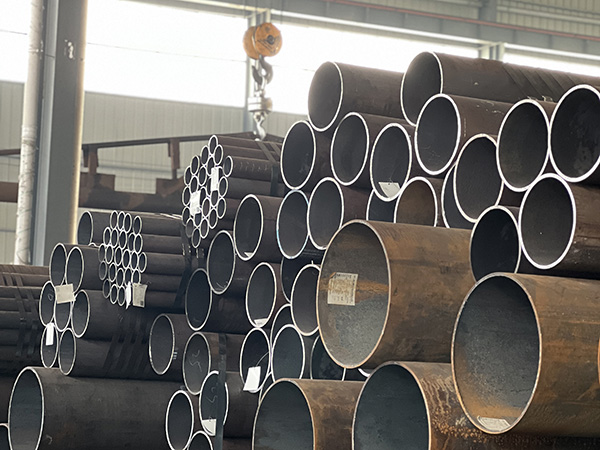
The Schedule (Sch) number is a dimensionless number that approximates the wall thickness of a pipe. Common schedules include Sch 10, Sch 40, Sch 80, Sch 160 and XXS. For a given NPS (Nominal Pipe Size), a higher Schedule means a thicker wall.
2. Common Schedules
- Sch 40 — standard wall, used for general service piping.
- Sch 80 — thicker wall, for higher pressure or corrosion allowance.
- Sch 160 — extra heavy wall, for very high pressure.
- Sch 10 — light wall, for low pressure and thin-walled applications.
3. Why Wall Thickness Matters
Thicker wall allows higher internal pressure, but also increases weight, cost and welding difficulty. The required wall thickness is calculated using Barlow's formula or per ASME B31.3 based on design pressure, diameter and allowable stress.
4. How to Verify
Use a caliper or ultrasonic thickness gauge to measure actual wall thickness. Always compare the measured value against the relevant standard (ASME B36.10M) to confirm the Schedule.
How to Calculate Required Wall Thickness
The required wall thickness is calculated using Barlow's formula: t = (P × D) / (2 × S × E). Add corrosion allowance (typically 1.5–3 mm) and fabrication tolerance. Always consult ASME B31.3 or the relevant piping code for the exact calculation method.
How to Calculate Required Wall Thickness
The required wall thickness is calculated using Barlow's formula: t = (P × D) / (2 × S × E), where P is design pressure, D is outside diameter, S is allowable stress, and E is joint efficiency. Add corrosion allowance (typically 1.5–3 mm) and fabrication tolerance. Always consult ASME B31.3 or the relevant piping code for the exact calculation method. For high pressure or critical applications, have a professional engineer verify the calculation.
Pressure Rating Charts and Temperature Effects
The pressure rating of a pipe decreases as temperature rises. A Schedule 40 carbon steel pipe rated for 1000 psi at room temperature may only handle 600 psi at 400°C. Always consult the pressure-temperature rating chart for your specific material and temperature. When in doubt, choose a heavier wall thickness than calculated to provide a safety margin.
- Barlow's formula — t = P×D / (2×S×E)
- Corrosion allowance — 1.5–3 mm typical for buried service
- Fabrication tolerance — 12.5% under-thickness allowed per ASTM A999
- Temperature derating — pressure capacity drops at elevated temperatures
Pipe Wall Thickness FAQ
Answers to the most common questions about pipe wall thickness and Schedule numbers.
- What does Schedule 40 mean? — Schedule number is a dimensionless thickness designation. Schedule 40 is the most common standard weight. The actual wall thickness varies by pipe size — larger pipes have thicker walls at the same Schedule number.
- How do I calculate required wall thickness? — Use Barlow's formula: t = (P × D) / (2 × S × E), where P is design pressure, D is outside diameter, S is allowable stress, and E is joint efficiency. Add corrosion allowance and fabrication tolerance.
- What is the difference between Schedule 40 and Schedule 80? — Schedule 80 has thicker walls than Schedule 40, providing higher pressure capacity. Schedule 80 is also thicker, so it has less internal flow area. Use Schedule 80 for high-pressure service.
- Can I reduce wall thickness to save cost? — Only if the design engineer approves. Reducing wall thickness below the code minimum is unsafe. Always use the thickness calculated by the piping code (ASME B31.1, B31.3, B31.4, etc.).
- How do I measure actual wall thickness? — Use ultrasonic thickness gauge (UT gauge) for non-destructive measurement. For new pipe, measure with calipers at the cut end. Always verify wall thickness before installation.
Pipe Weight per Meter Reference
The weight of steel pipe is important for shipping, support design and structural analysis. Schedule 40 steel pipe weighs approximately: 0.4 kg/m (1/2 inch), 2.4 kg/m (2 inch), 10.3 kg/m (6 inch), and 27.6 kg/m (12 inch). Always calculate the exact weight for your specific size and schedule.
Writer John Anderson
John Anderson is a technical writer and engineer with over 12 years of experience in the industry. He specializes in technical documentation, product specification and application engineering. John Anderson holds a Bachelor's degree in Mechanical Engineering and has contributed to numerous technical publications on pipeline design, corrosion protection and industrial solutions.
 Recommended Products
 Contact us
—— Contact:Manager
—— Tel:+86 15231788966
—— Email:info@zhantongpipe.com
—— Url:https://www.zhantongpipe.com
—— Address:Mengcun Hui Autonomous County, Cangzhou City, Hebei Province