
NewsDetails
How to Read Pipe Material Test Reports (MTR)
author:David Miller time:2026-11-23 20:00:56 Click:0
The Material Test Report (MTR), also called a mill certificate, documents the chemical composition and mechanical properties of a steel pipe batch. It is the key document proving material compliance.
1. What Is an MTR?
An MTR (typically EN 10204 3.1 or 3.2) is issued by the steel mill. It lists the heat number, chemical composition, tensile strength, yield strength, elongation and any required impact tests.
2. Key Items to Verify
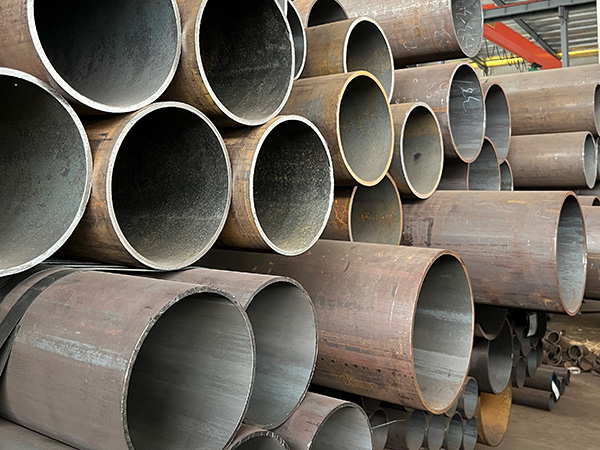
- Heat number — must match the number stenciled on the pipe.
- Chemical composition — C, Mn, Si, S, P within the specified ranges.
- Mechanical properties — yield strength, tensile strength and elongation meet the standard.
- Dimensions — outside diameter, wall thickness and length match the order.
- NDE results — ultrasonic, hydrostatic or radiographic test reports.
3. Traceability
Every pipe should be traceable through its heat number to the MTR. Keep MTRs with the project dossier for the client and third-party inspector.
How to Verify MTR Authenticity
Material Test Reports can be forged, so verify authenticity. Check that the heat number on the MTR matches the pipe stencil, that the chemical composition matches the standard, and that the report is signed by a competent person. For critical applications, require third-party inspection.
How to Verify MTR Authenticity
Material Test Reports can be forged, so verify authenticity. Check that the heat number on the MTR matches the pipe stencil, that the chemical composition matches the standard, and that the report is signed by a competent person. For critical applications, require third-party inspection (SGS, BV, TUV) and cross-check with the mill's database.
What to Look For in a Mill Certificate
A proper EN 10204 3.1 mill certificate includes: manufacturer name and address, customer name, order number, heat number, product description (size, grade, standard), chemical composition (heat analysis), mechanical properties (tensile, yield, elongation, impact), dimensions and tolerances, and a signature by the manufacturer's authorized inspector. EN 10204 3.2 adds independent third-party verification.
| Item | 3.1 Certificate | 3.2 Certificate |
|---|---|---|
| Issued by | Manufacturer | Independent inspector + manufacturer |
| Chemical composition | Heat analysis | Heat + product analysis |
| Mechanical properties | Tested by mill | Witnessed by inspector |
| Use case | General applications | Critical, high-risk |
Material Test Report FAQ
Answers to the most common questions about reading and verifying pipe material test reports (MTR).
- What is a mill test report? — A mill test report (MTR), also called a material certificate, is a document from the manufacturer verifying the chemical composition and mechanical properties of a material. It ensures the material meets the specified standard.
- What is the difference between 3.1 and 3.2 certificates? — EN 10204 3.1 is issued by the manufacturer's authorized inspection department. 3.2 is additionally verified by an independent third-party inspector. 3.2 is required for critical, high-risk applications.
- How do I verify an MTR is authentic? — Check that the heat number on the MTR matches the pipe stencil, that the chemical composition matches the standard, and that the report is signed by a competent person. For critical applications, cross-check with the mill's database.
- What information must be on an MTR? — Manufacturer name, heat number, product description, chemical composition (heat analysis), mechanical properties (tensile, yield, elongation, impact), dimensions, and signature. Always request the MTR at the time of order.
- Can I use pipe without an MTR? — No, for industrial and pressure applications, never use pipe without material certification. The MTR proves the material is what it claims to be. Without it, you have no quality assurance.
How to Read a Chemical Composition Table
The chemical composition table on an MTR lists the percentage of each element: Carbon (C), Manganese (Mn), Phosphorus (P), Sulfur (S), Silicon (Si), and others. Compare the values to the standard's required ranges. For example, ASTM A106 Gr.B requires maximum 0.30% Carbon, maximum 0.048% Phosphorus, and maximum 0.058% Sulfur.
Writer Robert Taylor
Robert Taylor is a technical writer and engineer with over 12 years of experience in the industry. He specializes in technical documentation, product specification and application engineering. Robert Taylor holds a Bachelor's degree in Mechanical Engineering and has contributed to numerous technical publications on pipeline design, corrosion protection and industrial solutions.
 Recommended Products
 Contact us
—— Contact:Manager
—— Tel:+86 15231788966
—— Email:info@zhantongpipe.com
—— Url:https://www.zhantongpipe.com
—— Address:Mengcun Hui Autonomous County, Cangzhou City, Hebei Province