
NewsDetails
The Importance of Raw Material Selection for Any Flange Manufacturer
author:Zhantong time:2026-01-25 15:22:56 Click:190
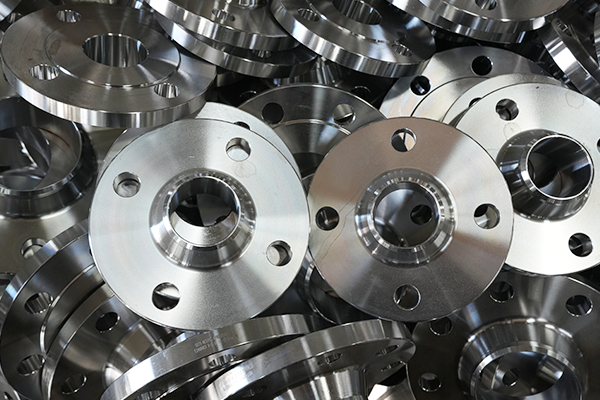
For any flange manufacturer, raw material selection is the foundation of product quality, safety, and long-term performance. Flanges are essential components in piping systems, connecting pipes, valves, pumps, and equipment under pressure and temperature variations. Even the most advanced production technology cannot compensate for poor material choices.
In professional flange manufacturing, experienced teams combine strict material control with modern factory production systems to ensure every batch meets mechanical, chemical, and dimensional requirements. This article explores why raw material selection matters, how it affects production, and how manufacturers use controlled processes to deliver reliable flanges for global applications.

What Is a Flange and Why Material Matters?
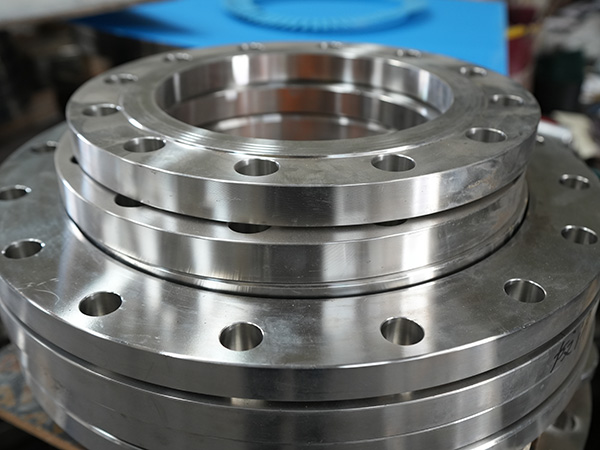
A flange is a mechanical connector used to join piping components securely. It must handle internal pressure, temperature changes, corrosion exposure, and mechanical stress over long service periods.
The raw material determines:
Strength and load capacity
Corrosion resistance
Temperature tolerance
Weldability
Machinability
Service life
For a flange manufacturer, choosing the right steel, alloy, or special material directly influences performance and safety. Proper material selection also ensures stable factory production and consistent quality in large-volume manufacturing.
Common Raw Materials Used by a Flange Manufacturer
Different applications require different materials. Professional flange manufacturing operations typically work with a wide range of metals and alloys.
Carbon Steel
Carbon steel is widely used for general industrial flanges. It offers good strength, affordability, and machinability. Many factory production lines rely on carbon steel for high-volume output in standard pipeline systems.
Stainless Steel
Stainless steel provides excellent corrosion resistance and temperature stability. A flange manufacturer selects stainless steel for chemical processing, marine, and food-grade systems where surface integrity is critical.
Alloy Steel
Alloy steels include added elements such as chromium, molybdenum, or nickel. These materials enhance strength and heat resistance, making them suitable for high-pressure and high-temperature environments.
Special Alloys
For extreme conditions, flange manufacturers may use nickel-based alloys or other special materials to handle aggressive chemicals and elevated temperatures.
Each material type requires different production control, tooling, and heat treatment during factory manufacturing.
How Raw Material Impacts Flange Production
Raw material selection affects every stage of flange production.
Machining Performance
Some materials machine more smoothly than others. Poor-quality steel can cause tool wear, surface defects, and dimensional inconsistency. Professional factory production starts with certified materials to improve machining accuracy and efficiency.
Forming and Forging
Many flanges are forged before machining. Material ductility and grain structure determine how well the metal forms without cracking. A flange manufacturer evaluates material composition to ensure it performs correctly during forging and shaping processes.
Welding and Assembly
Certain flange designs require welding. Raw material chemistry affects weld penetration, strength, and resistance to cracking. Stable materials simplify production and reduce defect rates in factory manufacturing.
Heat Treatment Behavior
Heat treatment improves hardness, toughness, and fatigue resistance. Different raw materials respond differently to thermal processes. Controlled factory production allows manufacturers to optimize heat treatment based on material properties.
Quality Control in Raw Material Selection
For any professional flange manufacturer, quality begins before production starts.
Key material control steps include:
Chemical composition testing
Mechanical property verification
Ultrasonic inspection
Surface defect examination
Traceability documentation
Factory production systems track raw materials from inbound inspection to finished product packaging. This traceability supports consistent batch supply and long-term reliability for distributors and project buyers.
Corrosion Resistance and Service Environment
Flanges often operate in challenging environments: moisture, chemicals, salt, pressure, and heat. Raw material selection determines how well a flange resists these conditions.
For example:
Carbon steel suits dry, low-corrosion environments.
Stainless steel performs well in humid or chemical exposure.
Alloy steels handle thermal cycling and pressure loads.
A professional flange manufacturer matches materials to service environments to prevent premature failure and costly maintenance.
Cost Efficiency and Production Stability
Material choice also influences production cost and supply stability.
High-quality raw materials:
Reduce scrap rates
Improve machining speed
Lower rework requirements
Extend tooling life
From a factory production viewpoint, consistent material sourcing supports bulk manufacturing without interruption. This allows flange manufacturers to maintain reliable delivery schedules and competitive pricing for large-volume orders.
Bulk Manufacturing and Material Consistency
For large projects, consistency across batches is critical. Different material lots can vary in hardness, composition, and structure.
Professional flange manufacturers rely on:
Approved supplier systems
Incoming material audits
Batch segregation
Production parameter matching
These steps ensure that factory production delivers uniform flanges across thousands of units, supporting stable bulk supply for industrial pipelines and infrastructure projects.
Innovation in Material Selection
Modern flange manufacturing continues to evolve with improved materials and testing methods.
Trends include:
Cleaner steel production
Enhanced alloy formulations
Improved corrosion-resistant coatings
Digital material traceability
By integrating innovation into factory production, a flange manufacturer can improve performance while maintaining efficiency and scalability.
How Buyers Benefit from Proper Material Selection
For buyers and project managers, choosing a flange manufacturer with strong material control provides:
Longer service life
Improved safety margins
Reduced maintenance costs
Predictable performance
Reliable batch supply
Material selection is not just a technical choice—it is a strategic factor in project success.
Conclusion: Why Raw Material Is the Core of Any Flange Manufacturer
In conclusion, raw material selection is the backbone of every flange manufacturer. From machining and forging to welding, heat treatment, and corrosion resistance, material quality shapes every aspect of flange performance.
By combining professional material control with advanced factory production systems, manufacturers deliver flanges that meet demanding industrial requirements while supporting stable bulk manufacturing and global supply.
For pipelines, power plants, chemical processing, and infrastructure systems, working with a flange manufacturer that prioritizes raw material excellence ensures safety, durability, and long-term operational confidence.
References
GB/T 7714:Alloying: understanding the basics[M]. ASM international, 2001.
MLA:Davis, Joseph R., ed. Alloying: understanding the basics. ASM international, 2001.
APA:Davis, J. R. (Ed.). (2001). Alloying: understanding the basics. ASM international.
 Recommended Products
 Contact us
—— Contact:Manager
—— Tel:+86 15231788966
—— Email:info@zhantongpipe.com
—— Url:https://www.zhantongpipe.com
—— Address:Mengcun Hui Autonomous County, Cangzhou City, Hebei Province