
NewsDetails
Water Well Casing Pipes: Agricultural and Municipal Applications for Sustainable Water Supply
author:Zhantong time:2026-07-10 18:48:49 Click:85
Water wells provide essential groundwater access for agricultural irrigation, municipal supply, and industrial processes worldwide. The casing and screen system—the permanent installed hardware that maintains borehole integrity while permitting water entry—directly determines well performance, longevity, and maintenance requirements. Proper selection among available materials and configurations ensures decades of reliable service from this subsurface infrastructure investment.
Casing Materials: Steel versus PVC Comparison
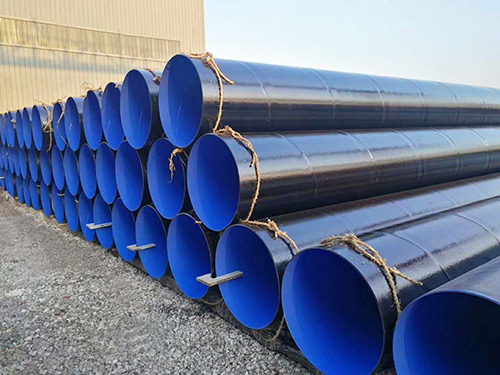
Steel casing dominates deep well applications where structural strength and threaded connection reliability prove essential. API K55 or N80 grade steel provides adequate yield strength for wells exceeding 500 feet depth, while resisting collapse pressures from surrounding geological formations. The threaded and coupled connection method enables field assembly without specialized equipment, simplifying construction logistics.
PVC casing offers compelling advantages for shallower applications where chemical resistance or cost optimization takes priority. Schedule 40 or Schedule 80 PVC provides excellent resistance to most groundwater chemistries, avoiding iron-related scaling that troubles steel wells in some aquifers. The smooth interior walls minimize friction losses, while lighter weight simplifies handling and reduces installation labor requirements.
Well Screen Design and Slot Configuration
Well screens filter aquifer materials while permitting water entry, determining both hydraulic performance and long-term yield sustainability. Bridge-slotted screens employ machined slots that resist plugging, while continuous wrap screens with triangular-profile wire provide maximum open area. The slot size selection matches aquifer grain size distribution, preventing sand pumping while maximizing water yield.
Screen length typically spans 20-40% of the aquifer thickness, balancing specific capacity (gallons per minute per foot of drawdown) against sand control requirements. Partial penetration of confined aquifers causes drawdown concentration near the screen, accelerating corrosion and reducing effective radius. Design calculations incorporating aquifer parameters guide optimal screen length and placement decisions.
Gravel Pack Installation and Filter Media Selection
Gravel pack installations surround screens with carefully sized filter media that stabilizes formations and improves well efficiency. The gravel—typically washed, rounded silica—filters formation sand while maintaining high permeability. Grain size selection follows standard criteria that balance filter stability against formation retention, typically targeting 6-12 times the effective grain size of the aquifer material.
Installation methods influence gravel pack effectiveness. Tremie pipe placement ensures uniform media distribution around screens, avoiding bridging that creates voids. Gravel pack density affects both initial well performance and long-term sand control reliability. Quality installations achieve 90%+ theoretical density, verified through radioactive tracer surveys when project specifications require documentation.
Grouting and Annular Seal Requirements
Proper well construction requires sealing the annular space between casing and borehole wall to prevent surface contamination infiltration. Grout—typically neat cement or bentonite clay slurry—fills this critical barrier zone, preventing downward migration of bacteria, chemicals, or improperly treated water into the aquifer. Regulatory standards commonly specify minimum 1.5-inch grout thickness extending from surface to specified depths.
Grouting methods influence seal effectiveness. Tremie placement from bottom to top prevents channeling that can occur with top-down pouring. Multiple-stage grouting addresses sloughing formation conditions where gravity flow cannot maintain column stability. Quality verification through pressure testing or electromagnetic caliper surveys confirms seal integrity before well development begins.
Well Development and Performance Optimization
Well development removes drilling fluid invasion, stabilizes formation materials, and maximizes hydraulic connection between aquifer and wellbore. Surfactant treatment lowers surface tension, emulsifies drilling fluid residues, and promotes water wetability for more effective sand release. Mechanical surging through repeated pump cycling mobilizes fine materials toward the screen.
Air lifting—injecting compressed air to create upward mixture flow—provides powerful development energy while avoiding chemical addition. Over-pumping beyond design capacity accelerates development in coarse aquifers but risks formation damage in finer materials. Observation of discharged water clarity, sand content, and specific capacity trends guides development duration and intensity decisions.
Maintenance and Rehabilitation Strategies
Well performance inevitably declines through encrustation, biofouling, or corrosion mechanisms. Chemical rehabilitation—using acids, dispersants, or biocides—addresses specific failure modes identified through video inspection and water quality analysis. Acid treatment dissolves mineral scale from iron, manganese, or calcium carbonate precipitation. Surfactant and biocide combinations treat organic fouling from iron bacteria or other microorganisms.
Physical rehabilitation methods include jetting with high-pressure water, brushing to remove tenacious deposits, and impact scaling that fractures mineral accumulations. These methods require specialized equipment and experienced contractors who understand formation characteristics and screen integrity limitations. Prevention through water quality monitoring and periodic treatment extends well life and reduces rehabilitation costs.
Inviting global distributors to join our water well products distribution network. We seek partners supplying groundwater contractors, agricultural cooperatives, and rural water utilities who understand local hydrogeological conditions.
References
AWWA A100-15: Water Wells
ASTM F480-14: Standard Specification for PVC Thermoplastic Well Casing Pipe and Pipe Coupled Stock
API 13A: Specification for Drilling-Fluid Materials
NGWA: Ground Water Manual, 3rd Edition
Water Well Journal, April 2021: Well Construction Best Practices
 Recommended Products
 Contact us
—— Contact:Manager
—— Tel:+86 15231788966
—— Email:info@zhantongpipe.com
—— Url:https://www.zhantongpipe.com
—— Address:Mengcun Hui Autonomous County, Cangzhou City, Hebei Province