
NewsDetails
What Is Flange Pressure Rating? Definition, Standards, and Importance
author:Zhantong time:2026-01-09 16:15:05 Click:155
In industrial piping systems, flange pressure rating plays a critical role in ensuring safety, reliability, and long-term performance. Whether used in oil and gas pipelines, chemical processing plants, or water transmission systems, flanges must be selected based on precise pressure and temperature requirements.
From a manufacturer and bulk production perspective, understanding flange pressure rating is not only a design consideration but also a key factor in material selection, production control, and quality assurance. This article explains what flange pressure rating means, how it is defined by standards, and why it is essential in real-world applications.

Understanding Flange Pressure Rating
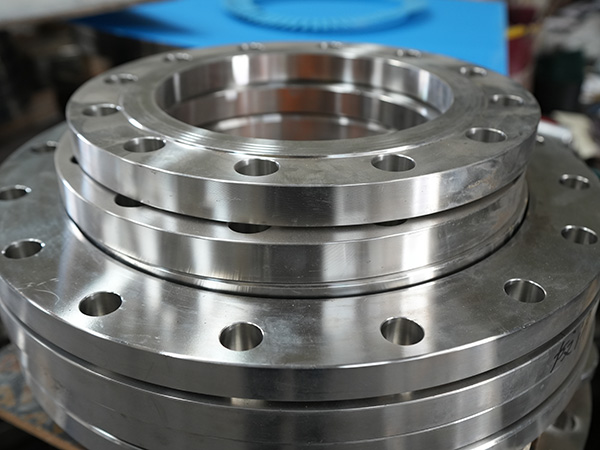
Flange pressure rating refers to the maximum allowable internal pressure that a flange can safely withstand at a specified temperature. It is not a single fixed value but a pressure limit that changes with operating temperature and material grade.
In industrial production environments, pressure rating ensures that flanges manufactured in large batches maintain consistent performance under defined service conditions. Incorrect pressure rating selection can result in leakage, deformation, or even catastrophic system failure.
Why Flange Pressure Rating Matters in Piping Systems
Flanges serve as connection points between pipes, valves, pumps, and other equipment. The pressure rating determines whether these connections remain secure when exposed to internal pressure, thermal expansion, and mechanical loads.
Key reasons flange pressure rating is critical include:
·Preventing leaks and joint failures
·Maintaining structural integrity under pressure
·Ensuring compliance with engineering standards
·Supporting long-term operational safety
From a production standpoint, manufacturers rely on standardized pressure ratings to streamline mass production while ensuring compatibility across different piping systems.
Common Flange Pressure Rating Standards
ASME Pressure Class System
One of the most widely used systems for flange pressure rating is defined by ASME standards. These pressure classes include:
·Class 150
·Class 300
·Class 600
·Class 900
·Class 1500
·Class 2500
Each class represents a pressure-temperature relationship rather than a direct pressure value. For example, a Class 300 flange does not always handle exactly twice the pressure of a Class 150 flange; temperature and material significantly influence performance.
PN Rating System
In many international markets, the PN (Pressure Nominal) system is used. PN ratings such as PN10, PN16, or PN40 indicate the nominal pressure capacity in bar at a reference temperature.
Manufacturers involved in export-oriented production often supply flanges designed to meet both ASME Class and PN rating requirements.
Temperature Influence on Flange Pressure Rating
Temperature has a direct impact on flange pressure rating. As operating temperature increases, the allowable pressure typically decreases due to reduced material strength.
Production engineers must account for this relationship during design and manufacturing to ensure that flanges perform reliably throughout their service life. Pressure rating charts provided by standards organizations clearly define these temperature-dependent limits.
Material Selection and Pressure Rating Performance
Flange material plays a decisive role in pressure rating capability. Common materials include:
·Carbon steel
·Stainless steel
·Alloy steel
Each material responds differently to pressure and temperature stress. From a manufacturing perspective, controlling material composition and heat treatment during production is essential to achieving consistent pressure rating performance across bulk supply orders.
Flange Pressure Rating in Real Applications
In practical piping systems, flange pressure rating must align with:
·Pipeline operating pressure
·Fluid characteristics
·Temperature fluctuations
·Safety factors
Industrial applications such as petrochemical pipelines, power plants, and municipal water systems rely heavily on correct pressure rating selection to ensure uninterrupted operation.
Manufacturers supplying flanges in large production volumes typically perform pressure testing and dimensional inspections to verify compliance before shipment.
Common Misunderstandings About Flange Pressure Rating
Despite its importance, flange pressure rating is often misunderstood. Some common misconceptions include:
·Assuming pressure class equals maximum pressure at all temperatures
·Ignoring the effect of material grade
·Overlooking system pressure fluctuations
Clear understanding and proper engineering evaluation help prevent these errors during system design and procurement.
Role of Manufacturing Quality in Pressure Rating Reliability
Consistent production processes are vital to ensuring reliable flange pressure rating performance. Factors such as machining accuracy, surface finish, and dimensional tolerance all influence sealing effectiveness under pressure.
Manufacturers focused on bulk supply and industrial-scale production typically implement strict quality control procedures, including material traceability and pressure-related testing, to maintain performance consistency.
Conclusion: Why Flange Pressure Rating Should Never Be Overlooked
Flange pressure rating is a foundational concept in piping system design and operation. It defines the safe pressure limits of flanges under specific temperature conditions and directly impacts system reliability and safety.
From a manufacturer and production standpoint, standardized pressure ratings enable efficient bulk manufacturing while ensuring compatibility with global piping standards. Correct selection, proper material control, and consistent production practices all contribute to long-term performance.
Understanding flange pressure rating is essential for engineers, procurement teams, and system designers aiming to build safe, efficient, and durable piping systems.
References
GB/T 7714:Link R E. An introduction to the design and behavior of bolted joints[J]. Journal of Testing and Evaluation, 1991, 19(5): 417-418.
MLA:Link, R. E. "An introduction to the design and behavior of bolted joints." Journal of Testing and Evaluation 19.5 (1991): 417-418.
APA:Link, R. E. (1991). An introduction to the design and behavior of bolted joints. Journal of Testing and Evaluation, 19(5), 417-418.
 Recommended Products
 Contact us
—— Contact:Manager
—— Tel:+86 15231788966
—— Email:info@zhantongpipe.com
—— Url:https://www.zhantongpipe.com
—— Address:Mengcun Hui Autonomous County, Cangzhou City, Hebei Province